Tag Archive: modern history

Why does Ukrainian nationalism look so different to the rest of Europe?

In 1992, Ukraine became a sovereign nation-state for the first time, following the collapse of the Soviet Union (USSR). After centuries of foreign occupation by the Polish-Lithuanian Commonwealth, Russians, and the Austro-Hungarian Empire,… Continue reading

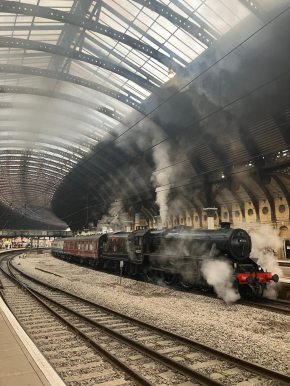
“Make all the Railways come to York”- a brief history of the railway industry in York

Arguably, the most significant aspect of York’s transportation heritage is its importance as a railway nucleus, a position it has maintained from the mid-19th century to the present day. This illuminating article provides a brief overview of how all the railways came to York, and the effects this had on the lives of the city’s residents.

AUTHOR: OSCAR HILDER

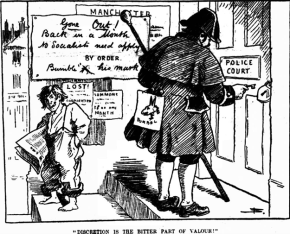
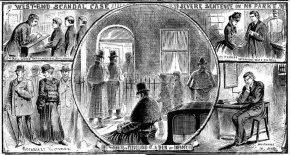
Secrets, Lies, and Scandal: The Cleveland Street Case

One of Victorian England’s most shocking scandals was the Cleveland Street affair, impacting perceptions surrounding the LGBT community. This article by James Lamont, written for the LGBT+ History Writing Competition, details the story of the scandal to reveal what made it such an infamous case. By foregrounding the key political individuals involved within the case, this piece highlights just why attitudes towards homosexuality were severely impacted as a result of the affair’s notoriety.
AUTHOR JAMES LAMONT
Heart of the Forest: The Freeminers of the Royal Forest of Dean

In 1960, Dennis Potter identified something unique about his homeland of the Forest of Dean that made it so special: the sense of a small green world hemmed in by two rivers and two nations. This article by Joseph Lowen-Grey, the winner of our Local and Community History Writing Competition, explores this further by detailing the Forest’s enchanting history. Anchoring the article around the forest’s Freeminers, this piece foregrounds the intricate legacy of the group that makes the Forest of Dean as remarkable as it stands today.
AUTHOR JOSEPH LOWEN-GREY
“She did something useful.” Operation Mincemeat: Reviving forgotten histories

Operation Mincemeat is a multi-award-winning musical that has taken the West End by storm, shedding light on the other roles played, highlighting the true stories of those involved with planning or putting the operation into action during the WWII. In this article, Helena discusses Mincemeat’s significance in rediscovering the history of Hester Leggatt, one of MI5’s secretaries.

AUTHOR: HELENA HUNTER

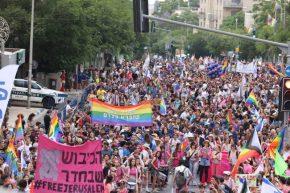
Jerusalem: Pride Amidst Two Layers of Tension and Violence

Since 2002, the Jerusalem Pride Parade has taken place annually while transforming throughout the years, marking the progress of gay rights in Israel. This article explores some of the contexts in which this progress has occurred, looking also at the intertwining of these tensions. As Alon Isac describes the historical developments and the political background of the pride parade, questions not just answered, but also raised.
AUTHOR ALON ISAC

The Victorian “Poison Panic”: Was Poison Really the Problem?

The Victorian Era was no stranger to poison. Its presence was everywhere, from arsenic in cosmetics, to cyanide in the wallpaper, causing a ‘poison panic’ to emerge in popular media. The panic especially surrounded women across this period, with some put on trial for supposedly poisoning their husbands. This insightful article by Finlay Ratcliffe for the 2024/2025 Women’s History Writing Competition explores the case studies of twenty-two women to highlight whether this public fear stemmed from the threat of the poison itself, or rather the threat of female power.
AUTHOR FINLAY RATCLIFFE

Finding Headspace: Embracing Eastern Meditation Practices in Western Culture

The practice of meditation, which originated between 600-500 BCE, in recent decades, has experienced a wave of global popularity, contributing to wellbeing, and helping many people deal with stress, depression and anxiety problems, so common in the 21st century. However, the orientalist discourse has attached a stigma to spiritual practices, especially those not founded by the West. This interesting article discusses the practice of meditation with roots in oriental Buddhism and the tendency of adapting it to the Western world, bringing to the fore a discussion of how platforms such as Headspace can raise awareness of its oriental Tibetan roots, possibly helping to decolonise it.
AUTHOR: HARRIET VICARY

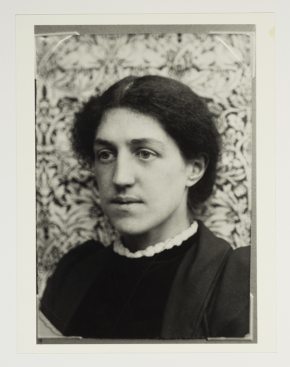
Queering Morris

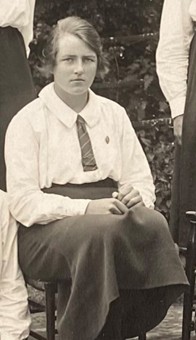
May Morris, daughter of the famous textile designer William Morris, is normally overshadowed by her famous father, both as an artistic and historic figure in her own right. However, with increased feminist revisions of the Arts and Crafts movement, May Morris’ status has been established as a pioneer of Arts and Crafts embroidery; a prolific contributor to the success of Morris and Co; and founder of the Women’s Guild of Arts. Furthermore, the rediscovery of Morris’ interwar diaries draws attention to the later years of her life and to the importance of her relationship with Mary Lobb, which sparked intense debate over the exact nature of their relationship. This rich and interesting history of the pair deserves a greater level of consideration within current scholarship, from both a feminist and queer perspective and is the topic of the winner of the LGBTQ+ article competition 2025.

AUTHOR: ROBIN HENDERSON

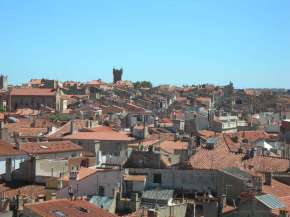
Perpignan or Perpinyà? Exploring the Multicultural History of the Southwest French City

Perpignan, located in the south of France, is the last large city closest to the Franco-Spanish border. Much like its history, the city stands today ensnared between French and Catalan culture. This article delves into the multiculturalism within Perpignan, especially looking at its Catalan, but also French, culture and identity. By exploring the city’s history, linguistics, heritage, and gastronomy, Cassia Wydra carefully traces and appreciates the bicultural identity of Perpignan, or Perpinyà.
AUTHOR CASSIA WYDRA

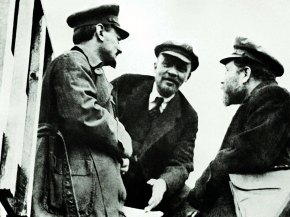
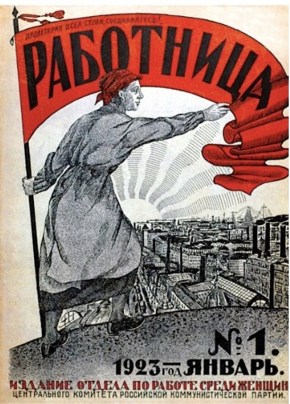
Whatever Happened to Leon Trotsky? An Overview of Trotsky’s Last Exile, 1929-1940

At the end of the 1920s, Leon Trotsky found himself in a precarious but familiar position. Although he was seen by some as Lenin’s natural successor, Trotsky was washed away by the power struggle caused by Stalin’s political manoeuvres. In this article, Iris Pinder explores Trotsky’s exile, tracing the final decade of his life. Although this period was overcast by doom and death, Trotsky’s ultimate ability to adapt as a pariah is reflected, finding his way albeit isolated from the communist dictatorship he helped create and defend.
AUTHOR IRIS PINDER

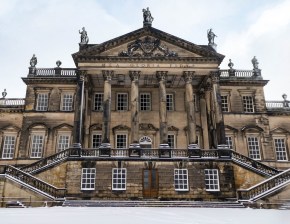
Wentworth Woodhouse: Mea Gloria Fides

Wentworth Woodhouse has undergone much expansion for decades, in terms of its architecture, owners, and history. In this article, Finlay Ratcliffe seeks to explore the history of the site, tracing it chronologically, using its fifteen owners as key historical checkpoints. By also foregrounding its rigid resistance to modern demolition attempts, as well as its current preservation plans, the reasons for why Wentworth Woodhouse is considered a great survivor are illuminated.
AUTHOR FINLAY RATCLIFFE

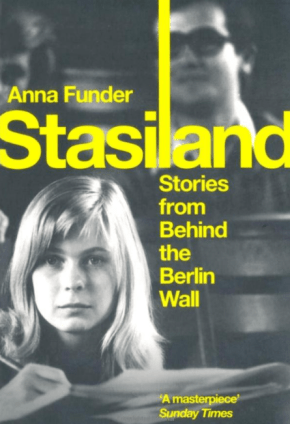
‘Stasiland’: Anna Funder’s Oral History Masterpiece

Today, Germany continues to grapple with the difficult legacy of its ‘second dictatorship’ behind the Berlin Wall. In Anna Funder’s captivating work, ‘Stasiland,’ a detailed oral history of this life is combined with Funder’s own observations of post-reunification Germany. In this article, Lizzy Stott explores what makes Funder’s novel both a narrative and investigative success in reflecting how the East German past is by no means over.
AUTHOR LIZZY STOTT

‘Blueshirts’: The Neglected Story of Irish Rightism in the Fledgling Free State

Irish political history in the early twentieth century is often portrayed as popular democratic, radically republican, and perhaps even left-wing Marxist in character. However, this obscures a key political story of the 1920s and 1930s, when Ireland too experienced a somewhat right-wing, nationalist, and potentially fascist movement. Henry Anderson delves into this underrepresented moment in modern Irish history by giving background to the rise and fall of the Blueshirts before assessing whether this movement was indeed fascist.
AUTHOR HENRY ANDERSON

Human Stories at Goathland Station

In the year 1864, the Sheffield Daily Telegraph made an appeal, calling for ‘the abolition of what is known as the ‘Goathland incline’, since this steep gradient had clearly become a threat to people using it. The result was that the North Eastern Railway (NER) began work on deviating the line, which opened in 1865, and along with it, a new station to serve Goathland. The author, an archaeologist, brings to light interesting human stories of people who had their lives intertwined with this iconic station (known nowadays popularly as Hogsmeade station from the first HP film!).
AUTHOR: WILLIAM PLANT

The Stories Behind Brit Bennett’s ‘The Vanishing Half’: Racial Passing in Twentieth Century USA

Brit Bennett’s novel ‘The Vanishing Half’ depicts the lives of two sisters, Stella and Desiree, within twentieth century USA. The trajectories that the twins take within the book reflect the complexities of racial identity and understanding at the time, especially surrounding racial passing. In this article, Eloise Gibson illuminates the histories of individuals such as Walter White to see the novel’s ability to represent the real people who experienced racial passing first-hand.
AUTHOR ELOISE GIBSON

Titanic’s Only Black Passenger: The Story of Joseph Laroche

Although the Titanic is arguably the most famous ship in history, many of the horrific memories of its more ordinary passengers have been forgotten. This article spotlights the life of Joseph Laroche and his family, passengers aboard the Titanic, devastated by the tragedy. Helena Hunter successfully widens the narrative of the Titanic disaster by shedding light on the story of the only Black man amongst the ship’s passengers.
AUTHOR: HELENA HUNTER

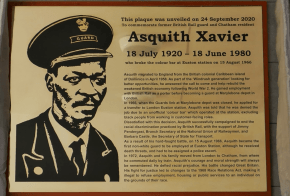
Race on the Rails: How Resistance to Racial Discrimination at London Euston Strengthened the UK’s Anti-Discrimination Laws

When one considers the history of racial discrimination, the stories of ordinary people who fought for equality are often overlooked. This compelling article spotlights Asquith Xavier, a Black West Indian railwayman, who challenged his rejection from a position at London Euston Station. By connecting Xavier to broader developments within the British civil rights movement, Oscar Hilder argues for Xavier’s influence on both racial legislation and his personal communities.
AUTHOR OSCAR HILDER

Josephine Baker: Fame, France and Fighting for a Cause

To shine a light on under-appreciated Black histories, Finlay Ratcliffe focuses on the life of Josephine Baker. Outlining her various roles as an entertainer, Second World War spy and civil rights advocate, as well as the commemorations that occurred after her untimely burial, this article recognises her significance both in life and death.
AUTHOR FINLAY RATCLIFFE

From Total Obscurity to Infamous Dictator: Why Stalin Was More Clever and Cunning Than You Think

In January 1942, Stalin had become firmly established as the leader of the Soviet Union. In this article, Alex Herzmansky explores his rise to power and leadership, focusing particularly on his calculated political tactics and strategic personality to ultimately reflect his clever and cunning nature.
AUTHOR ALEX HERZMANSKY

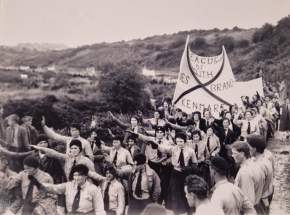
Exodus or Homecoming?: An Exploration of Nationality in the Greek-Turkish Population Exchange

The 1923 population exchange was perhaps one of the most important events in modern European history. Its enactment was not only significant for the peoples of Greece and Turkey, but also a template by which the nationalistic aims of European leaders would be realised across the 20th century. In this riveting article, the ideas and principles that governed such a decision are initially explored.
AUTHOR: MAX HILLIER

Historical Stories: Our Top Picks

The 2023-2024 York Historian Committee recommends our favourite historical fictional tales, from mystery novels, to medical television and queer film.

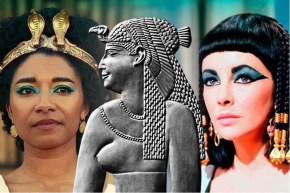
Depictions of Cleopatra from Shakespeare to Netflix

Cleopatra VII, the last queen of Egypt proper, has gripped popular media and its creative imagination throughout history. In this article, Leon Corneille-Cowell and Isabel Davies explore various depictions of the ruler, for example, using her medieval depictions and modern television portrayals.
AUTHOR LEON CORNEILLE-COWELL AND ISABEL DAVIES

A Western Phenomenon?: A Study of Witchcraft in Colonial Africa

The history of witchcraft has typically been examined from a Western perspective. In this article, Libby Foxwell and Eloise Gibson explore perceptions of witchcraft in colonial Africa to uncover and overcome historical misconceptions about the phenomenon.
AUTHOR LIBBY FOXWELL AND ELOISE GIBSON

Under the Knife: The Rise of Modern Plastic Surgery

Discussing the intricate history of plastic surgery, Lizzy Stott discusses its ideological and racialised aspects. Desiring to debunk the popular myth that plastic surgery originated after the First World War, this article makes for an illuminating read on the development and implications of the practise for a variety of groups.
AUTHOR LIZZY STOTT

To an Icy Grave: The Lost Franklin Expedition, its Legacy, and the Horror of an Arctic Death

The winner of our Halloween Writing Competition, Jack Rooney, details the tragic story of a crew tormented by disease, cannibalism, and the cold. Inspired by Dan Simmons’ novel ‘The Terror’, this article reveals the harsh historical reality of humanity’s own battle with their world.
AUTHOR JACK ROONEY

The Three Wise Men: Kennedy, Johnson, Nixon, and the Legacies of Assassination

Delving into the interlinking presidencies of Kennedy, Johnson and Nixon, Sam Chapman presents a fascinating element of 1960s and 1970s American political history. Focusing on how Johnson and Nixon differently revelled in becoming Kennedy’s successor, this article uniquely looks at how this ultimately contributed to both of their downfalls.
AUTHOR SAM CHAPMAN

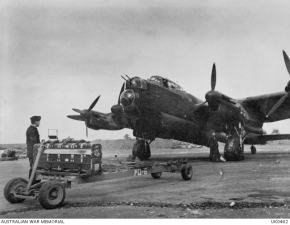
18th October, 1943 – Lancaster W4240, code letter ‘A’ for Able

To commemorate the Remembrance Day on the last 11th November (also known as Poppy Day), Joe Langham built an special and very personal account around a casualty of war happened during the WWII in the fight against Germany, the fate of the Lancaster W4240 and its crew.
AUTHOR: JOE LANGHAM

The Start of World War I: The Background of the Assassination of Franz Ferdinand

The nature of the causes of World War I have often been debated among historians. Steph Pook adds to the argument with her unique and fresh essay analysing the paradoxical and entangled origins of the war.
AUTHOR STEPH POOK

Why did Hospital Medicine Emerge in Paris?

Lauren Cheetham-Birmingham explores the interesting development of hospital medicine in Paris during the 19th century.

AUTHOR: LAUREN CHEETENHAM-BIRMINGHAM

A Third “Red Scare”? Bernie Sanders and the 2020 US Election

Stephanie Wilson analyses how Japan utilises the Olympic Games for political means

AUTHOR: STEPHANIE WILSON

War of the Worlds – BBC TV’s adaptation under the lens

Destruction! Dystopia! Deplorable? These are some of the many phrases we could choose to describe Peter Harness’ The War of the Worlds – a three-episode BBC adaptation of H.G. Wells’ 1898 novel. With… Continue reading

“Female Lords”: Women’s representation and restriction in the House of Lords.

Image Credit: https://www.youtube.com/watch?v=_sLZBWcPklk @ 01:06, UK Parliament Today, out of the 92 hereditary peers currently sitting in the House of Lords, none are women.  The House of Lords is a pivotal institution of… Continue reading

From Technonationalism to Superficial Environmentalism: Japan’s Olympics as a Political Tool

In anticipation for the upcoming 2020 Olympics in Tokyo, Stephanie Wilson analyses how Japan utilises the Olympic Games for political means
AUTHOR: STEPHANIE WILSON

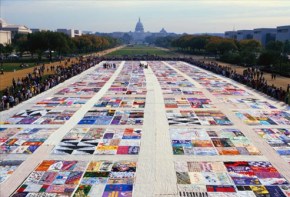
Art as Protest and Commemoration during the AIDS Crisis of the 1980s.

To mark LGBT History Month, Alice Van-Cliff explores the symbolism of art produced in response to the AIDS crisis in the 1980s.
AUTHOR: ALICE VAN-CLIFF

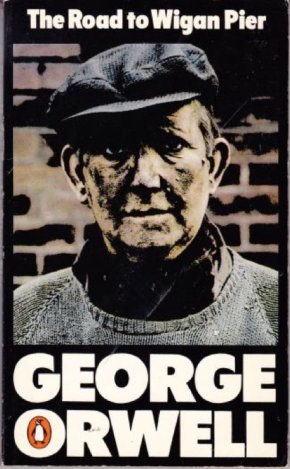
Orwell and “Northernness”: The Road to Wigan Pier

Our latest article investigates George Orwell’s ‘The Road to Wigan Pier’ and what it can tell historians about perceptions of the North in 1930s Britain.
AUTHOR: GEORGIA OWEN

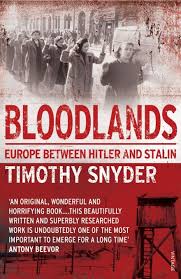
Bloodlands: Europe Between Hitler and Stalin, by Timothy Snyder.

A review of Timothy Snyder’s ‘Bloodlands’.
AUTHOR: MÅNS AHLSTEDT ÅBERG

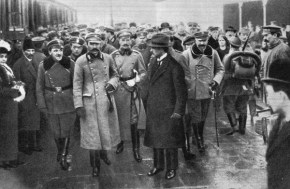
11th of November: The story of a re-emerging nation

On the 100th anniversary of Polish independence, Jan Sztanka-Toth explores the nation’s past, and how it is commemorated in contemporary society.
AUTHOR: JAN SZTANKA-TOTH

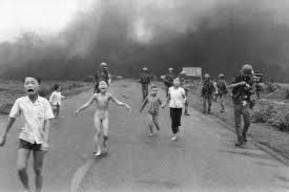
The Vietnam War: A Moment of Change in American Foreign Policy?

This article deals with the changing state of American foreign policy and Cold War politics during the Vietnam War.
AUTHOR: KATE MESHER

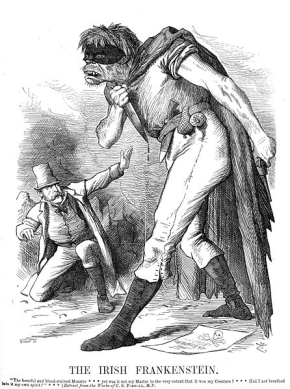
Anti-Irish Sentiment in Modern Britain

This article considers the development of anti-Irish sentiment in modern Britain, using a range of evidence to show the changes and continuities in the depiction of the Irish.
AUTHOR: ENYA HOLLAND

Chocolate and Feminism: Exploring the Changing Role of Women in Rowntree’s Chocolate and Cocoa Advertisements, 1930-1960

Our latest article considers the changing status of women in Rowntree’s chocolate and cocoa advertisements between 1930 and 1960.
AUTHOR: ELEANOR OLIVER

Reagan: a Critical Analysis

This article offers a critical exploration of the Ronald Reagan years by focusing on his economic, foreign and social policies.
AUTHOR: JAMES BASTIN

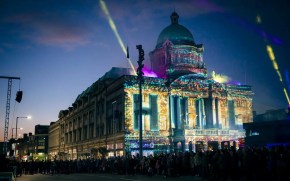
Hull: a History

Kingston-Upon-Hull’s history has been very varied, from establishing the largest travelling fair in Europe to it being one of the worst bombed British cities in the Second World War. This article considers some of Hull’s history, and how this history ties in with its future.
AUTHOR: VICTORIA BETTNEY

‘The Wolf of the Seas’: Thomas Cochrane, Britain’s Forgotten Hero

The British MP and admiral Thomas Cochrane has been somewhat overlooked in history. This article reconsiders his place in continental naval disputes, British history and the wider world.
AUTHOR: JATIN MAPARA

Did World War Two cause the end of the British Empire?

Analysing the causes for the decolonisation of the British Empire, this article finds that World War Two was a catalyst amongst a number of other coincidental factors.
AUTHOR: CLAIRE SWEETLAND

‘This is the beginning, not the end.’ Just why was the Good Friday Agreement signed?

A look back at the Good Friday Agreement of 1998. This article looks at which political players were involved and what their agendas were.
AUTHOR: VICTORIA BETTNEY

Margaret Thatcher and Gender

An exploration of Margaret Thatcher’s place in gender politics and feminism. Thatcher was unique as both a force for and against feminism.
AUTHOR: VICTORIA BETTNEY

Jinnah: Hero or Villian?

This piece questions historiographical opinions on Muhammad Ali Jinnah, founder of Pakistan, and re-assesses his role in one of the most turbulent periods in South Asian history.
AUTHOR: ANEESA YASIN

Stalin’s Cult of Personality: Its Origins and Progression

Stalin established a cult of personality that ensured a secure foundation for his autocratic regime, but how did he do it?
AUTHOR: JULIA KENNY

Mass Communication during the Great Leap Forward, 1958 – 1962

This article explores the various mediums the Chinese Communist Party used to communicate state visions and messages during the Great Leap Forward under Mao Zedong.
AUTHOR: AILA BICER