Why does Ukrainian nationalism look so different to the rest of Europe?
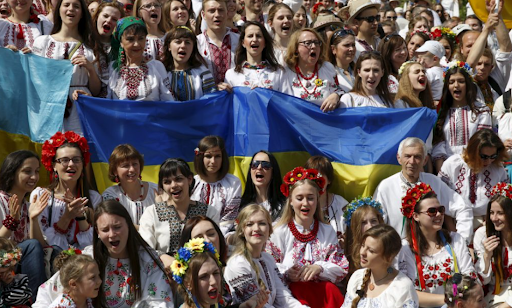
In 1992, Ukraine became a sovereign nation-state for the first time, following the collapse of the Soviet Union (USSR). After centuries of foreign occupation by the Polish-Lithuanian Commonwealth, Russians, and the Austro-Hungarian Empire, Ukrainian people finally had a territorial home with an autonomous political body. However, the historical absence of territorial sovereignty at a time where nation-building took hold across Western Europe left Ukraine with a unique national identity derived from shared history and resistance against cultural suppression. This article discusses a historical approach to Ukrainian nationalism, revealing the failures of traditional nationalist models to encapsulate the complexity and unique character of national identity in Ukraine. Ukrainian national identity can best be understood as a historical process, rooted in foreign occupation, cultural oppression, and regional diversity. Their unique historical trajectory has consequently created a national identity possessing both ethnic and civic elements, characteristics that historians such as Kohn have previously assumed to be mutually exclusive. Traditionally, scholars have tried to explain nationalism as a product of the industrial revolution (modernism) or as an organic phenomena that has existed throughout all of history (primordialism). At a time where Ukraine faces critical threats to its territorial sovereignty and cultural integrity, it is increasingly important to understand the essence of their national identity on their own terms.
Traditional Models of Nationalism
Ukraine serves as an excellent case study which illuminates a broader distinction between nationalism in Western Europe and nationalism in Eastern Europe. This distinction is in a large part due to a history of occupation and oppression, which has prevented the development and instrumentalisation of a national identity. There have been attempts to differentiate between types of nationalism, which has led to Hans Kohn’s classification of ‘civic’ and ‘ethnic’ nationalisms. A key distinction between the two in practice is that civic nationalism believes all those within one nation are equal citizens, whereas ethnic nationalism favours those with ethnic ties to that territory. These disparities led to the categorisation of nations east of Germany as following ethnic nationalism, whereas Western European countries exhibit civic nationalism. However, this presents an oversimplified picture of nationalism in Ukraine. Moreover, these theories have been criticised for their Eurocentric approach, and portraying ethnic nationalism as less correct or less modern.
So how can we begin to understand the emergence and character of nationalism in Ukraine?
Perhaps, at present, the most insightful approach comes from Plamenatz, who foregrounds the role of foreign occupation. He suggests that, for societies subjected to imperialism or political marginalisation, nationalism emerges as a reaction to cultural suppression in the form of cultural preservation and resistance. We can see this in Ukraine, as Galicia, located in Western Ukraine, served as a cultural hub of Ukrainian nationalism. Galicia saw the congregation of Ukrainian nationalists under Polish-Lithuanian and especially Austro-Hungarian rule, ensuring the survival of Ukrainian language and education through specific Ukrainian schools, thus forming a coherent group of Ukrainian intellectuals. Ukrainian nationalists even made the journey to Vienna to campaign for political representation and influence within the Austro-Hungarian Empire.
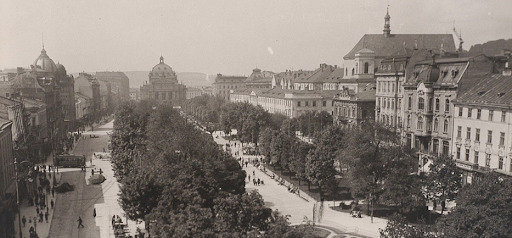
How historical memory has characterised Ukrainian national identity.
With so much of their history being shaped by foreign occupation, Ukrainian national identity has been underpinned by historical memory. The most important example of this is when Ukraine was part of the USSR. Although Eastern regions of Ukraine were taken into the USSR in 1922, the Western half was not absorbed until the end of World War II. Both sides were subject to Stalin’s ‘Sovietisation’ mission, which saw the undermining of the Ukrainian language, the banning of the Ukrainian catholic church, forced collectivisation, deportation, and the importation of Russians into the region to take over jobs. One of the most traumatic and infamous attempts of pacification was the Holodomor famine, which is largely accepted in academia to be an orchestrated genocide to suppress Ukrainian ethnicity. Memories and experiences of the Holodomor, which did not come to light until Ukraine gained independence in 1992, became integral to national identity, as a symbol of resistance and survival against foreign occupation. In today’s Ukraine, the Holodomor remains a key reference point for Ukrainian nationalism, with historical memory being employed to justify a desire by some Ukrainians to distance themselves from Russian influences, and thus stressing the importance of Ukrainian independence for national identity. Following Russia’s invasion of Ukraine in 2022, memory of Soviet oppression such as the Holodomor is vital to Ukrainians who are fighting to retain their independence.
Regional variations
An interesting element to Ukraine’s nationalism is the impact of historical divisions in Ukraine and how this has helped forge regional differences in national identity. Regions of today’s Ukraine have been historically divided since Mongol occupation in the thirteenth century, then being partitioned roughly into East and West zones, with Western regions being absorbed under Polish control and Eastern regions under Lithuanian control. This rough East-West divide remained until 1945, when Ukraine was reunited under Soviet control.
Naturally, this has led to significant differences in cultural, social, and linguistic development. Most notably, it has led to conflicting concepts of ethnicity and national identity which, in 1992, began to clash. Western regions of Ukraine such as Galicia have historically had more exposure to Western European influences, thanks to the Austro-Hungarian empire. Southern and Eastern Ukraine, however, have been more ‘Russified’ and exhibit a hybrid identity: a blend of Russian, Soviet, and Ukrainian cultures. For this reason, Ukrainians from different regions tend to have differing opinions on what it means to be part of the nation-state and Ukraine’s connections to Russia.
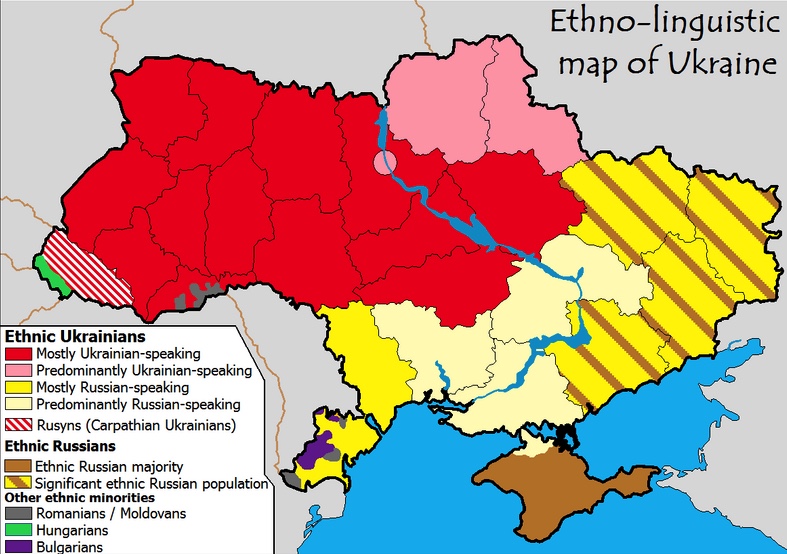
Nationalist movements and developments coming from Western Ukraine tend to take on an ‘ethnic’ form, to use Kohn’s categorisations, as this was the origins of the Organisation of Ukrainian Nationalists and Stepan Bandera, the infamous radical who campaigned for Ukrainian independence from Poland and the Soviet Union. This particular ethnic element of Ukrainian identity dominates ideas about nationalism, but this only tells half the story. This is largely because a disproportionate amount of cultural production and Ukrainian diasporic scholars come from the Western regions specifically; however, a critical approach to this imbalance reveals that another reason for the portrayal of Ukrainian national identity as fundamentally ethnic comes from Eurocentric biases. An exploration of Ukrainian identity and how it is expressed in Southern and Eastern regions underscores how nationalism in these parts of the country possess a more civic and hybrid conceptualisation of national identity. This is partially due to the historical hybrid nature of the regions: on Russia’s border, these parts of Ukraine have been historically close to Russia, with a strong Soviet legacy persisting in the region. Southern and Eastern Ukrainians often speak both Russian and Ukrainian on a daily basis, and some have considered themselves more ‘Soviet’ than specifically Ukrainian, or Russian.
Individuals in this region typically prefer national citizenship regardless of ethnic heritage, though Western Ukrainian concepts of nationalism stresses the importance of ancestral ties to the land. This ‘civic’ and hybrid nature of national identity expressed in South-Eastern Ukraine does not align with traditional understandings of nationalism, which implies homogeneity across the nation-state, nor with traditional scholarship, which portrays Eastern European nationalism as fundamentally ethnic in nature. The friction between expectation and reality could cause scholars to disproportionately emphasise characteristics of Ukrainian national identity that fit their frameworks.
Contemporary Case studies: the Orange Revolution and Euromaidan
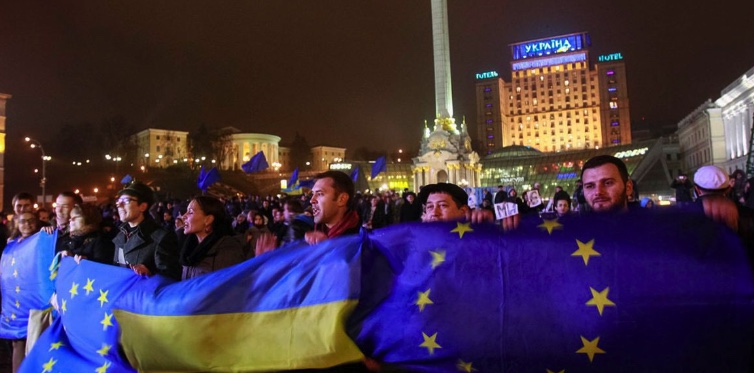
Most recently, the Orange Revolution and Euromaidan protests demonstrate civic elements of nationalism, where in both cases civilians protested for democracy, rule of law, and accountability: they believed these were central to Ukrainian identity and applied to all those living in Ukraine. In 2004, the Orange Revolution was sparked by electoral fraud and saw Ukrainians coming together to protect democracy and for free elections in their country. In the Euromaidan protests, Russian-speaking Ukrainians stood alongside Ukrainian-speaking westerners, demonstrating a shared commitment to self-determination and political freedom regardless of language or ethnicity. Both of these movements exhibit clear ‘civic’ characteristics, with Ukrainians coming together to campaign for free elections in 2004 and calls to join the European Union in 2013: an institution characterised by its promise to preserve civic values. Thus, these movements illustrate how Ukrainian nationalism is underpinned by civic participation and preservation of democracy, alongside historical memory, as Ukrainians have defined their national identity through political values rather than ethnicity. The commitment to these values is shared across the country regardless of ancestral heritage or language, challenging the rigid and perhaps outdated notion that Eastern European nationalism is fundamentally ethnic. However, these civic ideals are not disconnected from the historical memory that underpins national identity in Ukraine. The legacy of Russian oppression during the imperial and Soviet age, including the tragedy of the Holodomor, reinforces the importance of sovereignty and resistance to external suppression. This has become increasingly vital in recent years, with Russia once again threatening Ukrainian independence. Thus, civic nationalism and historical memory are intimately interlinked in contemporary Ukrainian identity.
Conclusion
It is evident that conceptualisations and expressions of nationalism and national identity vary across different regions of Ukraine. Unfortunately, this often means that traditional theories fail to capture the sheer complexity of Ukrainian national identity. Historians tend to disproportionately emphasise the experiences of Western Ukraine, which has the result of inadvertently supporting Eurocentric conceptualisations of nationalism, portraying national identity in Eastern European nations as fundamentally ethnic and therefore inferior to Western civic nationalism. This portrayal perpetuates the concept of Eastern Europe as a ‘demi-Orient’, a term describing how Eastern Europe has been viewed with a similar sense of inferiority and backwardness that Western nations have perceived Asian and African countries with – a key element of Edward Said´s ´Orientalism´. Understanding Ukrainian nationalism is vital in making sense of their attempts to retain sovereignty and national identity in the midst of Russian invasion. So how do we begin to approach the intricacies of Ukrainian nationalism?
Centuries of foreign occupation not only saw several attempts to suppress Ukrainian culture, but also prevented nationalism from developing in a similar way to Western nations: thus, Ukrainian national identity has been shaped by this historical memory of oppression and occupation. To some extent, this has had a unifying effect, with commemoration of events such as the Holodomor cultivating a sense of solidarity, collective resistance and a lesson for future generations. At the same time, Ukraine today has still failed to fully institutionalise a coherent national identity due to this history of occupation and division, resulting in regional divides and profound diversity in culture and political opinions. This has therefore prevented the homogenisation of culture under a nation-state which Western nations promote. The historical approach towards Ukrainian national identity that accounts for regional variations is at present the most appropriate way to encapsulate the complexity of nationalism in Ukraine, allowing us to understand the persistent oscillation between the European Union and Russia that Ukraine has exhibited since 1991 with nuance. From a perspective that views ethnic and civic nationalism as mutually exclusive, it is tempting to dismiss the pro-Russian standpoints of many Ukrainians – especially against the backdrop of the ongoing Russian invasion. But this view only further encourages division among Ukrainian national identity, as this Eurocentric perspective accepts elements of nationalism in Ukraine which they deem is ´right´ and ignores those elements which appear to be ´inferior´. If we want to begin to make sense of the tug-of-war between the EU and Russia from the Ukrainian point of view, it is imperative that we explore all aspects of national identity, not just the elements that suit the Western narrative.
Using a historical perspective to approach key elements of Ukrainian nationalism is important in revealing the stark differences between nation-building in Western Europe compared to Eastern Europe. In turn, it reveals the eurocentric nature of current theories of nationalism, demanding an approach that accounts for historical conditions and regional diversity. Such an approach would not only be helpful for understanding the expression of national identity in Ukraine but also other Eastern European countries, who, like Ukraine, possess long histories of occupation, division, and suppression at the hands of imperialism, Nazism, and the USSR, that traditional nationalist theories just simply cannot account for. Therefore, a historical approach to nationalism seems to be a promising path to understanding the past and current trajectory of not just Ukrainian nationhood, but also has potential to explain how nationalism expresses itself in Ukraine’s Eastern European neighbours.
Written by Madison Alford-Carnell
Bibliography
Images, in order of appearance.
Atlantic Council. “Kremlin Memory Wars and the Search for a Unifying Ukrainian National Identity.” Atlantic Council, 2020. Accessed March 4, 2025. https://www.atlanticcouncil.org/blogs/ukrainealert/kremlin-memory-wars-and-the-search-for-a-unifying-ukrainian-national-identity/.
Yale University Press. “Ukraine Between East and West: The Case of Galicia.” Yale Books Blog, August 12, 2015. Accessed March 4, 2025. https://yalebooks.yale.edu/2015/08/12/ukraine-between-east-and-west-the-case-of-galicia/.
Wikipedia. “Ethnolinguistic Map of Ukraine.” Wikipedia Commons, n.d. Accessed March 4, 2025. https://en.m.wikipedia.org/wiki/File:Ethnolingusitic_map_of_ukraine.png.

Deutsche Welle (DW). “Five Years after Euromaidan: Ukraine’s New Reformers Battle Corruption.” DW.com, November 20, 2018. Accessed March 4, 2025. https://www.dw.com/en/five-years-after-euromaidan-ukraines-new-reformers-battle-corruption/a-46384484.
Texts
Delanty, Gerard. Formations of European Modernity. Houndmills: Palgrave Macmillan, 2013.
Gellner, Ernest. Nations and Nationalism. Oxford: Blackwell, 1983.
Hrytsak, Yaroslav. “Rethinking Ukraine.” In What Does Ukraine Think?, edited by Andrew Wilson, 34-43. European Council on Foreign Relations, 2015. http://www.jstor.org/stable/resrep21660.7.
Jaskułowski, Krzysztof. “Western (Civic) ‘Versus’ Eastern (Ethnic) Nationalism: The Origins and Critique of the Dichotomy.” Polish Sociological Review 171 (2010): 289–303. http://www.jstor.org/stable/41275158.
Judt, Tony. “The Past Is Another Country: Myth and Memory in Post-war Europe.” Daedalus 121, no. 4 (1992): 83–118.
Kohn, Hans. “The Nature of Nationalism.” The American Political Science Review 33, no. 6 (1939): 1001-1021.
Laczo, Ferenc. “The Idea of Europe – and Its Consequences.” Lecture, YUFE Academy, 2020.
Magocsi, Paul Robert. The Roots of Ukrainian Nationalism: Galicia as Ukraine’s Piedmont. Toronto: University of Toronto Press, 2002.
Perks, Robert. “Ukraine’s Forbidden History: Memory and Nationalism.” Oral History 21, no. 1 (1993): 43–53. http://www.jstor.org/stable/40179315.
Plamenatz, John. “Two Types of Nationalism.” In Nationalism: The Nature and Evolution of an Idea, edited by Eugene Kamenka, 22–36. London: Edward Arnold, 1973. Said, Edward W. Orientalism. London: Penguin Books, 2003.
Pingback: Does leadership matter in the war against Ukraine?