Category Archive: Medieval History

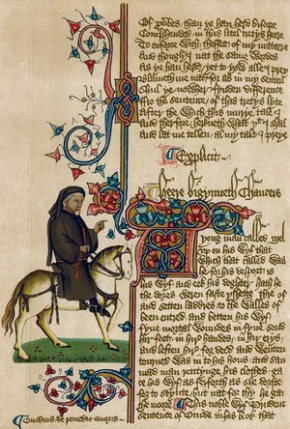
England Without English: The Rise of the Vernacular in Medieval England

From the late twelfth century, Middle English was the first language for most of the population within medieval England, but was hardly used in writing. However, this soon began to change. In this article, Emma Bassett details the reasons why uses of the English vernacular shifted, replacing Latin and French. By exploring the significance of the growing feeling of national identity at the time, this piece brilliantly explores the relationship between the rising vernacular and widespread access to knowledge.
AUTHOR EMMA BASSETT
Heart of the Forest: The Freeminers of the Royal Forest of Dean

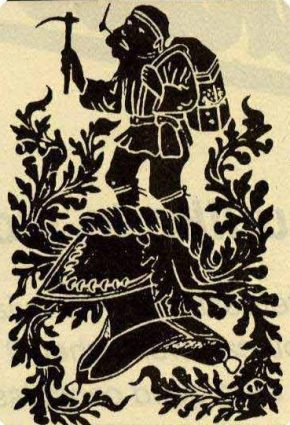
In 1960, Dennis Potter identified something unique about his homeland of the Forest of Dean that made it so special: the sense of a small green world hemmed in by two rivers and two nations. This article by Joseph Lowen-Grey, the winner of our Local and Community History Writing Competition, explores this further by detailing the Forest’s enchanting history. Anchoring the article around the forest’s Freeminers, this piece foregrounds the intricate legacy of the group that makes the Forest of Dean as remarkable as it stands today.
AUTHOR JOSEPH LOWEN-GREY

PART I – A Brief Observational History of The Universe: Prehistory to the Middle Ages
No matter where they lived, our ancient ancestors were fascinated by the wonders within the night sky. This article is the first within a series where Annon Ford explores the developmental history of humanity’s celestial observations. Part I delves into the astronomical beliefs of prehistory, antiquity, and the Middle Ages, beginning to trace the expansion of the universe, or, rather, the expanding knowledge of the human perspective.
AUTHOR ANNON FORD

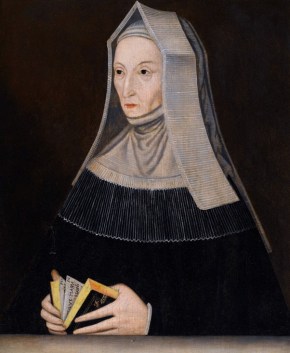
Lady Margaret Beaufort: Survivor, Kingmaker, Powerhouse

The Wars of the Roses are a complex period of English history, with much of the focus placed on particular men in the main roles. One of the primary players, however, must be given the mainstream attention she deserves: Lady Margaret Beaufort. Despite being essential to the Tudors’ rise to power and a pioneer for women’s autonomy, she is often left out of the histories. This is the topic discussed in the winning article of the Women’s History Competition 2025.
AUTHOR ANNON FORD

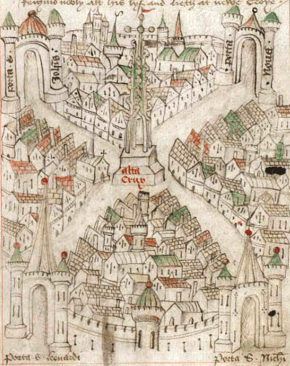
The King’s Contemptuous Subjects: The Bristol Revolt of 1312-1316

The fourteenth century in England was a time of great dysfunction and tumult, with events like the Black Death and the Peasants’ Revolt. However, before this came the Bristol Revolt, one of the most significant but understudied urban rebellions of medieval England. In this article, Daniel Cramphorn details the rebellion’s background, sources, and its key events, focusing on the changing levels of violence and order. The exploration of this four-year-long revolt highlights just why it should be widely seen as an extraordinary example of late medieval urban protest.
AUTHOR DANIEL CRAMPHORN

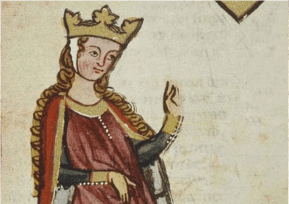
“By the Wrath of God.” Eleanor of Aquitaine: The Queen with Ambition

Eleanor of Aquitaine, having been Queen of both France and England, was a force to be reckoned with. Her contemporaries and historians alike are divided on whether she was extraordinary or troublesome. Even so, this article by Kirsten Pierrepont uses Eleanor as a demonstrative case study to delve deeply into influential and powerful women that dominated the medieval landscape. Her royal power is explored, as well as her status within historiography, to find whether she was truly a unique medieval Queen.
AUTHOR KIRSTEN PIERREPONT

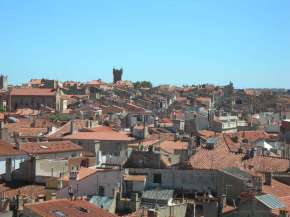
Perpignan or Perpinyà? Exploring the Multicultural History of the Southwest French City

Perpignan, located in the south of France, is the last large city closest to the Franco-Spanish border. Much like its history, the city stands today ensnared between French and Catalan culture. This article delves into the multiculturalism within Perpignan, especially looking at its Catalan, but also French, culture and identity. By exploring the city’s history, linguistics, heritage, and gastronomy, Cassia Wydra carefully traces and appreciates the bicultural identity of Perpignan, or Perpinyà.
AUTHOR CASSIA WYDRA

What Norse Mythology Teaches Us About Attitudes to Disability in Old Scandinavian Societies

It is difficult and complex to explore the histories of individuals with disabilities without applying our modern and present attitudes. However, Serafina Coupe sees this as making the study of attitudes towards disability within Norse mythology all the more intriguing. This article therefore deeply explores Norse mythological figures within Icelandic sagas to compare presentations of disability within medieval Scandinavian cultures.
AUTHOR SERAFINA COUPE

Was Britain Ever Really a White Country?

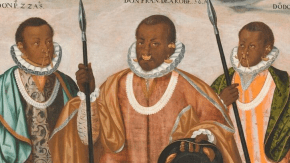
War, empire, and nationhood have typically defined British history, with whiteness serving as a constant underlying motif. As a result, Black history has often been written out of this mainstream narrative. In this illuminating article, Sinead Bedward explores the deep-rooted presence of Black people in Britain, from ancient times to the Tudor period. By foregrounding their success and influence, the article challenges the misconception that Black history is separate from British history, instead exemplifying how Black individuals have shaped Britain for centuries.
AUTHOR SINEAD BEDWARD

The Pig’s Peasant: Swine Herding in Anglo-Saxon England

Despite their small scale, the pigs of Anglo-Saxon England can reveal much about those who reared and wrote about them. In this article, Frederick Upton analyses key medieval documents and unique sources to highlight swine in this period as unique economic goods, but also as signifiers of culture and society. Through this exploration, the interesting and exclusive role of swineherds are also consequently illuminated.
AUTHOR FREDERICK UPTON

The End of the World as We Know It: Climate Change Throughout History

Climate change is an especially relevant issue, with the current global warming crisis needing urgent attention by world leaders. In this article, Leon Corneille-Cowell outlines the history of this phenomenon, reflecting its precedence over thousands of decades, and its devastating impacts upon a number of civilisations and groups throughout time.
AUTHOR: LEON CORNEILLE-COWELL

A Concealed History: The Great Pavement of Woodchester

After being lost for centuries, the Great Pavement was rediscovered in the village of Woodchester, Gloucestershire. Charlotte Mandefield details the story of the Roman mosaic, from the mythological origins of its visual imagery, to its modern-day problematic preservation.
AUTHOR CHARLOTTE MANDEFIELD

2024 in History

A look at historical anniversaries and commemorations that occurred in 2024 by the 2023-2024 York Historian Committee.

Power or Pressure? Exploring whether Cosmetic Practices throughout History have Granted its Users Agency

Throughout history, women have utilised cosmetic practises to beautify themselves, adorning their appearances. Despite the tendency of historiography, as well as societies, to view these actions as a product of patriarchal influence, reducing cosmetic practices as being dictated by the male gaze, this has not always been the case. In this very interesting article, it is explored that the idea that cosmetics have actually been consistently used by women in particular to grant themselves with agency.
AUTHOR: PIPER HEDGES

Depictions of Cleopatra from Shakespeare to Netflix

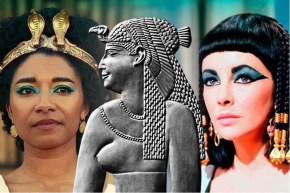
Cleopatra VII, the last queen of Egypt proper, has gripped popular media and its creative imagination throughout history. In this article, Leon Corneille-Cowell and Isabel Davies explore various depictions of the ruler, for example, using her medieval depictions and modern television portrayals.
AUTHOR LEON CORNEILLE-COWELL AND ISABEL DAVIES

Meaning within Miscellany: The Value of Late Medieval Commonplace Books

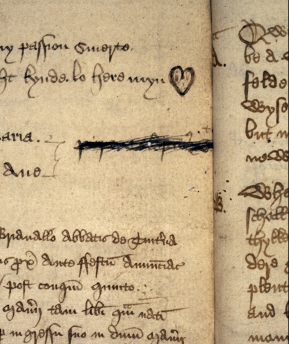
Although general book production and literary grew in late medieval England, Amelia Spanton focuses on the commonplace book as a point of great interest. This article reflects the significance of these texts in containing and portraying information about life and society in this period.
AUTHOR AMELIA SPANTON

Unveiling the Intriguing Evolution of Courtship: From Ancient Times to the Medieval Era

For Greco-Roman societies, marriage was not for love; rather, it was seen as a legal duty for all citizens. The idea of love and relationships began to change during the twelfth-century when the idea of ‘courtly love’ appeared for the first time in France with Queen Eleanor of Aquitaine’s ‘Court of Love’.
AUTHOR ELLIE-MAE BRITTON

The Emotion of Anna Komnene: Feeling in the Alexiad

The Alexiad was written to chronicle the life and times of the Emperor Alexios I Komnenos, imperial sovereign of the Eastern Roman Empire from 1081-1118, by Anna Komnene, his first daughter, as a homage to him and also a personal account of facts she witnessed herself. What it stands out from the narrative is her unique personality and the emotion which is embedded in it.

AUTHOR JAMIE MEADE

The Celtic Origins of Halloween

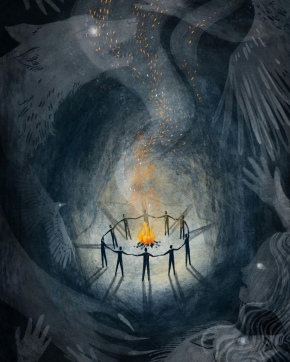
Runner up of our 2023 Halloween Writing Competition, Seren Davies-Jones outlines the Celtic influences behind the celebration of Halloween. By looking at the common human fascination with all things dark and mysterious, clear connections are drawn between Samhain and Halloween.
AUTHOR SEREN DAVIES-JONES

Medieval leprosy in Western Europe: contemporary understandings of the disease

When we think about the disease of leprosy, this conjures up in the popular imaginary images of groups of wandering and forcibly isolated people; nameless faces horribly scarred, targeted often with prejudice by society. But, what is (and was) leprosy in fact? And how did late medieval people understand it? Find out more about the medical and religious ideas from were these understandings drawn in this very interesting and thought-provoking article.
AUTHOR: SACHA BROZEL

“Shrine of a King, Cradle of the Law”: The Motto of a Town Steeped in History 

Located in the heart of Suffolk, Beoderic’s Worth (later known as Bury St Edmunds) has a rich, complex history ranging from saints to rebellions to legends.

AUTHOR EMMA LE POIDEVIN

Vespasiano Da Bisticci: “King of the world’s booksellers”

An exciting review of the life and relevant work of one of the most mysterious figures of the Italian Renaissance, Italian humanist and librarian Vespasiano Da Bisticci.
AUTHOR EMMA LE POIDEVIN

Anne Neville: More than just a Footnote in History

How we see The Wars of the Roses is overwhelmingly masculine. From militant Kings and backstabbing nobles to she-wolf Queens demonised for presenting attributes equal to men, its male influence is almost inescapable. This article will try to rectify, exploring the tumultuous life of Anne Neville: Princess of Wales, Duchess of Gloucester, and Queen of England.
AUTHOR KATIE WILKINSON

50–350 AD, 300 Years of Conquest, Romans and Political History in York, the Capital of the North

A glimpse into the old days of York, serving as a centre of Roman power.

AUTHOR: FIN BOSWORTH

Holy Men as a Window into Late Antique Religion

An exploration into how the holy man is they key to understanding late antique religion

AUTHOR: HOLLY PALMER

2020 in History

As we enter into the new year of 2021, we take a look at some of the historical anniversaries we saw in 2020, from literature to international legislation
AUTHOR: VARIOUS

An Introduction to the History of Emotions

A brief introduction to the History of Emotions

AUTHOR: LIAM GREENACRE

Histories and Stories: Narration in Historiography

An insightful examination of the multifaceted role of narration in history.
AUTHOR: VERA RATNIKOVA

Visiting Anglo-Saxon Kingdoms: Art, Word, War at The British Library

A review of the recent British Library exhibition: Anglo-Saxon Kingdoms: Art, Word, War. AUTHOR: LIAM GREENACRE

The Afterlife of St Edmund: Hagiography, Cults, Multimedia and Tourism

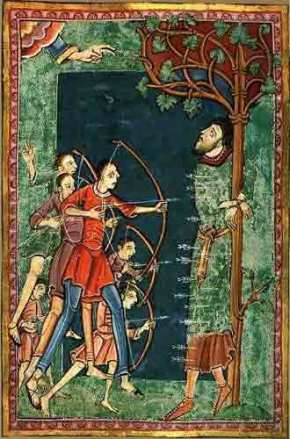
Very little is known about St Edmund’s life. Our latest article explores his legacy, and how his image has been shaped and changed to serve different purposes throughout history.
AUTHOR: LIAM GREENACRE

Ideology and Identity in sixth-century Ravenna

In our latest article, Liam Greenacre explores King Theodoric’s attempts to manage and shape Gothic and Roman identities in sixth-century Italy. AUTHOR: LIAM GREENACRE

Why Has Anglo Saxon York Been Forgotten?

Usually when we think of York, we think of the Vikings. Why has York’s Anglo Saxon history been overlooked?
AUTHOR: ELSA ROBINSON

Propaganda during the Hundred Years’ War

The use of propaganda was integral to the Hundred Years’ War. Was Christine de Pizan involved in its production?
AUTHOR: ELSA ROBINSON

‘The Norman Yoke’: Uses of the Past During the English Civil War

In this article, Liam Greenacre considers the use of the Norman Conquest of 1066 during the 17th century English Civil War, contrasting the perceived utopian age with the realities of living under foreign rule.
AUTHOR: LIAM GREENACRE

“Be the Heroine of your Life”: Five Inspirational Women From History Assessed

This article looks five women from across history from vastly different backgrounds. The background of each woman is assessed, and a judgement made on their lasting contributions to society.
AUTHOR: VICTORIA BETTNEY AND OTHERS

The Life of St. Gerald of Aurillac and Secular Sanctity in the Carolingian Empire

How did Gerald of Aurillac reconcile his roles as both a secular aristocrat and a cleric? This article explores that dilemma by analysing Odo of Cluny’s ‘Vita Geraldi’.
AUTHOR: LIAM GREENACRE

“High Ruler of the Storm-Tents”: The Christianization of Iceland

The Christianization of Iceland was not straightforward. It was distinctly Icelandic, as this article explores.
AUTHOR: VANIA BUSO

Banners and Blazons: Introducing Heraldry to History.

A whistle-stop tour of Heraldry offers us an improved, clarified understanding of its usage and shows some of the common misconceptions.
AUTHOR: AZAM CAESAR

Late Medieval England: A Man’s World?

Examining the lives of women in late medieval England, this article demonstrates that a patriarchal society didn’t necessarily mean that women were excluded from popular culture. AUTHOR: MARTHA BAILEY

I Need A Hero: Why Medieval England Needed Robin Hood

Robin Hood is no doubt a famous outlaw, with stories of him popular across the ages. This article explores the romantic imagery in ballads and tales about outlaws and their historical contexts, providing an insight into popular opinion and the fantasies of medieval townspeople,
AUTHOR: JESSICA HARRIS

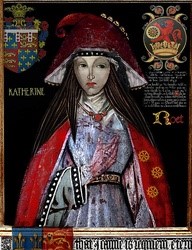
Katherine Swynford: Her Life and Legacy

Though she has a brief mention in history as the lover and eventual wife of John of Gaunt, who was Katherine Swynford? This piece studies her personal and political life, mapping out her rise in status.
AUTHOR: LAUREN MILLER

‘An heir and a spare’: a brief history of the royal succession in British history

The problem of succession to the British throne has consistently reared its head throughout history. This article explores different situations where trouble ensued regarding claims to the throne – with some more legitimate than others.
AUTHOR: LAURA FLANNIGAN

Eleanor of Aquitaine: Why we should not forget the medieval era when searching for our most powerful queens.

The intriguing life of Eleanor of Aquitaine, a queen to be remembered. AUTHOR: JESSICA HARRIS-EDWARDS

The Forgotten German History

A microcosmic study of the German town of Prichsenstadt followed by a deeper analysis into ways German history is studied today.

AUTHOR: CAITLIN BURGE

More than just a mob? The Justice System as a Motivating Factor behind the Peasants’ Revolt of 1381

An analysis of the role the justice system played in relation to the outbreak of the Peasants’ Revolt of 1381. AUTHOR: JESSICA HARRIS-EDWARDS

The Role of Monasteries in the Carolingian Empire

An exciting piece looking at the various ways monasteries were focal institutions for society in the 9th century. AUTHOR: CAITLIN COADY

The History of an Idea: The Paradoxes of Magna Carta in its 800th Year

This weekend we celebrate the 800th anniversary of the sealing of Magna Carta — but are we celebrating an idea rather than a reality? AUTHOR: LAURA FLANNIGAN