Medieval leprosy in Western Europe: contemporary understandings of the disease
Introduction
The disease of leprosy conjures up images of groups of wandering people; nameless faces horribly scarred. The word ‘leper’ has become synonymous with ‘outcast’ in modern parlance. Indeed, in popular imaginations, the lack of sympathy for its sufferers has meant that leprosy has become symbolic of the middle ages, a period often regarded as ruthless and unfeeling. But we cannot take lepers’ exclusion from society as a starting point. Instead, we must examine the evidence in order to answer the key questions. What is (and was) leprosy? How did medieval people understand it? And from what medical and religious ideas were these understandings drawn?
Modern experts now recognise 5 different types of leprosy, also called Hansen’s disease, which all present with different symptoms. In its most violent form, leprosy is characterised by loss of sensation and a decreased ability to feel pain, especially in the extremities, and damage skin, the throat and eyes. Today leprosy is a treatable disease, with fewer than 200,000 cases globally. This was not always the case. Various forms of leprosy have been recorded since antiquity. However, Hansen’s disease only properly struck Europe in the tenth century. It was ubiquitous until the fourteenth century and mostly died out by the seventeenth century. During leprosy’s heyday (c.1000-1300), estimates for the prevalence of the disease vary; however, even where it was endemic, it is likely that infection rates only just exceeded 1 in 100. Thus, the mark leprosy left on the medieval psyche was disproportionate to the actual impact it had on a population’s health.
Medical Understandings of leprosy
To begin, diagnosis of leprosy demonstrates the empirical approach of medieval physicians. Medical texts, such as Jordan of Turre’s ‘The Symptoms of Lepers’ (1330), describe a series of tests of urine, pulse, blood and hair that could identify leprosy. Such medical texts suggest an emphasis on diagnostic rigour. Indeed, excavations of a medieval leper-hospital cemetery in Denmark found that over three-quarters of skeletons showed signs of leprous change. Impressive as this is, especially considering that leprosy does not always affect the skeleton, it is likely that diagnostic accuracy varied with time and place. A similar excavation in Chichester found less than a quarter of skeletons presented evidence of leprosy. This suggests the number of falsely identified ‘lepers’ would have been significant. Regardless of the efficacy of diagnosis, medieval medicine was based on empirical, rational thought that did not necessitate the segregation or persecution of lepers.
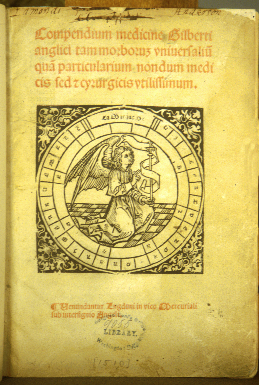
Importantly, in the middle ages, contagion was not a concept understood as it is today. Medically, the idea did not exist until the fourteenth century and certainly was not appreciated until well after the Black Death. Instead, medieval medical knowledge was dominated by the humoral theory of Galen, a second-century Greek physician. A healthy body required a balance of the four humours; black bile, yellow bile, phlegm and blood. Popular medical texts such as Gilbert the Englishman’s ‘Compendium Medicinae’ (c.1230) and Jordan of Turre’s ‘The Symptoms of Leprosy’ (c.1330) accounted for the plethora of leprosy’s symptoms with different humoral imbalances; each type of humoral imbalance corresponded to a different type of leprosy. However, this picture is complicated by other medical discourses. From the twelfth-century onwards, there was a growing appreciation of the role of external factors in health.
A ninth-century Arabic text popularly known in Western Europe as the ‘Isagoge’ of Johannitius (Hunayn Ibn Ishaq) provides a cogent summary. Hunayn distinguishes between three things affecting the health of the body: ‘res naturales’ (naturals) were the four humours; ‘res contra naturels’ (contra-naturals) were things that upset the healthy state; and lastly the ‘non-naturals’, the determinants of health. These were: air, diet, exercise, sleep, excretion and ‘the passions of the soul’ (what we would now call emotions). Medieval historian Touati convincingly argues for a ‘double aetiology’ of leprosy in which both external and internal factors could play a role in transmission. What would this look like? Some change to the ‘non-naturals’, such as an immoral act, or change in diet, could cause a corresponding change in the ‘res naturales’, creating a humoral imbalance that resulted in leprosy.
Thus armed with a knowledge of medieval medical knowledge, we can also better understand non-medical or ‘popular’ understandings of leprosy. It goes without saying that most people in the middle ages would not have been well-versed in Galenic humoral theory. However, this tripartite medical model we see in the Isagoge is not only a useful insight into professional medical views at the time; instead this model with ‘naturals’, ‘contra-naturals’ and ‘unnaturals’ reflects an incredibly intuitive understanding of health. In many ways, we still think of our own health this way: if you have caught a cold (a ‘contra-natural’,) this will upset your (‘natural’) bodily state into producing more phlegm, and you should get more rest (‘non-natural’). In a world typically understood in terms of balance, there is no reason that an average, illiterate peasant would not have split those things affecting their well-being into what was happening inside their body, those potentially harmful things outside their body and the daily routines that might affect their health.
Considering all three categories described in the Isagoge allows for some more subtle interpretation of contemporary understandings of the disease. For instance, some non-medical writings imply an appreciation of external causes of leprosy. Thirteenth-century French jurist Philippe De Beaumanoir wrote that ‘it would be a dangerous thing to mix lepers with healthy people, because the healthy might become lepers’. To modern eyes, this looks like a simple statement that leprosy was contagious. However, ideas of contagion did not exist before the Black Death in the same way that they do today. Instead, De Beaumanoir is most likely describing how some external factor (contra-natural) that made the lepers unwell might do the same to those that they mix with. Some historians have made the argument that although a medical explanation for contagion did not exist, this did not preclude a general understanding that being in close proximity to lepers would make you catch the disease. However, this seems to be a rather anachronistic argument based on nothing more than a projection of current knowledge into the past. Indeed, in his medical treatise ‘On the Properties of Things’ (c.1240), Bartholomaeus Anglicus, felt the need to define contagion: “contagious, that is to say, infective from one to another”. That even a physician felt the need to define the idea of contagion demonstrates that the idea could not have been popularly appreciated. Moreover, many leprosaria (leper-hospitals) record how their inhabitants would be expelled for poor behaviour, completely dispelling the notion that they were built to ‘quarantine’ lepers. Rather, we should exercise caution before assuming that ideas that are ‘intuitive’ today would have been so centuries ago; medieval people explained leprosy with contemporary understandings of disease.
Religious Attitudes towards leprosy
In the eleventh and twelfth centuries, the association between leprosy and sin in the popular imagination was particularly strong. In particular, lepers were seen as sexually promiscuous. This stereotype is visible in the story of Tristan and Isolde, a popular tale told in numerous formats since the twelfth century. Here, Isolde is sent to a leper colony as a punishment for adultery. Medieval miracle stories or miracula in the eleventh and twelfth centuries often depicted leprosy as God’s punishment for sin. The didactic purpose of these miracula, which emphasise divine power (often through the vehicle of a saint) is strengthened by the strong association between leprosy and sin more generally. For example, in the miracula of Saint Remaclus, the author complained of a monk ‘aggravated by pleasures of the flesh’, and when the monk showed no remorse, Remaclus gave him leprosy. These eleventh and twelfth century narratives of leprosy depict the disease as a divine punishment. Considering the pedagogical nature of these stories, we should perhaps be cautious before declaring leprosy a moral disease in the eyes of its sufferers and those around them. Nevertheless, the connection between leprosy and poor spiritual health was an important one.
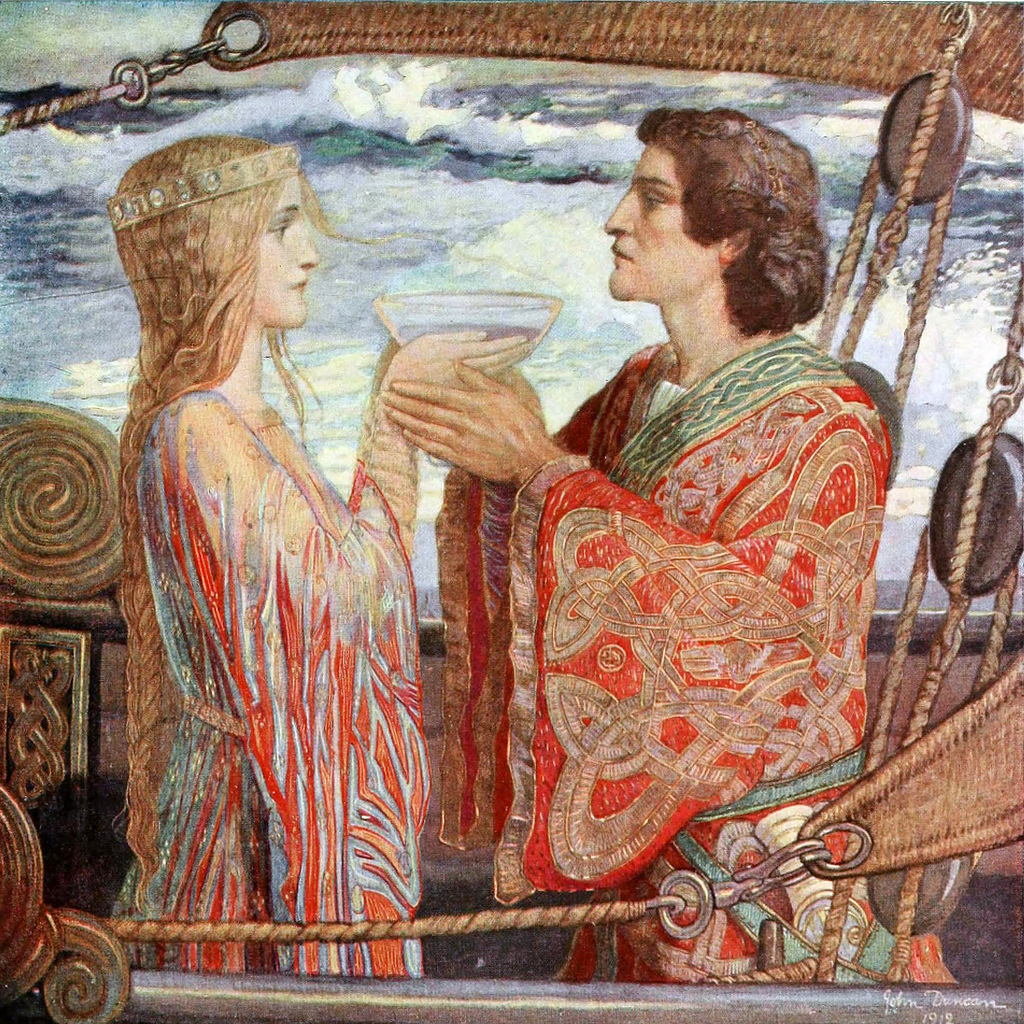
Tristan and Isolde by John Duncan (1912)
However, from the thirteenth century, lepers increasingly became objects of religious devotion. Popular christian belief held that one needed to suffer in either this life or the next. This is illustrated by the biblical story of Dives and Lazarus. In this parable from the Gospel of Luke, the rich man (Dives), and the poor (Lazrus) both die; Dives goes to hell and implores Abraham to send Lazarus from his side in Heaven to warn the rich man’s family from sharing his fate. This gave textual grounds to the idea that those that suffered in their earthly life would have more chance of achieving happiness in the next. This idea gained more traction with the formalisation of the doctrine of purgatory in the thirteenth century. That lepers in particular should be chosen by Christ is drawn from the Gospel of Matthew, when he cures a man afflicted with . Leprosy, popularly seen as a physical manifestation of depravity, was described as ‘purgatory on earth’; this opportunity to undergo purgation before death came to be seen as privilege. Therefore, despite their association with sin, lepers increasingly became objects of religious devotion. The unpleasant task of caring for lepers was seen as a ticket to salvation. Contemporary sources which describe care for lepers, particularly miracula, emphasise the abhorrence of their physical appearance and their smell. Thus the very abhorrence of any contact with lepers reinforced the spiritual reward for providing them with material or spiritual care.
An important corollary to the spiritual arguments for caring for Lepers was the strong association between Lepers and Christ. Their scars and disfigurements made them the literal embodiment of Christ’s suffering for humanity’s sins. This phenomenon, leprous quasi christus, led to many accounts of devoted care for lepers. Most famously, a story tells of Queen Matilda washing and kissing the feet of lepers in her chambers. When asked what would happen if the king found her to be kissing leper’s feet, she said, ‘the feet of the eternal king are to be preferred over the lips of a king who was going to die’. This demonstrates a genuine belief that in anointing the leper’s feet, she was physically caring for Christ. A thirteenth-century sermon provides yet another example of leprous quasi christus. It describes how a noblewoman, whilst her uncharitable husband was hunting, invited a leper into her house and allowed him into her husband’s bedchamber to rest. Upon her husband’s return, the leper had vanished, and her account of events persuaded him to become pious and charitable. His miraculous disappearance implies that in caring for the leper, the noblewoman actually encountered Christ. Thus the preacher connects caring for lepers with heavenly reward. Should we then view all medieval care and provision for lepers as selfish efforts to achieve salvation? Not necessarily. Actions can have multiple motivations. Medieval concern for salvation did not preclude genuine compassion. Nevertheless, the treatment of the leper’s body as a site of piety meant leprosy occupied a prominent place in medieval thinking.
Conclusion
Attitudes toward leprosy were dictated by contemporary medical and religious thinking. This might lead the modern reader to perceive a dichotomy between professional medical attitudes governed by empirical and rational thought, and popular feeling governed by faith. The aim of this article has been to complicate this reading. The line between professional and popular medical knowledge was extremely porous; both were governed by medieval principles of balance and harmony. Moreover, the middle ages did not distinguish between scientific knowledge and faith. This is illustrated by the pre-eminence of medieval care for the soul over physical care when treating any illness. People in the middle ages drew on whatever knowledge available to them to explain their experiences. The result was a complex, evolving set of competing discourses surrounding leprosy, any number of which could be deployed in a given situation.
Written by Sacha Brozel
Bibliography
Brenner, Elma. “Between Palliative Care and Curing the Soul: Medical and Religious Responses to Leprosy in France and England, C. 1100–c. 1500.” Medicine, Religion and Gender in Medieval Culture 11 (2015): 221–35.
Davis, Adam J. “Hospitals, Charity, and the Culture of Compassion in the Twelfth and Thirteenth Centuries.” In Approaches to Poverty in Medieval Europe: Complexities, Contradictions, Transformations, C. 1100-1500, edited by Sharon Farmer, 23–45. Turnhout Belgium : Brepols 2015.
De Beaumanoir, Philippe. The Coutumes de Beauvaisis of Philippe de Beaumanoir. Translated by F.R.P. Akehurst. Philadelphia: University of Pennsylvania Press, 1992.
Demaitre, L. “The Description and Diagnosis of Leprosy by Fourteenth-Century Physicians.” Bulletin of the History of Medicine 59, no. 3 (Autumn 1985): 327–44.
Farmer, Sharon. “The Leper in the Master Bedroom: Thinking through a Thirteenth-Century exemplum.” In Framing the family : narrative and representation in the medieval and early modern periods, edited by Rosalynn Voaden and Diane Wolfthal, 79-100. Temple, Arizona: Arizona Center for Medieval and Renaissance Studies, 2005.
Gilchrist, Roberta. Contemplation and Action: The Other Monasticism. Leicester: Leicester University Press, 1995.
Grant, Edward. A Source Book in Medieval Science. Harvard University Press, 1974.
Horden, Peregrine. “A Non-Natural Environment: Medicine without Doctors and the Medieval European Hospital.” In The Medieval Hospital and Medical Practice, 133–45. Routledge, 2017.
Measly Middle Ages Source Booklet (2023).
Moore, Robert I. The Formation of a Persecuting Society: Authority and Deviance in Western Europe 950-1250. New Jersey: John Wiley & Sons, 2008.
Rawcliffe, Carole. “Learning to Love the Leper: Aspects of Institutional Charity in Anglo Norman England.” Anglo Norman Studies xxiii (2001): 20.
Rawcliffe,Carole. Leprosy in medieval England. Woodbridge: Boydell Press, 2006.
Richards, Peter. The Medieval Leper and His Northern Heirs. Boydell & Brewer, 2000.
Starkey, Kathryn, and Mae Velloso-Lyons. “Teaching the Legend of Tristan and Isolde.” Arthuriana 32, no. 4 (2022): 103–20.
Stemmle, J. “From Cure to Care: Indignation, Assistance, and Leprosy in the High Middle Ages.” In Experiences of Charity 1250-1650, edited by Anne M. Scott, 43-61. Farnham: Ashgate, 2015.
Touati, François-Olivier. “Contagion and Leprosy: Myth, Ideas and Evolution in Medieval Minds and Societies.” In Contagion: Perspectives from Pre-Modern Societies, edited by Lawrence I. Conrad and Dominik Wujastyk. London: Routledge, 2000.