Tag Archive: university of york

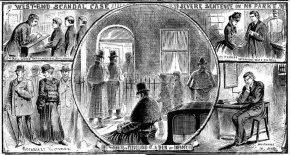
Secrets, Lies, and Scandal: The Cleveland Street Case

One of Victorian England’s most shocking scandals was the Cleveland Street affair, impacting perceptions surrounding the LGBT community. This article by James Lamont, written for the LGBT+ History Writing Competition, details the story of the scandal to reveal what made it such an infamous case. By foregrounding the key political individuals involved within the case, this piece highlights just why attitudes towards homosexuality were severely impacted as a result of the affair’s notoriety.
AUTHOR JAMES LAMONT
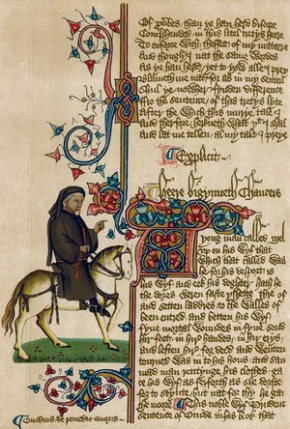
England Without English: The Rise of the Vernacular in Medieval England

From the late twelfth century, Middle English was the first language for most of the population within medieval England, but was hardly used in writing. However, this soon began to change. In this article, Emma Bassett details the reasons why uses of the English vernacular shifted, replacing Latin and French. By exploring the significance of the growing feeling of national identity at the time, this piece brilliantly explores the relationship between the rising vernacular and widespread access to knowledge.
AUTHOR EMMA BASSETT

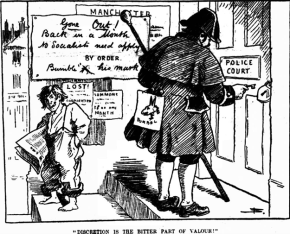
How Effective was the Forced Transportation of Criminals to Australia as a Legal Punishment?

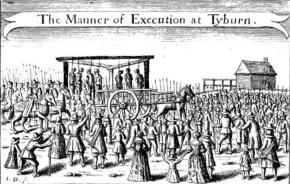
In 1788, the First Fleet arrived in what would later be known as Sydney Harbour, marking the beginning of Australia’s history as a penal colony. Britain’s gaols were flooding with prisoners, causing a crisis with soaring rates of crime. This article delves into the forms of punishment within this period of Georgian British history, comparing these to the transportation of prisoners to Australia. Benjamin Fradley’s insightful piece uses this comparison to evaluate whether transportation was truly successful as a form of punishment, or whether it was simply a necessary alternative to other, more barbaric practices.
AUTHOR BENJAMIN FRADLEY

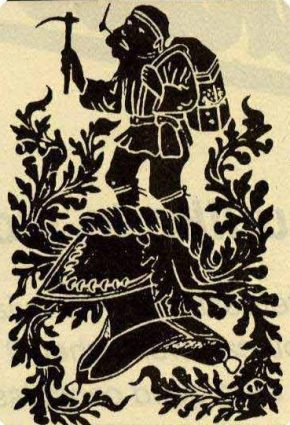
Heart of the Forest: The Freeminers of the Royal Forest of Dean

In 1960, Dennis Potter identified something unique about his homeland of the Forest of Dean that made it so special: the sense of a small green world hemmed in by two rivers and two nations. This article by Joseph Lowen-Grey, the winner of our Local and Community History Writing Competition, explores this further by detailing the Forest’s enchanting history. Anchoring the article around the forest’s Freeminers, this piece foregrounds the intricate legacy of the group that makes the Forest of Dean as remarkable as it stands today.
AUTHOR JOSEPH LOWEN-GREY

PART I – A Brief Observational History of The Universe: Prehistory to the Middle Ages

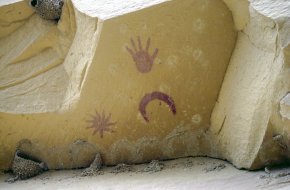
No matter where they lived, our ancient ancestors were fascinated by the wonders within the night sky. This article is the first within a series where Annon Ford explores the developmental history of humanity’s celestial observations. Part I delves into the astronomical beliefs of prehistory, antiquity, and the Middle Ages, beginning to trace the expansion of the universe, or, rather, the expanding knowledge of the human perspective.
AUTHOR ANNON FORD

Jerusalem: Pride Amidst Two Layers of Tension and Violence

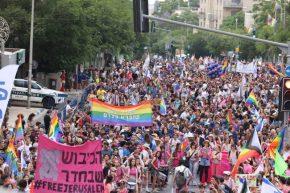
Since 2002, the Jerusalem Pride Parade has taken place annually while transforming throughout the years, marking the progress of gay rights in Israel. This article explores some of the contexts in which this progress has occurred, looking also at the intertwining of these tensions. As Alon Isac describes the historical developments and the political background of the pride parade, questions not just answered, but also raised.
AUTHOR ALON ISAC

The Victorian “Poison Panic”: Was Poison Really the Problem?

The Victorian Era was no stranger to poison. Its presence was everywhere, from arsenic in cosmetics, to cyanide in the wallpaper, causing a ‘poison panic’ to emerge in popular media. The panic especially surrounded women across this period, with some put on trial for supposedly poisoning their husbands. This insightful article by Finlay Ratcliffe for the 2024/2025 Women’s History Writing Competition explores the case studies of twenty-two women to highlight whether this public fear stemmed from the threat of the poison itself, or rather the threat of female power.
AUTHOR FINLAY RATCLIFFE

Queering Morris

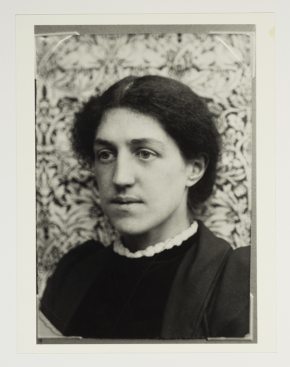
May Morris, daughter of the famous textile designer William Morris, is normally overshadowed by her famous father, both as an artistic and historic figure in her own right. However, with increased feminist revisions of the Arts and Crafts movement, May Morris’ status has been established as a pioneer of Arts and Crafts embroidery; a prolific contributor to the success of Morris and Co; and founder of the Women’s Guild of Arts. Furthermore, the rediscovery of Morris’ interwar diaries draws attention to the later years of her life and to the importance of her relationship with Mary Lobb, which sparked intense debate over the exact nature of their relationship. This rich and interesting history of the pair deserves a greater level of consideration within current scholarship, from both a feminist and queer perspective and is the topic of the winner of the LGBTQ+ article competition 2025.

AUTHOR: ROBIN HENDERSON

The King’s Contemptuous Subjects: The Bristol Revolt of 1312-1316

The fourteenth century in England was a time of great dysfunction and tumult, with events like the Black Death and the Peasants’ Revolt. However, before this came the Bristol Revolt, one of the most significant but understudied urban rebellions of medieval England. In this article, Daniel Cramphorn details the rebellion’s background, sources, and its key events, focusing on the changing levels of violence and order. The exploration of this four-year-long revolt highlights just why it should be widely seen as an extraordinary example of late medieval urban protest.
AUTHOR DANIEL CRAMPHORN

“By the Wrath of God.” Eleanor of Aquitaine: The Queen with Ambition

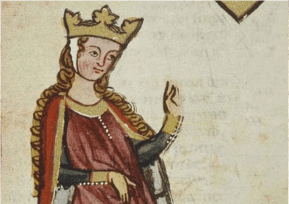
Eleanor of Aquitaine, having been Queen of both France and England, was a force to be reckoned with. Her contemporaries and historians alike are divided on whether she was extraordinary or troublesome. Even so, this article by Kirsten Pierrepont uses Eleanor as a demonstrative case study to delve deeply into influential and powerful women that dominated the medieval landscape. Her royal power is explored, as well as her status within historiography, to find whether she was truly a unique medieval Queen.
AUTHOR KIRSTEN PIERREPONT

The Collapse of Minoan Civilisation – A Geological, Anthropological, or Meteorological Phenomenon?

Over 3000 years ago, the Minoan Civilisation vanished, a historical event that has bewildered academics for over a century. This article explores the reasons for this unexpected collapse, attempting to highlight the main factor. By exploring its geological, anthropological, and meteorological aspects, Amy Hutchison begins to untangles the mystery of this unanticipated loss of an entire culture.
AUTHOR AMY HUTCHISON

Illegitimacy and Infanticide in Early Modern England

The crime of infanticide was something closely associated with illegitimate births throughout Early Modern England and was a cause for public anxiety. However, this article explores how many women actually resorted to infanticide as a result of illegitimate pregnancies. Olivia Boyle compares the presence of infanticide in popular culture to real cases to see how far it truly was the fate for infants at the time, or if there was a more prevalent threat at play for them.
AUTHOR OLIVIA BOYLE

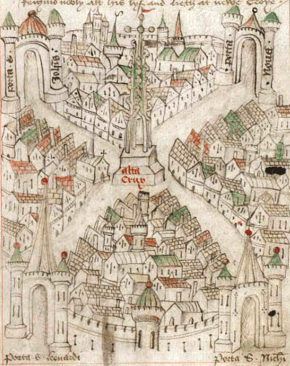
Perpignan or Perpinyà? Exploring the Multicultural History of the Southwest French City

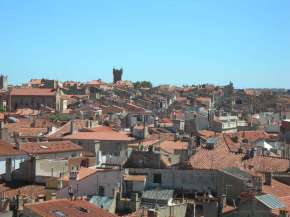
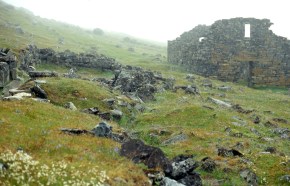
Perpignan, located in the south of France, is the last large city closest to the Franco-Spanish border. Much like its history, the city stands today ensnared between French and Catalan culture. This article delves into the multiculturalism within Perpignan, especially looking at its Catalan, but also French, culture and identity. By exploring the city’s history, linguistics, heritage, and gastronomy, Cassia Wydra carefully traces and appreciates the bicultural identity of Perpignan, or Perpinyà.
AUTHOR CASSIA WYDRA

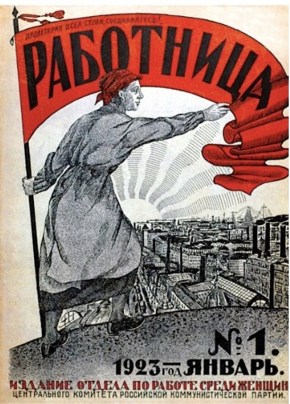
Whatever Happened to Leon Trotsky? An Overview of Trotsky’s Last Exile, 1929-1940

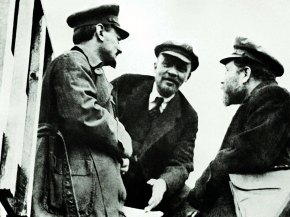
At the end of the 1920s, Leon Trotsky found himself in a precarious but familiar position. Although he was seen by some as Lenin’s natural successor, Trotsky was washed away by the power struggle caused by Stalin’s political manoeuvres. In this article, Iris Pinder explores Trotsky’s exile, tracing the final decade of his life. Although this period was overcast by doom and death, Trotsky’s ultimate ability to adapt as a pariah is reflected, finding his way albeit isolated from the communist dictatorship he helped create and defend.
AUTHOR IRIS PINDER

Wentworth Woodhouse: Mea Gloria Fides

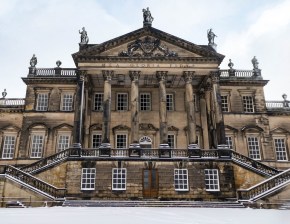
Wentworth Woodhouse has undergone much expansion for decades, in terms of its architecture, owners, and history. In this article, Finlay Ratcliffe seeks to explore the history of the site, tracing it chronologically, using its fifteen owners as key historical checkpoints. By also foregrounding its rigid resistance to modern demolition attempts, as well as its current preservation plans, the reasons for why Wentworth Woodhouse is considered a great survivor are illuminated.
AUTHOR FINLAY RATCLIFFE

What Norse Mythology Teaches Us About Attitudes to Disability in Old Scandinavian Societies

It is difficult and complex to explore the histories of individuals with disabilities without applying our modern and present attitudes. However, Serafina Coupe sees this as making the study of attitudes towards disability within Norse mythology all the more intriguing. This article therefore deeply explores Norse mythological figures within Icelandic sagas to compare presentations of disability within medieval Scandinavian cultures.
AUTHOR SERAFINA COUPE

Was Britain Ever Really a White Country?

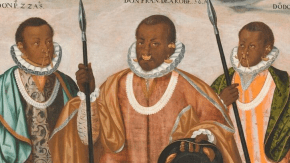
War, empire, and nationhood have typically defined British history, with whiteness serving as a constant underlying motif. As a result, Black history has often been written out of this mainstream narrative. In this illuminating article, Sinead Bedward explores the deep-rooted presence of Black people in Britain, from ancient times to the Tudor period. By foregrounding their success and influence, the article challenges the misconception that Black history is separate from British history, instead exemplifying how Black individuals have shaped Britain for centuries.
AUTHOR SINEAD BEDWARD

‘Stasiland’: Anna Funder’s Oral History Masterpiece

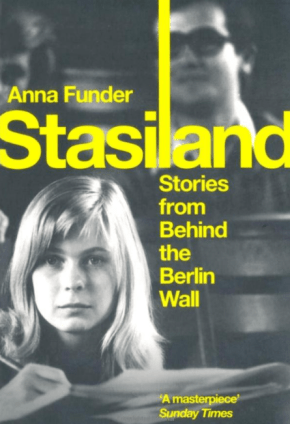
Today, Germany continues to grapple with the difficult legacy of its ‘second dictatorship’ behind the Berlin Wall. In Anna Funder’s captivating work, ‘Stasiland,’ a detailed oral history of this life is combined with Funder’s own observations of post-reunification Germany. In this article, Lizzy Stott explores what makes Funder’s novel both a narrative and investigative success in reflecting how the East German past is by no means over.
AUTHOR LIZZY STOTT

‘Blueshirts’: The Neglected Story of Irish Rightism in the Fledgling Free State

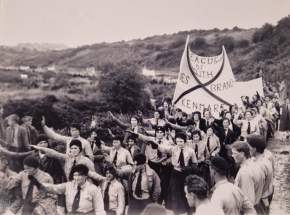
Irish political history in the early twentieth century is often portrayed as popular democratic, radically republican, and perhaps even left-wing Marxist in character. However, this obscures a key political story of the 1920s and 1930s, when Ireland too experienced a somewhat right-wing, nationalist, and potentially fascist movement. Henry Anderson delves into this underrepresented moment in modern Irish history by giving background to the rise and fall of the Blueshirts before assessing whether this movement was indeed fascist.
AUTHOR HENRY ANDERSON

The Stories Behind Brit Bennett’s ‘The Vanishing Half’: Racial Passing in Twentieth Century USA

Brit Bennett’s novel ‘The Vanishing Half’ depicts the lives of two sisters, Stella and Desiree, within twentieth century USA. The trajectories that the twins take within the book reflect the complexities of racial identity and understanding at the time, especially surrounding racial passing. In this article, Eloise Gibson illuminates the histories of individuals such as Walter White to see the novel’s ability to represent the real people who experienced racial passing first-hand.
AUTHOR ELOISE GIBSON

The Pig’s Peasant: Swine Herding in Anglo-Saxon England

Despite their small scale, the pigs of Anglo-Saxon England can reveal much about those who reared and wrote about them. In this article, Frederick Upton analyses key medieval documents and unique sources to highlight swine in this period as unique economic goods, but also as signifiers of culture and society. Through this exploration, the interesting and exclusive role of swineherds are also consequently illuminated.
AUTHOR FREDERICK UPTON

The End of the World as We Know It: Climate Change Throughout History

Climate change is an especially relevant issue, with the current global warming crisis needing urgent attention by world leaders. In this article, Leon Corneille-Cowell outlines the history of this phenomenon, reflecting its precedence over thousands of decades, and its devastating impacts upon a number of civilisations and groups throughout time.
AUTHOR: LEON CORNEILLE-COWELL

Titanic’s Only Black Passenger: The Story of Joseph Laroche

Although the Titanic is arguably the most famous ship in history, many of the horrific memories of its more ordinary passengers have been forgotten. This article spotlights the life of Joseph Laroche and his family, passengers aboard the Titanic, devastated by the tragedy. Helena Hunter successfully widens the narrative of the Titanic disaster by shedding light on the story of the only Black man amongst the ship’s passengers.
AUTHOR: HELENA HUNTER

Race on the Rails: How Resistance to Racial Discrimination at London Euston Strengthened the UK’s Anti-Discrimination Laws

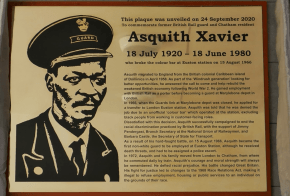
When one considers the history of racial discrimination, the stories of ordinary people who fought for equality are often overlooked. This compelling article spotlights Asquith Xavier, a Black West Indian railwayman, who challenged his rejection from a position at London Euston Station. By connecting Xavier to broader developments within the British civil rights movement, Oscar Hilder argues for Xavier’s influence on both racial legislation and his personal communities.
AUTHOR OSCAR HILDER

Josephine Baker: Fame, France and Fighting for a Cause

To shine a light on under-appreciated Black histories, Finlay Ratcliffe focuses on the life of Josephine Baker. Outlining her various roles as an entertainer, Second World War spy and civil rights advocate, as well as the commemorations that occurred after her untimely burial, this article recognises her significance both in life and death.
AUTHOR FINLAY RATCLIFFE

From Total Obscurity to Infamous Dictator: Why Stalin Was More Clever and Cunning Than You Think

In January 1942, Stalin had become firmly established as the leader of the Soviet Union. In this article, Alex Herzmansky explores his rise to power and leadership, focusing particularly on his calculated political tactics and strategic personality to ultimately reflect his clever and cunning nature.
AUTHOR ALEX HERZMANSKY

A Concealed History: The Great Pavement of Woodchester

After being lost for centuries, the Great Pavement was rediscovered in the village of Woodchester, Gloucestershire. Charlotte Mandefield details the story of the Roman mosaic, from the mythological origins of its visual imagery, to its modern-day problematic preservation.
AUTHOR CHARLOTTE MANDEFIELD

Cultural Exchange: Ptolemaic Egypt

Egypt’s pharaonic era has consistently been a titan of historical interest. In this article, Isaiah Reitan highlights the colonial aspects of ancient Egypt, namely how its Macedonian Greek rulers brought about widespread cultural exchange across a variety of political avenues and religious spheres.
AUTHOR ISAIAH REITAN

“Upon Which Order The Child Was Brought To Him Which He Refused To Take”: The Fathers and Grandparents of Illegitimate Children in Early Modern England

In early modern English society, illegitimate children were a recognisable feature, especially in parishes. Olivia Boyle explores the familial dynamics surrounding these children, especially highlighting the unique involvement of fathers and grandparents in the lives of their ‘bastard’ descendants.
AUTHOR OLIVIA BOYLE

Angry, Fat and Cross – the Unmarried Woman in Early Modern England

Unmarried women in the Post-Mediaeval society occupied a unique position, since it meant to be partially socially and financially independent, but also to waiver certain social rights and privileges that were ordinarily only available to married women. The stereotype of the widow (elderly, destitute, lonely and haggard); superstitions around them and later, the satire found in both print and the wider media as well how historical archaeology can help unveil this preconceptions are explored in this excellent article.

AUTHOR: TOMO OLLIVIER

Depictions of Cleopatra from Shakespeare to Netflix

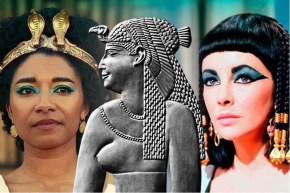
Cleopatra VII, the last queen of Egypt proper, has gripped popular media and its creative imagination throughout history. In this article, Leon Corneille-Cowell and Isabel Davies explore various depictions of the ruler, for example, using her medieval depictions and modern television portrayals.
AUTHOR LEON CORNEILLE-COWELL AND ISABEL DAVIES

Meaning within Miscellany: The Value of Late Medieval Commonplace Books

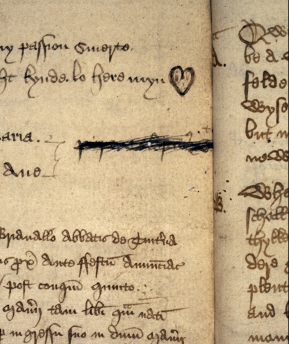
Although general book production and literary grew in late medieval England, Amelia Spanton focuses on the commonplace book as a point of great interest. This article reflects the significance of these texts in containing and portraying information about life and society in this period.
AUTHOR AMELIA SPANTON

The Ming Dynasty, Porcelain, Builders and Travellers

The Ming dynasty, known widely as the ‘Great Ming,’ oversaw the building of some of China’s most iconic monuments and contained many other unique features. In this article, Leon Corneille-Cowell explores these, as well as key individuals within the dynasty, such as the Hongwu Emperor and Zhang He.
AUTHOR LEON CORNEILLE-COWELL

A Western Phenomenon?: A Study of Witchcraft in Colonial Africa

The history of witchcraft has typically been examined from a Western perspective. In this article, Libby Foxwell and Eloise Gibson explore perceptions of witchcraft in colonial Africa to uncover and overcome historical misconceptions about the phenomenon.
AUTHOR LIBBY FOXWELL AND ELOISE GIBSON

Under the Knife: The Rise of Modern Plastic Surgery

Discussing the intricate history of plastic surgery, Lizzy Stott discusses its ideological and racialised aspects. Desiring to debunk the popular myth that plastic surgery originated after the First World War, this article makes for an illuminating read on the development and implications of the practise for a variety of groups.
AUTHOR LIZZY STOTT

The Qing: China’s Last Imperial Dynasty

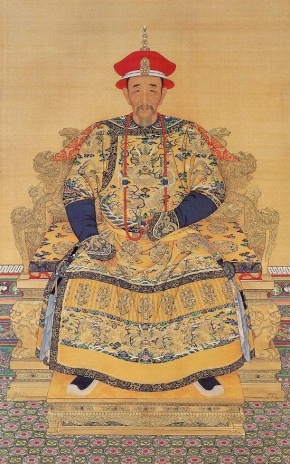
Retelling the history of the Qing dynasty, Leon Corneille-Cowell discusses the range of factors that led to its eventual decline. This article gives an overview by detailing events such as the Taiping Rebellion while also looking at typical Qing fashion.
AUTHOR LEON CORNEILLE-COWELL

The Mythology of Punkie Night

Kate Maybury discusses the mythology and local history surrounding Punkie Night. Inspired by her own links to the tradition, this article sheds a new light on the origins and stories behind Punkie Night and Halloween.
AUTHOR KATE MAYBURY

To an Icy Grave: The Lost Franklin Expedition, its Legacy, and the Horror of an Arctic Death

The winner of our Halloween Writing Competition, Jack Rooney, details the tragic story of a crew tormented by disease, cannibalism, and the cold. Inspired by Dan Simmons’ novel ‘The Terror’, this article reveals the harsh historical reality of humanity’s own battle with their world.
AUTHOR JACK ROONEY

The Three Wise Men: Kennedy, Johnson, Nixon, and the Legacies of Assassination

Delving into the interlinking presidencies of Kennedy, Johnson and Nixon, Sam Chapman presents a fascinating element of 1960s and 1970s American political history. Focusing on how Johnson and Nixon differently revelled in becoming Kennedy’s successor, this article uniquely looks at how this ultimately contributed to both of their downfalls.
AUTHOR SAM CHAPMAN

Chocolate and Feminism: Exploring the Changing Role of Women in Rowntree’s Chocolate and Cocoa Advertisements, 1930-1960

Our latest article considers the changing status of women in Rowntree’s chocolate and cocoa advertisements between 1930 and 1960.
AUTHOR: ELEANOR OLIVER

“Be the Heroine of your Life”: Five Inspirational Women From History Assessed

This article looks five women from across history from vastly different backgrounds. The background of each woman is assessed, and a judgement made on their lasting contributions to society.
AUTHOR: VICTORIA BETTNEY AND OTHERS

“And Our Enemies We’ll Scatter”: The Glorious Revolution and the Battle of the Boyne Considered

The Glorious Revolution marked one of the greatest periods of political change within early modern Britain and Ireland. This article assesses the decisive Battle of the Boyne in securing the new dynasty, as well as its lasting historical significance.
AUTHOR: VICTORIA BETTNEY

Martin McGuinness: A turbulent life

From Chief of Staff of the IRA to shaking hands with the Queen of England, Martin McGuinness embodies the changes within Northern Irish Republicanism in the late twentieth century. This article looks at key periods in McGuinness’s life, 1950-2017.
AUTHOR: VICTORIA BETTNEY

The European Witch Hunts: A Mass Murder of Women?

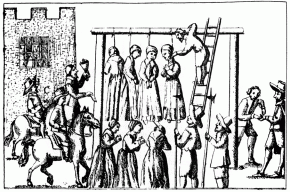
The witch trials have been described as a ‘mass murder of women’. This article considers why the gender element to witch hunts has been surprisingly neglected, and what theories are most compelling as to why women were accused of witchcraft than men.
AUTHOR: ENYA HOLLAND

The Devonshire MS: Women and Literature

The Devonshire MS is a collection of poetry; its significance lies in its authorship – historical women of import in the Henrician period. This article outlines how the folio changed hands and how it came to be.
AUTHOR: JESSICA AYRES

The Fall of the Ancien Régime

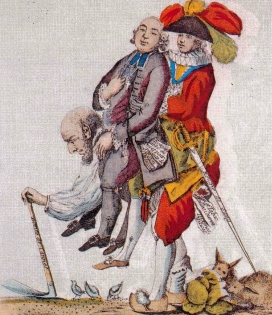
The role of literacy, the rising middle class, and the decline of the Church were all factors in the Ancien Régime’s steady demise, this article shows.
AUTHOR: LAUREN MILLER

The problems with Scottish history: anglo-centrism and national identities

Scottish history is sorely neglected – British history often means anglo-centric or English history. This article charters out how Scottish history has been overlooked.
AUTHOR: EMILY DUNN

‘The Wolf of the Seas’: Thomas Cochrane, Britain’s Forgotten Hero

The British MP and admiral Thomas Cochrane has been somewhat overlooked in history. This article reconsiders his place in continental naval disputes, British history and the wider world.
AUTHOR: JATIN MAPARA

Doing the Dissertation: Tips for researching and writing an undergraduate History dissertation

Writing and researching for a dissertation is no easy task. Here, tips and tricks for making the challenge more achievable are considered.
AUTHOR: LAURA FLANNIGAN and others.

Shakespeare’s Life

400 years after Shakespeare’s death, this article seeks to briefly layout the life of this revered, literary genius. AUTHOR: LAUREN MILLER