Tag Archive: Early Modern History

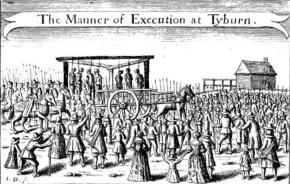
How Effective was the Forced Transportation of Criminals to Australia as a Legal Punishment?

In 1788, the First Fleet arrived in what would later be known as Sydney Harbour, marking the beginning of Australia’s history as a penal colony. Britain’s gaols were flooding with prisoners, causing a crisis with soaring rates of crime. This article delves into the forms of punishment within this period of Georgian British history, comparing these to the transportation of prisoners to Australia. Benjamin Fradley’s insightful piece uses this comparison to evaluate whether transportation was truly successful as a form of punishment, or whether it was simply a necessary alternative to other, more barbaric practices.
AUTHOR BENJAMIN FRADLEY

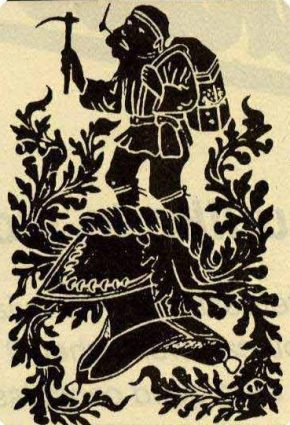
Heart of the Forest: The Freeminers of the Royal Forest of Dean

In 1960, Dennis Potter identified something unique about his homeland of the Forest of Dean that made it so special: the sense of a small green world hemmed in by two rivers and two nations. This article by Joseph Lowen-Grey, the winner of our Local and Community History Writing Competition, explores this further by detailing the Forest’s enchanting history. Anchoring the article around the forest’s Freeminers, this piece foregrounds the intricate legacy of the group that makes the Forest of Dean as remarkable as it stands today.
AUTHOR JOSEPH LOWEN-GREY

Illegitimacy and Infanticide in Early Modern England

The crime of infanticide was something closely associated with illegitimate births throughout Early Modern England and was a cause for public anxiety. However, this article explores how many women actually resorted to infanticide as a result of illegitimate pregnancies. Olivia Boyle compares the presence of infanticide in popular culture to real cases to see how far it truly was the fate for infants at the time, or if there was a more prevalent threat at play for them.
AUTHOR OLIVIA BOYLE

Perpignan or Perpinyà? Exploring the Multicultural History of the Southwest French City

Perpignan, located in the south of France, is the last large city closest to the Franco-Spanish border. Much like its history, the city stands today ensnared between French and Catalan culture. This article delves into the multiculturalism within Perpignan, especially looking at its Catalan, but also French, culture and identity. By exploring the city’s history, linguistics, heritage, and gastronomy, Cassia Wydra carefully traces and appreciates the bicultural identity of Perpignan, or Perpinyà.
AUTHOR CASSIA WYDRA

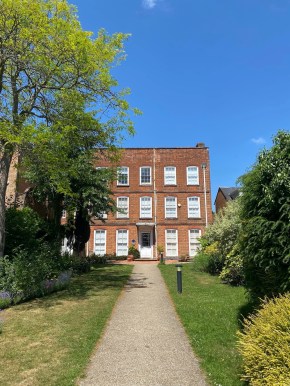
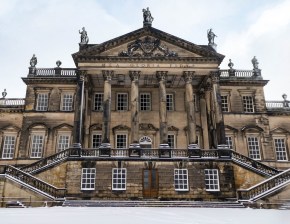
Wentworth Woodhouse: Mea Gloria Fides

Wentworth Woodhouse has undergone much expansion for decades, in terms of its architecture, owners, and history. In this article, Finlay Ratcliffe seeks to explore the history of the site, tracing it chronologically, using its fifteen owners as key historical checkpoints. By also foregrounding its rigid resistance to modern demolition attempts, as well as its current preservation plans, the reasons for why Wentworth Woodhouse is considered a great survivor are illuminated.
AUTHOR FINLAY RATCLIFFE

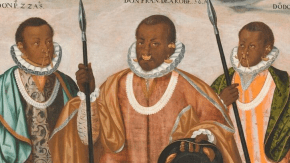
Was Britain Ever Really a White Country?

War, empire, and nationhood have typically defined British history, with whiteness serving as a constant underlying motif. As a result, Black history has often been written out of this mainstream narrative. In this illuminating article, Sinead Bedward explores the deep-rooted presence of Black people in Britain, from ancient times to the Tudor period. By foregrounding their success and influence, the article challenges the misconception that Black history is separate from British history, instead exemplifying how Black individuals have shaped Britain for centuries.
AUTHOR SINEAD BEDWARD

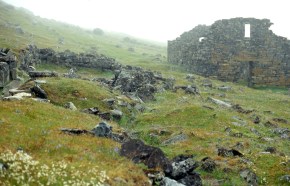
The End of the World as We Know It: Climate Change Throughout History

Climate change is an especially relevant issue, with the current global warming crisis needing urgent attention by world leaders. In this article, Leon Corneille-Cowell outlines the history of this phenomenon, reflecting its precedence over thousands of decades, and its devastating impacts upon a number of civilisations and groups throughout time.
AUTHOR: LEON CORNEILLE-COWELL

“Upon Which Order The Child Was Brought To Him Which He Refused To Take”: The Fathers and Grandparents of Illegitimate Children in Early Modern England

In early modern English society, illegitimate children were a recognisable feature, especially in parishes. Olivia Boyle explores the familial dynamics surrounding these children, especially highlighting the unique involvement of fathers and grandparents in the lives of their ‘bastard’ descendants.
AUTHOR OLIVIA BOYLE

Historical Stories: Our Top Picks

The 2023-2024 York Historian Committee recommends our favourite historical fictional tales, from mystery novels, to medical television and queer film.

Angry, Fat and Cross – the Unmarried Woman in Early Modern England

Unmarried women in the Post-Mediaeval society occupied a unique position, since it meant to be partially socially and financially independent, but also to waiver certain social rights and privileges that were ordinarily only available to married women. The stereotype of the widow (elderly, destitute, lonely and haggard); superstitions around them and later, the satire found in both print and the wider media as well how historical archaeology can help unveil this preconceptions are explored in this excellent article.

AUTHOR: TOMO OLLIVIER

The Ming Dynasty, Porcelain, Builders and Travellers

The Ming dynasty, known widely as the ‘Great Ming,’ oversaw the building of some of China’s most iconic monuments and contained many other unique features. In this article, Leon Corneille-Cowell explores these, as well as key individuals within the dynasty, such as the Hongwu Emperor and Zhang He.
AUTHOR LEON CORNEILLE-COWELL
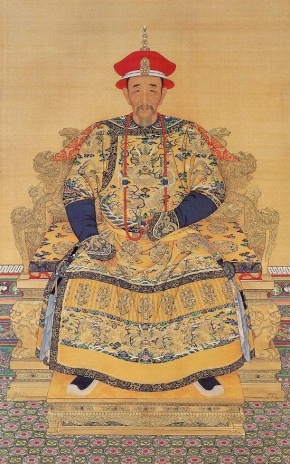
The Qing: China’s Last Imperial Dynasty

Retelling the history of the Qing dynasty, Leon Corneille-Cowell discusses the range of factors that led to its eventual decline. This article gives an overview by detailing events such as the Taiping Rebellion while also looking at typical Qing fashion.
AUTHOR LEON CORNEILLE-COWELL

The Mythology of Punkie Night

Kate Maybury discusses the mythology and local history surrounding Punkie Night. Inspired by her own links to the tradition, this article sheds a new light on the origins and stories behind Punkie Night and Halloween.
AUTHOR KATE MAYBURY

The Celtic Origins of Halloween

Runner up of our 2023 Halloween Writing Competition, Seren Davies-Jones outlines the Celtic influences behind the celebration of Halloween. By looking at the common human fascination with all things dark and mysterious, clear connections are drawn between Samhain and Halloween.
AUTHOR SEREN DAVIES-JONES

A TownMouse Christmas: A Review of Fairfax House’s new Festive exhibition

In our latest article Katie Wilkinson and Ariane S. Palmas review the new festive exhibition at Fairfax House, a Georgian town house, with influences of neo-classical architecture in its standing building.

AUTHORS: KATIE WILKINSON AND ARIANE S. PALMAS

“Female Lords”: Women’s representation and restriction in the House of Lords.

Image Credit: https://www.youtube.com/watch?v=_sLZBWcPklk @ 01:06, UK Parliament Today, out of the 92 hereditary peers currently sitting in the House of Lords, none are women.  The House of Lords is a pivotal institution of… Continue reading

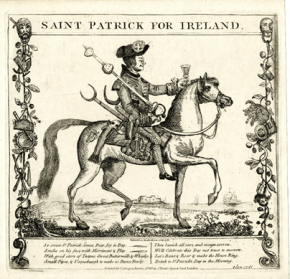
Anti-Irish Sentiment in Modern Britain

This article considers the development of anti-Irish sentiment in modern Britain, using a range of evidence to show the changes and continuities in the depiction of the Irish.
AUTHOR: ENYA HOLLAND

1666: Plague, War and Hellfire, by Rebecca Rideal (2016)

A Review of 1666: Plague, War and Hellfire, by Rebecca Rideal (2016).
AUTHOR: JESS AYRES

‘The Norman Yoke’: Uses of the Past During the English Civil War

In this article, Liam Greenacre considers the use of the Norman Conquest of 1066 during the 17th century English Civil War, contrasting the perceived utopian age with the realities of living under foreign rule.
AUTHOR: LIAM GREENACRE

Hull: a History

Kingston-Upon-Hull’s history has been very varied, from establishing the largest travelling fair in Europe to it being one of the worst bombed British cities in the Second World War. This article considers some of Hull’s history, and how this history ties in with its future.
AUTHOR: VICTORIA BETTNEY

Anti-Irish Sentiment in Early Modern Britain

Modern attitudes towards the Irish have a complex history, beginning in the Early Modern period. This article explores the evolution of Anti-Irish sentiment in this period, charting its changes and various forms.
AUTHOR: ENYA HOLLAND

The York Historian Meets: Michael Walkden

“The university historian doesn’t have to be the only gatekeeper of the truth of the past.”
The York Historian’s Paul Kerr meets PhD student, Michael Walkden.

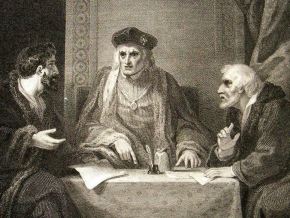
The Rise and Fall of Edmund Dudley: the “hawk” of Henry VII?

Should we take the negative reputation of infamous Henrician minister Edmund Dudley at face value? This article outlines his life and career in order to explore the realities of his representation.
AUTHOR: LAURA FLANNIGAN

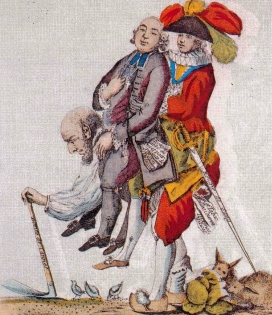
The Fall of the Ancien Régime

The role of literacy, the rising middle class, and the decline of the Church were all factors in the Ancien Régime’s steady demise, this article shows.
AUTHOR: LAUREN MILLER

‘The Wolf of the Seas’: Thomas Cochrane, Britain’s Forgotten Hero

The British MP and admiral Thomas Cochrane has been somewhat overlooked in history. This article reconsiders his place in continental naval disputes, British history and the wider world.
AUTHOR: JATIN MAPARA

Magic and Science in Early Modern Europe – Are They Really So Different?

An examination of Early Modern science and the practice of magic – how the two are more intertwined than it would seem.
AUTHOR: MARTHA BAILEY

Shakespeare’s Life

400 years after Shakespeare’s death, this article seeks to briefly layout the life of this revered, literary genius. AUTHOR: LAUREN MILLER

The Queen’s Birthday: Development, Forms, and Functions of the celebrations for Elizabeth I and Elizabeth II

On this day, the Queen’s 90th birthday, this article looks back at the development of this national holiday.
AUTHOR: LAURA FLANNIGAN

John Dee: Science, Occult and Empire

Inspired by a recent exhibition at the Royal Society of Physicians, this article explore the life and achievements of polymath John Dee, with a focus on his progressive views on navigation and empire.
AUTHOR: LAUREN MILLER

Tudor Royal Palaces – More Than Just Hampton Court?

Hampton Court Palace is the most famous of the Tudor dynasty. However, it was but one of a repertoire of many architectural marvels. This article explores the construction and use of other grand palaces used by the Tudors.
AUTHOR: JESS AYRES

What was the significance of the 95 Theses?

There is no doubt among historians that Martin Luther’s ’95 Theses’ document was central to the Reformation in the 16th century. This article explores the 95 theses in detail, analysing what they were, why they were written and their impact.
AUTHOR: VICTORIA BETTNEY

“Close the wall up with our English dead”: does Shakespeare’s Henry V actually problematise Agincourt?

A contextualisation of Shakespeare’s play, Henry V, which allows for exploration of the portrayal of Henry V and the Battle of Agincourt in 1415.
AUTHOR: LAURA FLANNIGAN

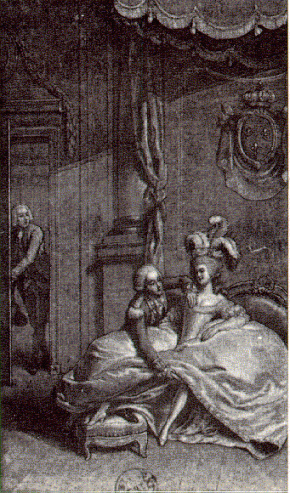
The Myth of Marie Antoinette

This interesting article discusses the ‘true’ nature of Marie Antoinette with insight from analyses of pamphlets.
AUTHOR: LAUREN MILLER

Why Did Elizabeth I Never Marry?

Elizabeth I is known as the Virgin Queen. This article surveys the potential reasons behind why she never married, a decision that caused the death of the Tudor dynasty.
AUTHOR: JESSICA AYRES

Anne Boleyn: A Romantic Heroine?

This article examines the romanticised representations of Anne Boleyn portrayed by historians and artists centuries after her death, with particular focus on Victorian perspectives on her character and execution.
AUTHOR: LAUREN MILLER

‘An heir and a spare’: a brief history of the royal succession in British history

The problem of succession to the British throne has consistently reared its head throughout history. This article explores different situations where trouble ensued regarding claims to the throne – with some more legitimate than others.
AUTHOR: LAURA FLANNIGAN

The Forgotten German History

A microcosmic study of the German town of Prichsenstadt followed by a deeper analysis into ways German history is studied today.

AUTHOR: CAITLIN BURGE

On This Day in 1491 – The Birth of Henry VIII

An insight into perceptions of Henry VIII and interpretations of his rule. Who was Henry VIII? AUTHOR: LAURA FLANNIGAN