The End of the World as We Know It: Climate Change Throughout History
Climate change is a pervasive issue. The current anthropogenic global warming, causing sea levels to rise and weather systems to go into chaos, is one target of the United Nations’ Sustainable Development Goals. However, climate change is not a new phenomenon: over thousands of years, the Earth’s climate has been cooling, warming, wetting, and drying. Examples include the last Ice Age, which ended around 11,500 years ago, causing Doggerland to flood, as well the ‘African humid period’ which allowed for the spread of agriculture into Africa before the Sahara became a desert. In his book Collapse, Jared Diamond cites climate change as a major reason for the decline of civilisations, and, with this in mind, this article will summarise and explore past human-climate interactions.
The Indus Valley Civilisation
The Indus Valley Civilisation (3300-1300 BCE), also known as the Harappan Civilization, was one of the first world civilisations. Based in the north of India and east of Pakistan, this Bronze Age civilisation is often cited as having declined as a result of climate change: droughts in the already-arid environment led to conflict over resources, as well as a rise in tropical diseases such as malaria. Wholesale climatic warming led to irregular temperature shifts in the Indian and Atlantic oceans which, in turn, shifted the monsoon cycle. Not only did this cause a shift in water supply, but it also led to the drying of the Saraswati River in around 1900 BCE. These droughts led to a decline in population health, which was further compounded by political disruptions, war and migration away from struggling urban centres – all of which ultimately contributed to the end of Harappan Civilisation.
The Bronze Age Collapse
Contemporary to the Harappan Civilisation, the Mediterranean was a bustling network of groups such as the Minoan and Mycenaean Greeks, the Hittites of Anatolia, and the Egyptians, to name just a few. However, around the twelfth century BC, several of these civilisations collapsed. The archaeological record shows a serious decline in material culture at this time. Scripts such as linear A and B (linear forms of writing used by the Minoans and Myceneans respectively, with B evolving from A) fell into disuse. The exact reason for this decline is a mystery, with some blaming Viking-esque ‘Sea People,’ who are depicted in carvings by Ramesses III as having attempted to raid Egyptian coastal settlements. One alternative hypothesis suggests a localised natural disaster such as the volcanic eruption which decimated the island of Thera (Santorini) in 1600 BCE. However, it is more likely that the increasingly arid conditions during the late Bronze and early Iron Ages led to droughts and crop failure similar to the Indus Valley, which, in turn, was taken advantage of by raiders such as the mysterious Sea People.
The Romans and Han China
From around 300 BCE, it is recorded that there was a period of warmer, wetter climate that lasted until somewhere between 200 AD to 400 AD. This coincided with the rise of the Roman Republic and Empire, which covered most of southern Europe, hence the name ‘Roman Warm Period’ or ‘Roman Climate Optimum.’ However, in around 200 AD, a change occurred. Historian Kyle Harper has cited this as the start of the ‘Roman Transitional Period,’ whilst others have dubbed it the ‘Migration Period,’ as climatic shifts forced the migration of barbarian peoples such as the Huns, Goths, Vandals, and Anglo-Saxons across Europe. This brought them into contact and conflict with Rome, thus hastening the decline and fall of the Western Roman Empire.
Meanwhile in East Asia, China’s second Imperial dynasty, the Han, was founded by Liu Bang (256-195 BCE). The Han is considered as the foundation of Chinese civilisation and identity, as the Romans are to the West. Worsening conditions, as well as court corruption, eventually led to several uprisings including the Yellow Turban Rebellion of 184-205 AD. Opportunistic warlords took advantage of this instability, leading to the end of the Han and the start of the chaotic Three Kingdoms period.


The Late Antiquity Little Ice Age
The Late Antiquity Little Ice Age, also known as the Dark Age Cold Epoch, was a cold period that affected early medieval Europe. It is believed to have been caused by bouts of volcanic activity in Iceland and the Mediterranean in the years 536, 539 and 547 AD, with 536 being known as the ‘Volcanic Winter of 536.’ Sources from China mention “a dense, dry, fog” and Michael the Syrian, a chronicler writing in Greece, noted that “the sun became dark and its darkness lasted one and a half years.” Likewise, in Ireland, the annals of Ulster also talk about a “year without bread.”
As seen in Season 11, Episode 1 of Digging for Britain, samples taken from the Anglican settlement at Heslerton, North Yorkshire, had volcanic material in them, suggesting that it was this volcanic activity that had caused the abandonment of the site. This ‘Dust Veil’ was felt all over northern Europe, including Scandinavia, where hard times and poor harvests led to the emergence of a warrior culture that eventually began raiding the towns and monasteries of the rest of Europe, later becoming known as the ‘Viking.’
Around this time, the plague of Justinian (541–549 AD) was also sweeping through Europe. Caused by Yersinia pestis bacteria being transmitted by fleas in populations of black rats, it is theorised that the changing climate caused populations of rats to fall, resulting in fleas having to find a new host: humans. As its name suggests, the plague affected the Byzantine Empire, including the Mediterranean Basin, Europe, and the Near East, and severely affecting the Sasanian Persian Empire as well.
The Late Antiquity Little Ice Age did not affect everywhere equally, however. In the Middle East, for example, it has been hypothesised that the drop in temperature improved the fertility of the usually arid environment. This boost in food supply aided the Islamic armies in their conquests of the area, whilst the strain that these climatic shifts put on the Byzantine and the Sassanid Empires helped the Arab conquests of Persia, Egypt, and the Levant. Interestingly, the effects of this colonisation are still felt today, with Islam being the second-largest religion worldwide.
The Medieval Warm Period
The Medieval Warm Period (also known as the Medieval Climate Anomaly) began in around the eighth or ninth century and ended in the thirteenth or fourteenth century. Consisting of a warmer, wetter period in Europe, it is believed that this more temperate climate allowed for the spread of the Viking diaspora and facilitated the colonisation of Greenland due to the normally frigid environment being milder than usual. Likewise, in the Mediterranean, the Byzantine Empire entered a period of prosperity which has been linked to this change in climate.
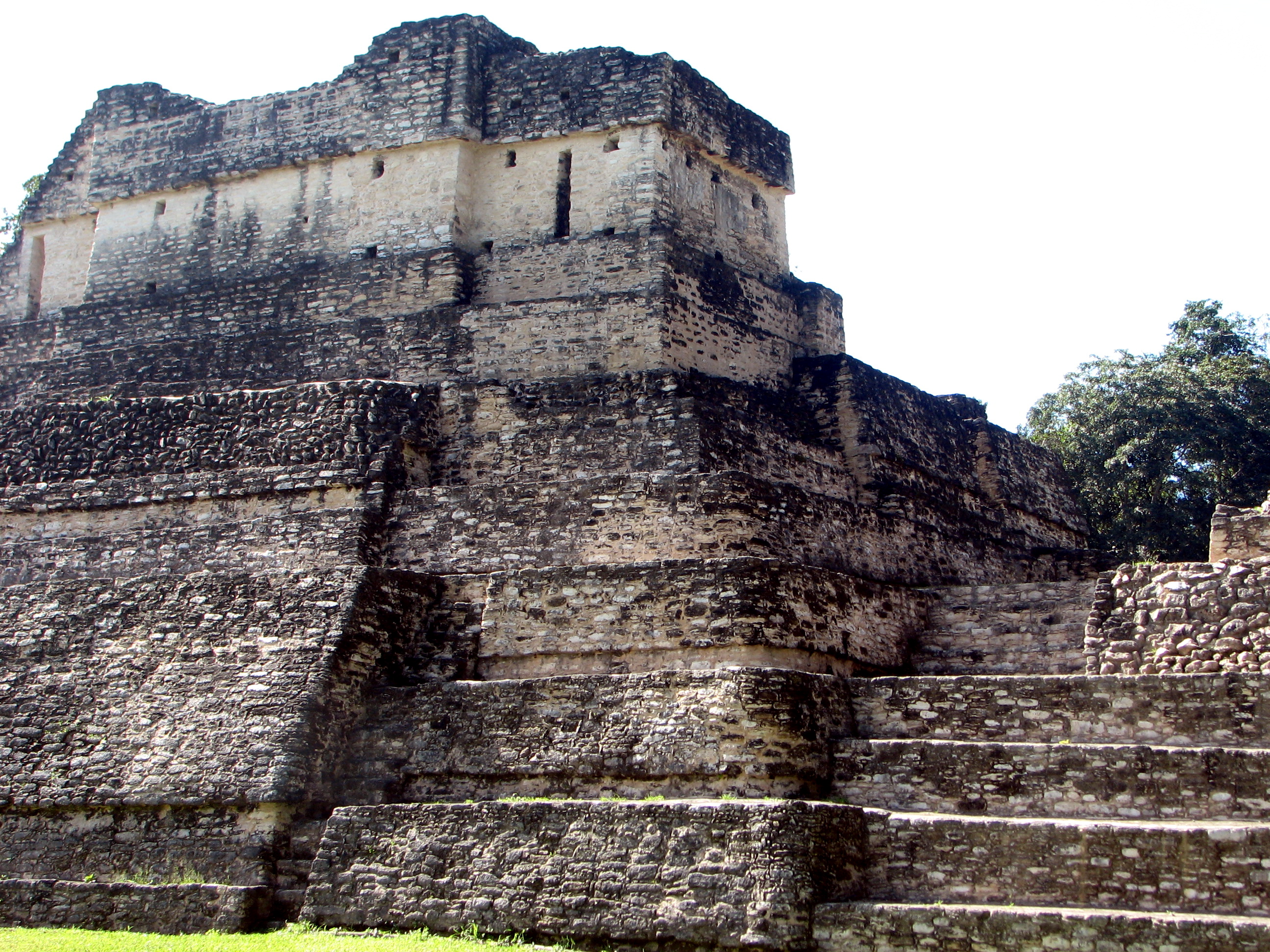
However, it was not all peace and prosperity at this time. Across the Atlantic, on the South American continent, a different story was playing out. Compared to most of the examples we have discussed thus far, this is the only case examined within the Southern Hemisphere and therefore presents a rather different picture climatically. An example of this is the El Niño–Southern Oscillation. This climatic phenomenon emerges from variations in oceanic surface temperatures over the southern tropical Pacific Ocean, and is believed to be roughly cyclical. El Niño causes temperature rises and therefore droughts. In this part of the world, during the Medieval Warm Period, the Maya of northern South America were in their ‘classic’ period (250-900 AD). The Maya began to experience decreased rainfall, and their slash-and-burn style of agriculture, which involves razing part of the forest and using the ash as fertiliser, was unable to deal with the change. Maya society then descended into resource conflict and decline, with similar fighting seen elsewhere in South America, such as amongst the pre-Hispanic Peruvians.
The Little Ice Age
Finally, the Little Ice Age is the moniker given to the period disputed to have begun somewhere between 1250-1450 AD, and ended around 1850 with the advent of the Industrial Revolution. It was not a long, monolithic cold period as the name implies, but rather a series of colder spells. However, this should not be mistaken as minimising the effect that the Little Ice Age had on humans: as with the other climatic shifts, in certain regions of the world, the impact was borderline apocalyptic. The Baltic Sea froze over twice and encroaching glaciers in the Alps destroyed farms. Rivers and canals were frozen solid enough to allow ice skaters and invading armies to use them with surprising ease, considering the weight of military equipment. In addition, the Norse settlers of Greenland who had colonised it during the Medieval Warm Period slowly began to abandon the island as conditions became impossible to live in. In 1816 (also known as ‘the Year without Summer’), the eruption of Mount Tambora in Indonesia lowered the global temperature by as much as seven degrees, and the resulting cold and rain caused widespread crop failure, thus devastating populations.
In China, the Ming dynasty had reigned with relative peace and prosperity for three centuries. However, in the early seventeenth century, crop failure, floods, droughts, and governmental corruption coincided with the ‘Great Plague’ of 1633–1644 AD. Collectively, this produced a period of unrest that allowed rebels at first, then Manchu invaders from the north, to bring down the Ming and establish the Qing dynasty. However, some historians and palaeoclimatologists have warned against such a simple and universal model of cause and effect, citing historical factors, such as imperial corruption and political mismanagement, as just as much of a cause.
Worldwide, climate-induced black rat population decline caused Yersinia Pestis to reappear several times throughout the Little Ice Age, perhaps most notably in the form of the Black Death, which killed between 25–50 million people between 1346 and 1353 AD: a third of Europe’s population at the time. Yersinia Pestis struck again in 1629–1631 in Italy and 1665-1666 in England. Furthermore, bubonic plague was not the only disease sweeping the world at this time. The Cocoliztli epidemics (1544-1813), a series of 12 epidemics through the early modern period, wiped out half of the population of Mexico, though the specific pathogen is unknown.

(https://wellcomecollection.org/works/ud59j8e5).
Conclusion and Now
Since the nineteenth century, the Earth’s temperature has been steadily increasing due to a complex mix of greenhouse gases emitted by industry, deforestation and rising populations. This has led the United Nations to name climate change as one of their sustainable development goals, warning of disastrous consequences if humanity fails to deal with the problem. In particular, they warn of the desertification of ‘breadbasket’ regions (the process by which fertile land in arid, semi-arid, or dry sub-humid areas is gradually degraded into desert). As seen in the Great Plains of America, from 1930-1936, extreme heat, flooding and devastating storms, as well as an increase in tropical diseases like malaria. It is true that climate change did not signal the end of the world for people in the past, but for our modern society, we may not be so lucky.
Written by Leon Corneille-Cowell
Bibliography
B, B. (2024). Caracol Belize. [online] Flickr. Available at: https://www.flickr.com/photos/billy3001/331121721/in/photostream/ [Accessed 19 Nov. 2024].
Brook, T. (2023). The Price of Collapse. Princeton: Princeton University Press.
Burroughs, W.J. (2005). Climate Change in Prehistory. Cambridge: Cambridge University Press.
Carlin, D. (2020). The End Is Always Near: Apocalyptic Moments from the Bronze Age Collapse to Nuclear near misses. London: William Collins.
Climate Change and the Fall of the Indus Valley Civilization: Interview with Dr. Alena Giesche, (2024). [Podcast] Tides of History.
Cline, E.H. (2015). 1177 B.C.: The Year Civilization Collapsed. Princeton: Princeton University Press.
Cooper, P. (2024). Fall of Civilizations. Harlequin.
Degroot, D. (2019). The Frigid Golden Age: Climate Change, the Little Ice Age, and the Dutch Republic, 1560-1720. Cambridge, United Kingdom: Cambridge University Press.
Diamond, J.M. (2005). Collapse: How Societies Choose to Fail or Succeed. New York: Penguin Books.
Fagan, B. (2019). The Little Ice Age. New York: Basic Books.
Fan, K. (2023). The Little Ice Age and the Fall of the Ming Dynasty: A Review. Climate, 11(3).
Frankopan, P. (2024). The Earth Transformed. Vintage.
Harper, K. (2017). The Fate of Rome Climate, Disease, and the End of an Empire. Princeton: Princeton University Press.
Harvey, A. (2024). Forgotten Vikings. Stroud: Amberley Publishing Limited.
Hughes, M.K. and Diaz, H.F. (2012). The Medieval Warm Period. Dordrecht: Springer Science & Business Media.
Jobbová, E. (2021). The Maya and Environmental Stress from Past to Present. Oxford: BAR Publishing.
Lieberman, B. and Gordon, E. (2021). Climate Change in Human History. 2nd ed. New York: Bloomsbury Publishing.
Liu, Q., Li, G., Kong, D., Huang, B. and Wang, Y. (2018). Climate, disasters, wars and the collapse of the Ming Dynasty. Environmental Earth Sciences, 77(2). doi:https://doi.org/10.1007/s12665-017-7194-4.
Mcmichael, A.J., Woodward, A. and Muir, C. (2017). Climate change and the health of nations: famines, fevers, and the fate of populations. New York : Oxford University Press.
Prokosch , P. (2024). Hvalsey Church ruins, South-West Greenland. [online] Flickr. Available at: https://www.flickr.com/photos/gridarendal/31940958732 [Accessed 19 Nov. 2024].
Van De Mieroop, M. (2016). A History of the Ancient Near East, ca. 3000-323 BC. Chichester: Wiley Blackwell.
Wellcome Collection. (n.d.). The Plague of Florence, 1348; an Episode in the Decameron by Boccaccio. Etching by L. Sabatelli the Elder after G. Boccaccio. [online] Available at: https://wellcomecollection.org/works/ud59j8e5.
WikiCommons (2009). RomanandHanEmpiresAD1.png. [online] Wikimedia.org. Available at: https://commons.wikimedia.org/wiki/File:RomanandHanEmpiresAD1.png [Accessed 19 Nov. 2024].