Tag Archive: british history

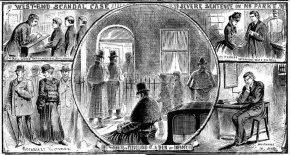
Secrets, Lies, and Scandal: The Cleveland Street Case

One of Victorian England’s most shocking scandals was the Cleveland Street affair, impacting perceptions surrounding the LGBT community. This article by James Lamont, written for the LGBT+ History Writing Competition, details the story of the scandal to reveal what made it such an infamous case. By foregrounding the key political individuals involved within the case, this piece highlights just why attitudes towards homosexuality were severely impacted as a result of the affair’s notoriety.
AUTHOR JAMES LAMONT

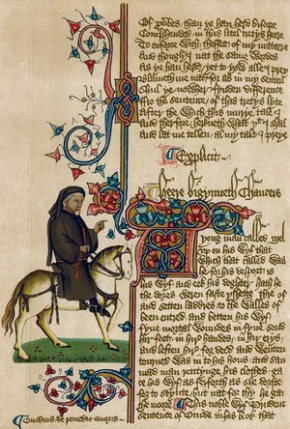
England Without English: The Rise of the Vernacular in Medieval England

From the late twelfth century, Middle English was the first language for most of the population within medieval England, but was hardly used in writing. However, this soon began to change. In this article, Emma Bassett details the reasons why uses of the English vernacular shifted, replacing Latin and French. By exploring the significance of the growing feeling of national identity at the time, this piece brilliantly explores the relationship between the rising vernacular and widespread access to knowledge.
AUTHOR EMMA BASSETT

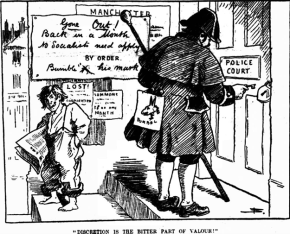
How Effective was the Forced Transportation of Criminals to Australia as a Legal Punishment?

In 1788, the First Fleet arrived in what would later be known as Sydney Harbour, marking the beginning of Australia’s history as a penal colony. Britain’s gaols were flooding with prisoners, causing a crisis with soaring rates of crime. This article delves into the forms of punishment within this period of Georgian British history, comparing these to the transportation of prisoners to Australia. Benjamin Fradley’s insightful piece uses this comparison to evaluate whether transportation was truly successful as a form of punishment, or whether it was simply a necessary alternative to other, more barbaric practices.
AUTHOR BENJAMIN FRADLEY

Heart of the Forest: The Freeminers of the Royal Forest of Dean

In 1960, Dennis Potter identified something unique about his homeland of the Forest of Dean that made it so special: the sense of a small green world hemmed in by two rivers and two nations. This article by Joseph Lowen-Grey, the winner of our Local and Community History Writing Competition, explores this further by detailing the Forest’s enchanting history. Anchoring the article around the forest’s Freeminers, this piece foregrounds the intricate legacy of the group that makes the Forest of Dean as remarkable as it stands today.
AUTHOR JOSEPH LOWEN-GREY

The Victorian “Poison Panic”: Was Poison Really the Problem?

The Victorian Era was no stranger to poison. Its presence was everywhere, from arsenic in cosmetics, to cyanide in the wallpaper, causing a ‘poison panic’ to emerge in popular media. The panic especially surrounded women across this period, with some put on trial for supposedly poisoning their husbands. This insightful article by Finlay Ratcliffe for the 2024/2025 Women’s History Writing Competition explores the case studies of twenty-two women to highlight whether this public fear stemmed from the threat of the poison itself, or rather the threat of female power.
AUTHOR FINLAY RATCLIFFE

Queering Morris

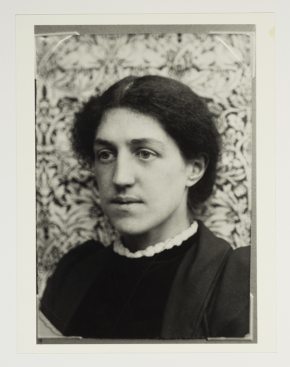
May Morris, daughter of the famous textile designer William Morris, is normally overshadowed by her famous father, both as an artistic and historic figure in her own right. However, with increased feminist revisions of the Arts and Crafts movement, May Morris’ status has been established as a pioneer of Arts and Crafts embroidery; a prolific contributor to the success of Morris and Co; and founder of the Women’s Guild of Arts. Furthermore, the rediscovery of Morris’ interwar diaries draws attention to the later years of her life and to the importance of her relationship with Mary Lobb, which sparked intense debate over the exact nature of their relationship. This rich and interesting history of the pair deserves a greater level of consideration within current scholarship, from both a feminist and queer perspective and is the topic of the winner of the LGBTQ+ article competition 2025.

AUTHOR: ROBIN HENDERSON

The King’s Contemptuous Subjects: The Bristol Revolt of 1312-1316

The fourteenth century in England was a time of great dysfunction and tumult, with events like the Black Death and the Peasants’ Revolt. However, before this came the Bristol Revolt, one of the most significant but understudied urban rebellions of medieval England. In this article, Daniel Cramphorn details the rebellion’s background, sources, and its key events, focusing on the changing levels of violence and order. The exploration of this four-year-long revolt highlights just why it should be widely seen as an extraordinary example of late medieval urban protest.
AUTHOR DANIEL CRAMPHORN

Illegitimacy and Infanticide in Early Modern England

The crime of infanticide was something closely associated with illegitimate births throughout Early Modern England and was a cause for public anxiety. However, this article explores how many women actually resorted to infanticide as a result of illegitimate pregnancies. Olivia Boyle compares the presence of infanticide in popular culture to real cases to see how far it truly was the fate for infants at the time, or if there was a more prevalent threat at play for them.
AUTHOR OLIVIA BOYLE

Wentworth Woodhouse: Mea Gloria Fides

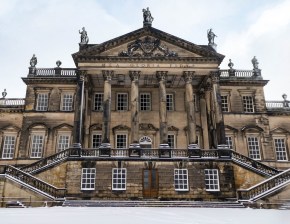
Wentworth Woodhouse has undergone much expansion for decades, in terms of its architecture, owners, and history. In this article, Finlay Ratcliffe seeks to explore the history of the site, tracing it chronologically, using its fifteen owners as key historical checkpoints. By also foregrounding its rigid resistance to modern demolition attempts, as well as its current preservation plans, the reasons for why Wentworth Woodhouse is considered a great survivor are illuminated.
AUTHOR FINLAY RATCLIFFE

Was Britain Ever Really a White Country?

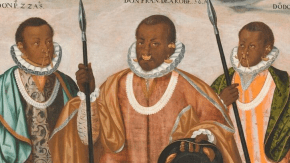
War, empire, and nationhood have typically defined British history, with whiteness serving as a constant underlying motif. As a result, Black history has often been written out of this mainstream narrative. In this illuminating article, Sinead Bedward explores the deep-rooted presence of Black people in Britain, from ancient times to the Tudor period. By foregrounding their success and influence, the article challenges the misconception that Black history is separate from British history, instead exemplifying how Black individuals have shaped Britain for centuries.
AUTHOR SINEAD BEDWARD

Race on the Rails: How Resistance to Racial Discrimination at London Euston Strengthened the UK’s Anti-Discrimination Laws

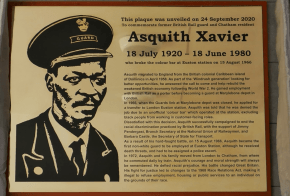
When one considers the history of racial discrimination, the stories of ordinary people who fought for equality are often overlooked. This compelling article spotlights Asquith Xavier, a Black West Indian railwayman, who challenged his rejection from a position at London Euston Station. By connecting Xavier to broader developments within the British civil rights movement, Oscar Hilder argues for Xavier’s influence on both racial legislation and his personal communities.
AUTHOR OSCAR HILDER

To an Icy Grave: The Lost Franklin Expedition, its Legacy, and the Horror of an Arctic Death

The winner of our Halloween Writing Competition, Jack Rooney, details the tragic story of a crew tormented by disease, cannibalism, and the cold. Inspired by Dan Simmons’ novel ‘The Terror’, this article reveals the harsh historical reality of humanity’s own battle with their world.
AUTHOR JACK ROONEY

The Celtic Origins of Halloween

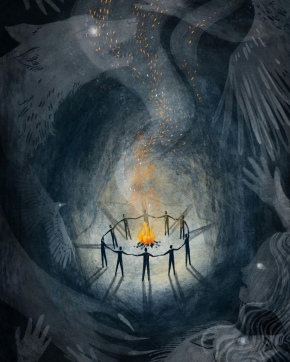
Runner up of our 2023 Halloween Writing Competition, Seren Davies-Jones outlines the Celtic influences behind the celebration of Halloween. By looking at the common human fascination with all things dark and mysterious, clear connections are drawn between Samhain and Halloween.
AUTHOR SEREN DAVIES-JONES

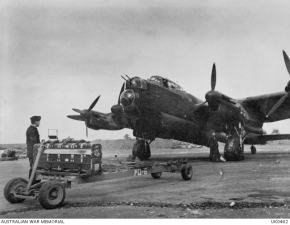
18th October, 1943 – Lancaster W4240, code letter ‘A’ for Able

To commemorate the Remembrance Day on the last 11th November (also known as Poppy Day), Joe Langham built an special and very personal account around a casualty of war happened during the WWII in the fight against Germany, the fate of the Lancaster W4240 and its crew.
AUTHOR: JOE LANGHAM

Chocolate and Feminism: Exploring the Changing Role of Women in Rowntree’s Chocolate and Cocoa Advertisements, 1930-1960

Our latest article considers the changing status of women in Rowntree’s chocolate and cocoa advertisements between 1930 and 1960.
AUTHOR: ELEANOR OLIVER

The problems with Scottish history: anglo-centrism and national identities

Scottish history is sorely neglected – British history often means anglo-centric or English history. This article charters out how Scottish history has been overlooked.
AUTHOR: EMILY DUNN

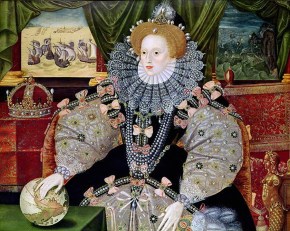
Why Did Elizabeth I Never Marry?

Elizabeth I is known as the Virgin Queen. This article surveys the potential reasons behind why she never married, a decision that caused the death of the Tudor dynasty.
AUTHOR: JESSICA AYRES