PART II – A Brief Observational History of Astronomy
INTRODUCTION
The study of astronomy, as well as countless other disciplines, swelled in popularity during the European Renaissance. Prior to the Scientific Revolution in 1543 and as examined in Part I of this article, early humans relied on logic and mythology to unravel the universe. They created stories to explain how the sun moved across the sky, what the stars were, and why the moon was ever-present, day and night.
Beginning in the early modern period, the Scientific Revolution generated a paradigm shift, significantly changing the way humans understood the world, the stars, and the universe. Scientific inquiry and discovery began to replace mythological belief and folklore. In Part II of this article series, we delve deep into the beginnings of science, contradicting the status quo, especially that which was promoted by the Catholic Church in Europe. We will investigate how scientific observation and religion clashed in Europe as humankind began to fully grasp what truly resides in the night sky and beyond. The first instance of the Scientific Revolution is widely regarded to be Nicolaus Copernicus’ work.
THE COPERNICAN REVOLUTION AND CATHOLIC REBUFF
Nicolaus Copernicus was a Polish astronomer who dedicated his time to debunking the widely accepted geocentric model, as theorised by Ptolemy in the 2nd century CE. Copernicus believed in a heliocentric model: that the sun was the centre of the solar system, not the Earth. Copernicus was not the first person to suggest that the Earth was not the centre of the universe: Philolaus, Aryabhata and Aristarchus had proposed their own theories some millennia beforehand. Beginning with the 1514 text Commentariolus, which would not be published until after Copernicus’ death but instead distributed to some choice astronomers and friends, Copernicus claimed that the Earth and all the planets of the solar system orbited the sun, while the moon orbited the Earth. While he did also claim that the sun was the centre of the universe, which we now know is mostly untrue (The Exploratorium laboratory demonstrates that all points of the universe are technically the centre due to the nature of the expanding universe), most of his ideas were accurate to what we understand as fact in the 21st century.
30 years later, Copernicus would rewrite Commentariolus into a much larger work, De Revolutionibus Orbium Coelestium, or On the Revolutions of Heavenly Spheres, and have it published shortly before his death in 1543. Upon reading, many contemporary mathematicians and astronomers were convinced once and for all that the Earth orbited the sun, and were thus called “Copernicans”. Some academics consider Copernicus’ lengthy writing time to be a result of fears of heretical accusations from the Catholic church, who still perpetuated information set out explicitly in the Bible that the Earth was at the centre of the universe (“[God] set the earth on its foundations, so that it should never be moved.”- Psalm 104:5.) This postulation is convincing, as we shall see from the Galileo Affair.
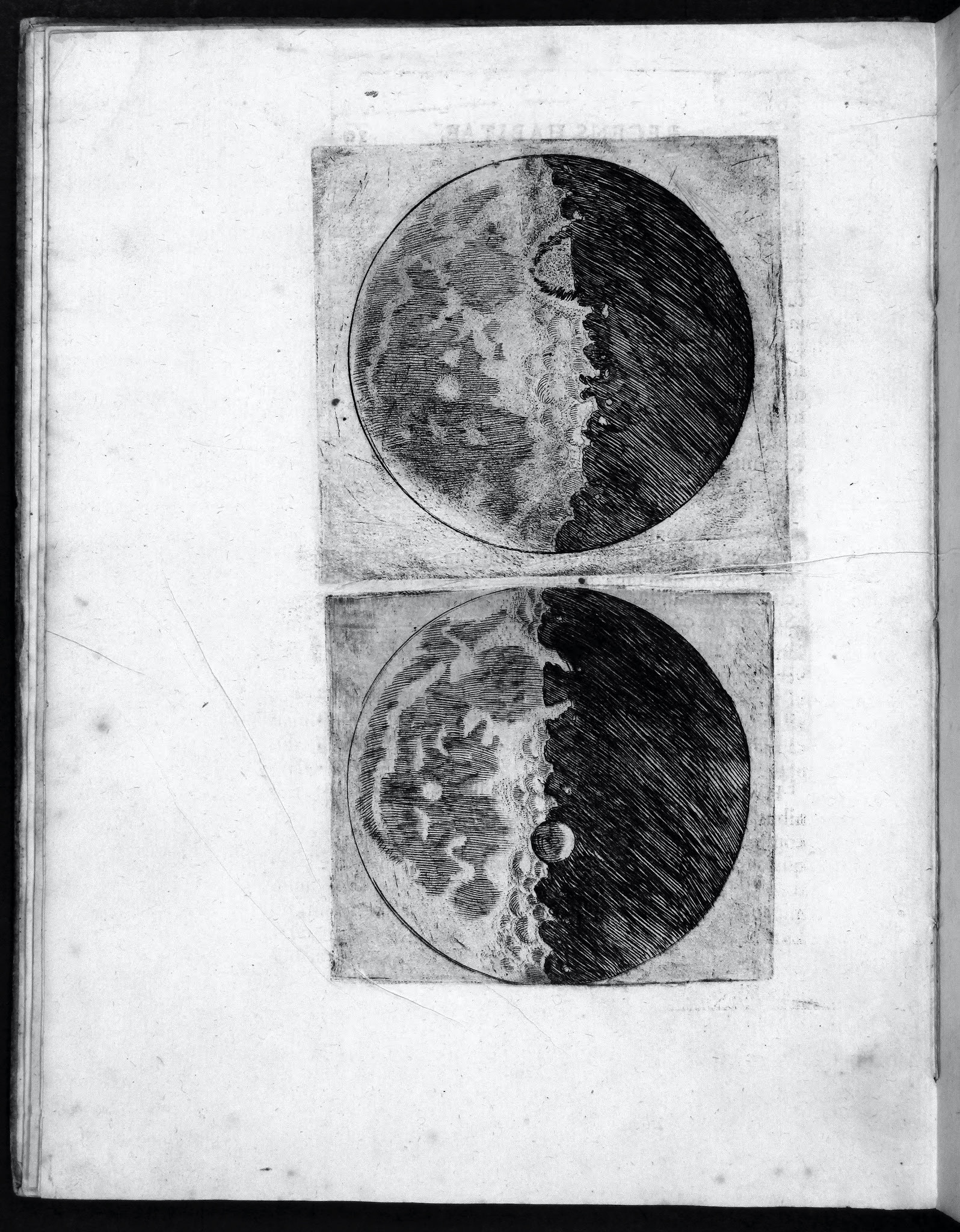
Later in the 16th century, Galileo Galilei, the famous astronomer from Pisa and follower of the Copernican heliocentrism, would begin to make his own observations on various discrepancies he had with Greek theories, such as Aristotle’s idea of the heavens as immutable (or never changing), by observing shifting sunspots on the sun’s surface. His most significant contribution to humanity’s understanding of the universe was the refracting telescope. Built in the first decades of the 17th century and able to magnify celestial bodies up to 30x, the telescope allowed Galileo to observe that the moon was not as smooth as originally assumed, but cratered. Galileo also discovered the four main moons of Jupiter, later named Ganymede, Io, Europa and Callisto and known collectively today as the ‘Galilean Moons’. He observed that the moons orbited Jupiter, bringing more clarity to the idea of heliocentrism, but laid out anomalies to Aristotle’s understanding of the universe. Furthermore, Galileo discovered Saturn’s rings but initially mistook them for two other planets, and was among the first to observe the planet Neptune, but is not credited with the discovery as he thought it to be a dim star.
Galileo’s public support of Copernican heliocentrism implicated him with the Catholic Church, and he was accused by the Roman Inquisition of trying to rewrite the bible. After various lengthy legal battles across two decades, Galileo was eventually forced into house arrest in Florence after being suspected (but never charged) of heresy. Like Copernicus, his work was placed on the Church’s Index Librorum Prohibitorum, or the List of Forbidden Books. He would not be pardoned for his ‘crimes’ against the Bible by the Church until several centuries later in 1992.
Around the same time Galileo was working in astronomy, Johannes Kepler, a German Copernican, was theorising that planets orbited the sun elliptically, and in order for these planets to orbit the sun in the first place, a form of magnetism between these celestial bodies must be taking place. This would later be reconceptualised as ‘gravity’ by Isaac Newton in 1666.
THE AGE OF ENLIGHTENMENT
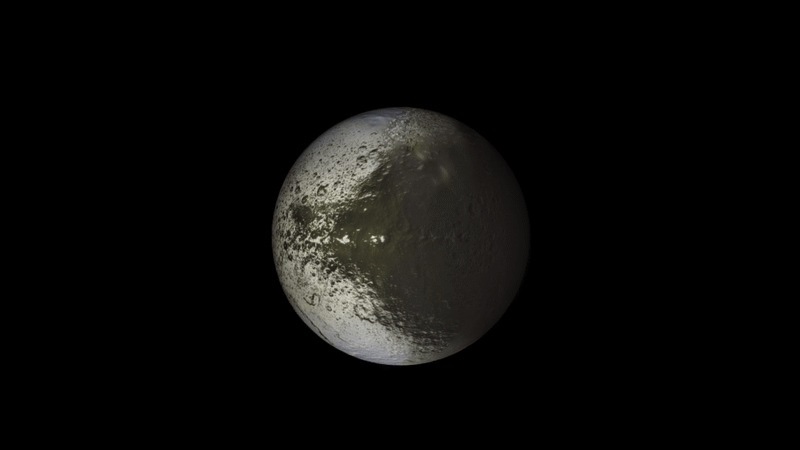
Observations of moons and planets in particular continued into the Baroque Period and the Age of Enlightenment. In the late 17th century, Dutch scientist Christiaan Huygens and Italian-French astronomer Giovanni Domenico Cassini were closely observing Saturn and its moons. Huygens discovered Saturn’s largest moon, Titan, while Cassini discovered four other moons of Saturn: Iapetus, Rhea, Tethys and Dione. Cassini is credited with accurately predicting the appearance of Iapetus, despite observing it only as a small, bright dot through his telescope. By observing variations in the moon’s brightness as it orbited Saturn, Cassini theorised that half of the surface was darker than the other, and that it was tidally locked to the planet, the same as Earth’s moon is. From Earth’s perspective, astronomers would have to wait for Iapetus to orbit Saturn completely before they could see the entirety of the surface. His theory was proved right in 2004 when a NASA spacecraft, fittingly named ‘Cassini’, performed a fly-by mission and photographed the surface. So too was the phenomenon of one side of the moon being darker than the other named after him, the ‘Cassini Regio’. The Cassini probe also delivered a rover
It was not until the late 18th century that planets beyond Saturn would be discovered. In 1781, German-British astronomer William Herschel discovered Uranus after originally mistaking it for a star. Herschel named it “Georgium Sidus”, or “George’s star”, after his royal patron George III of Britain. It was later renamed “Uranus” by German astronomer Johann Elert Bode, however, to fit in with the mythological theme of the rest of the solar system. Unlike the other major planets, Uranus’ name would be lifted from Greek mythology, not Roman. Uranus’ moons, too, would not follow Roman mythology names, but would be named after various characters appearing in William Shakespeare and Alexander Pope’s fiction. The eighth planet, Neptune, would be discovered later in 1846 by Urbain Le Verrier in Paris and John Couch Adams in Cambridge simultaneously and independently, with its largest moon, Triton, being discovered a few days later.
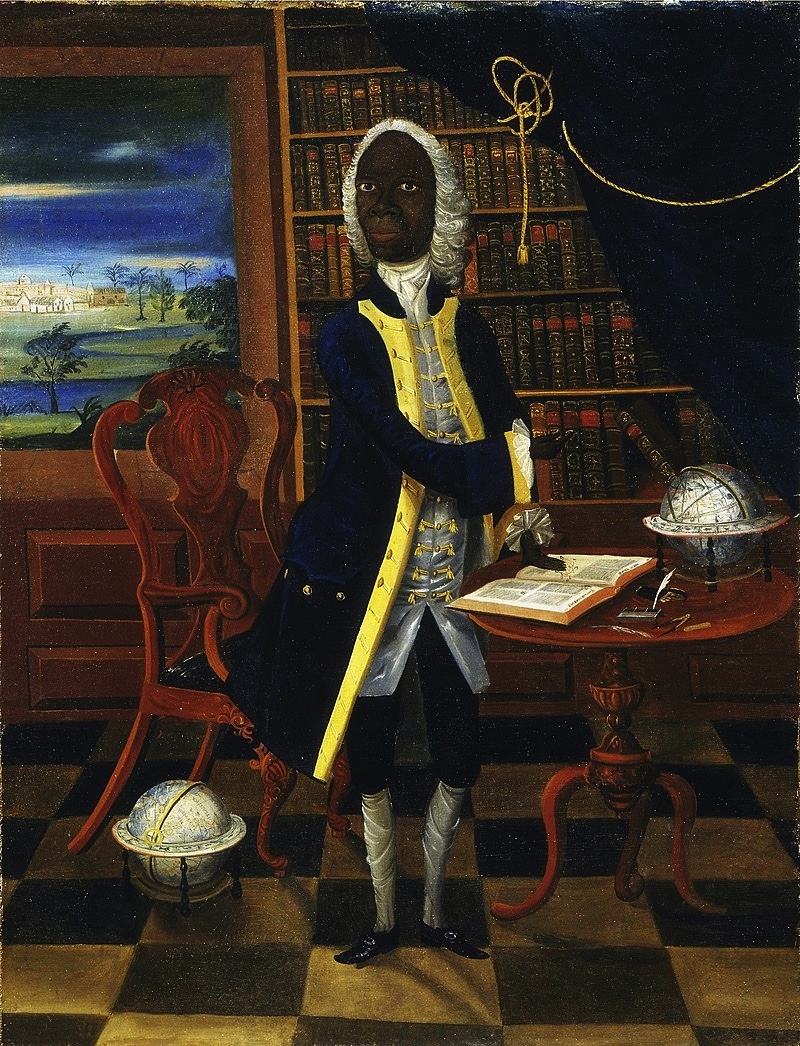
A boom of astronomical interest emerged after Uranus and Neptune were discovered, with many European astronomers searching the skies in the hopes of discovering a new planet, moon, or comet to name after themselves. One of these astronomers was Edmond Halley, who theorised that comets were returning visitors that orbited widely around the sun. Tracing back a number of comets that appeared to Earth in ~76-year intervals, Halley predicted that the comet that appeared to the Saxons and Normans in 1066 also appeared periodically in 1145, 1222, 1301, 1378, 1456, 1531, 1607 and 1682. He therefore predicted that the comet would return around 1759. Halley never lived to see his prediction confirmed, as he died in 1742, but many contemporary astronomers, such as Jamaican Francis Williams, confirmed the theory upon the comet’s arrival. The comet was named Halley’s Comet in honour of the man who concluded that it was a returning visitor.
FURTHER AFIELD
The observations that we have examined so far in the Renaissance and Enlightenment periods have all occurred within the solar system. While the discovery of planets and laws of physics dominated this period of history, observations of galaxies and nebulae were also underway, often by the same people.
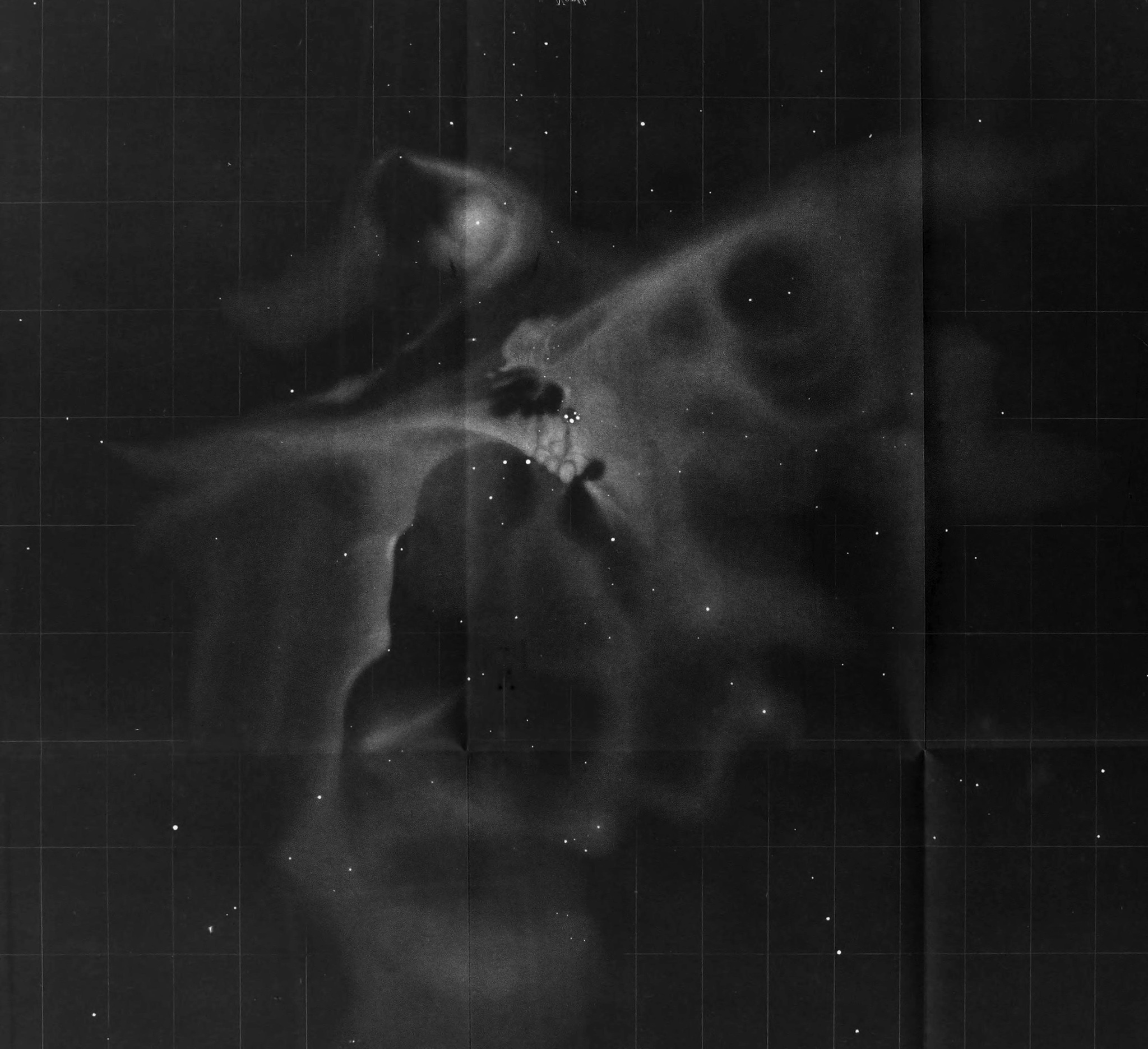
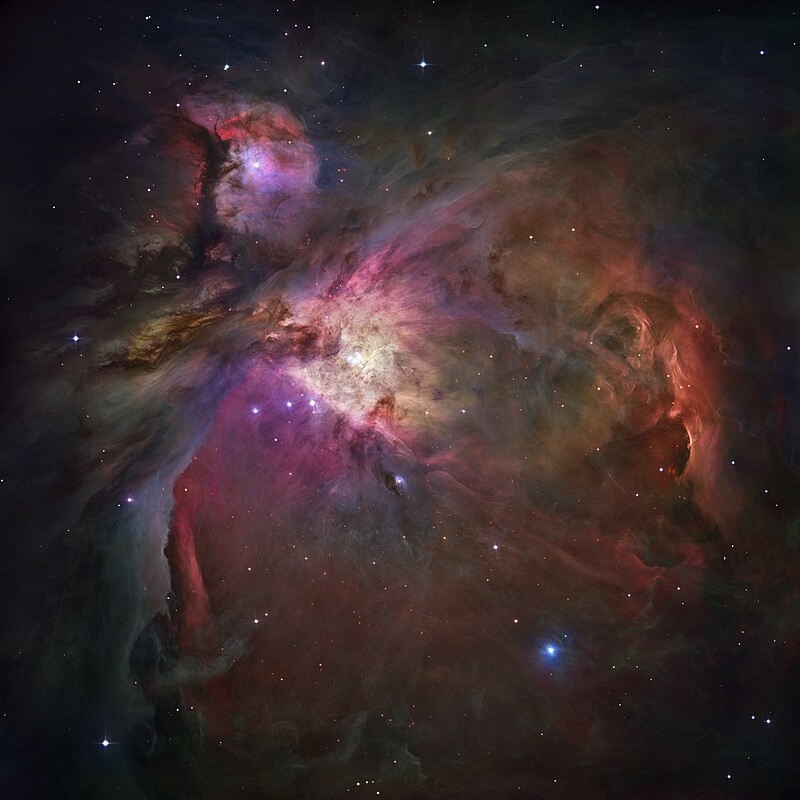
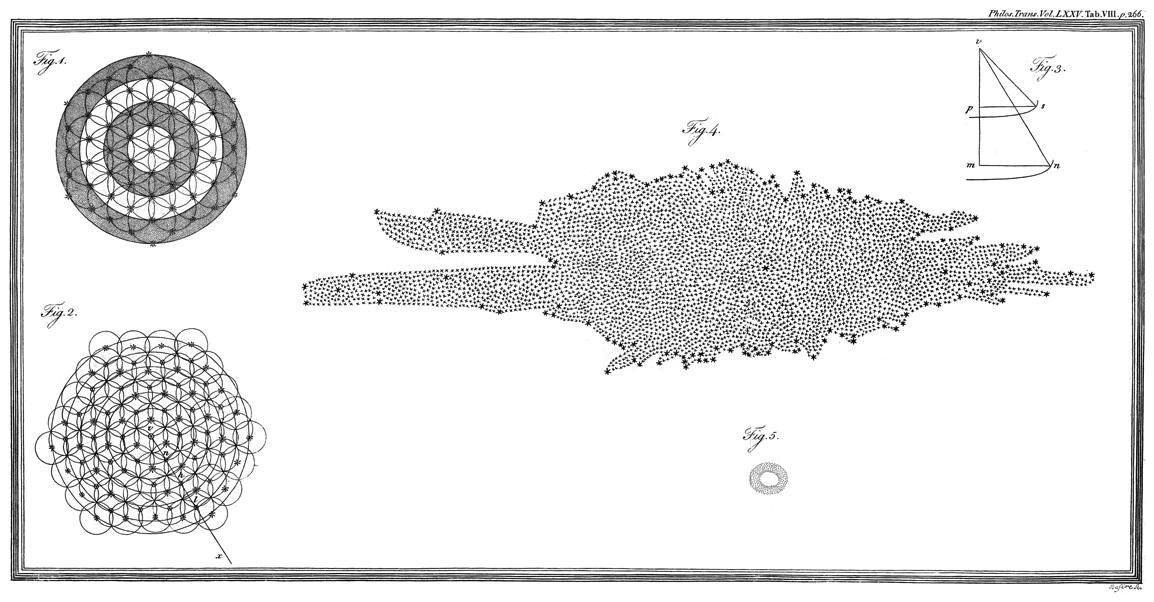
Christiaan Huygens was one of several scientists to claim the discovery of the Orion Nebula, the largest star-forming nebula observable from Earth, and visible to the naked eye under perfect conditions. It is thought that the Mayans discovered the nebula originally and, rather accurately, associated it with fiery creation. John Herschel would publish the first drawing of the nebula 200 years later in 1847, following in the footsteps of his father William Herschel, who published the first drawing of the Milky Way in 1785. William Herschel believed that the sun was located towards the centre of the Milky Way, reflecting humanity’s assumption that we are significant enough to be ‘close to the centre’ of things, as had previously occurred with the geocentric model and early maps of Earth placing the Mediterranean (meaning “middle of the Earth”) at the centre.
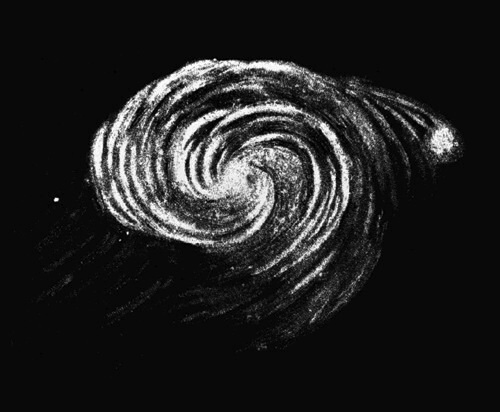
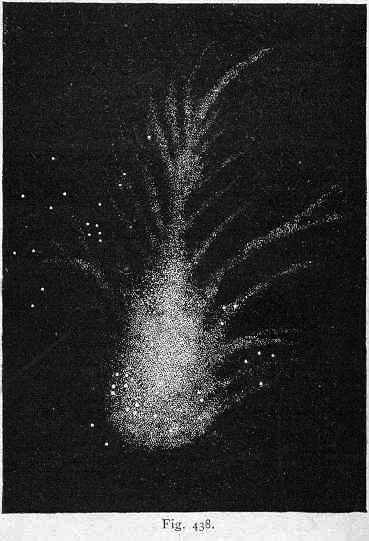
Over in France, Charles Messier, while searching the night sky for comets and becoming frustrated by the distractions of distant clusters and gas, created a catalogue ( now known as the Messier Catalogue) of star clusters, galaxies and nebulae visible in the northern hemisphere. The catalogue was gradually added to by Messier himself and other astronomers. In particular, Caroline Herschel, the often forgotten astronomer, sister and assistant to William Herschel, would add a final galaxy to the Messier catalogue in the late 18th century: a dwarf galaxy and satellite of the Andromeda Galaxy, named M110. That same night, she would also discover the Sculptor Galaxy, though this would not be included in the Messier catalogue as it appeared too close to the southern hemisphere. Many of the most iconic nebulae, clusters and galaxies in the night sky are included in this list, such as the Crab Nebula (M1), the Triangulum Galaxy (M33) and the Pinwheel Galaxy (M101). 19th-century British astronomer Lord Rosse would also observe these bodies and sketch them out. Some sketches appear very differently from the photographs that we are able to take in the 20th and 21st centuries, while others, such as the drawing of the Pinwheel Galaxy, have striking accuracy.
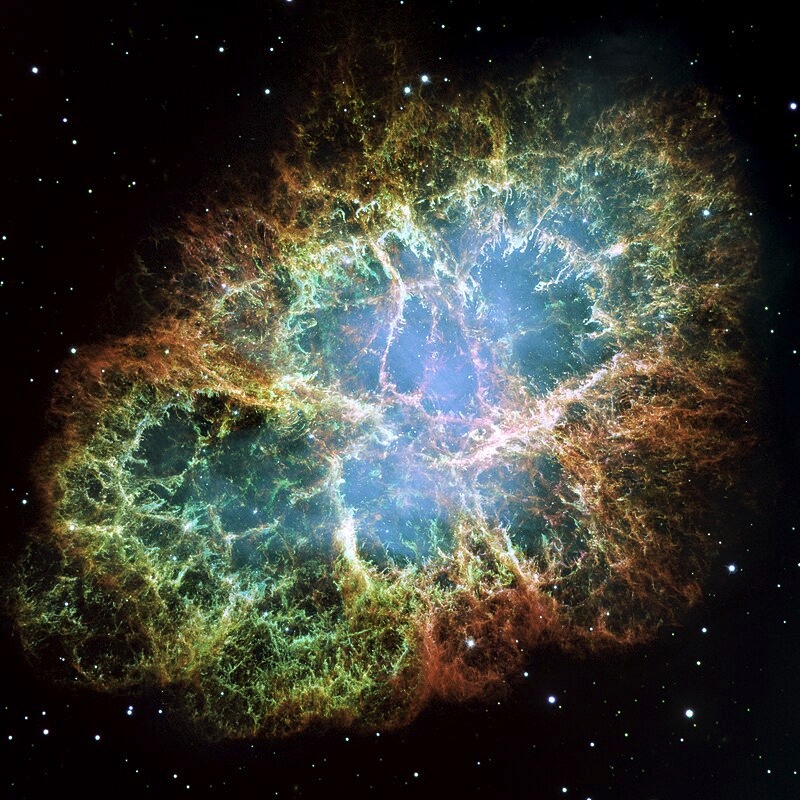
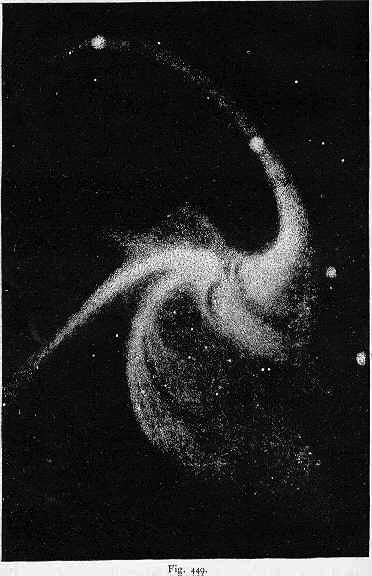
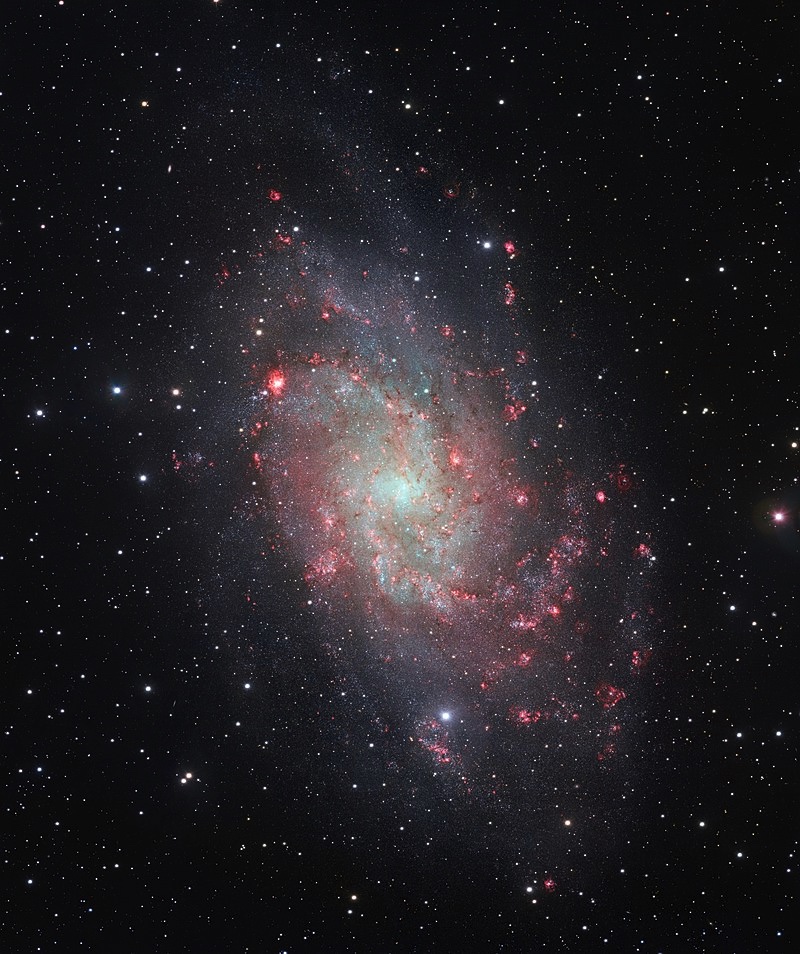
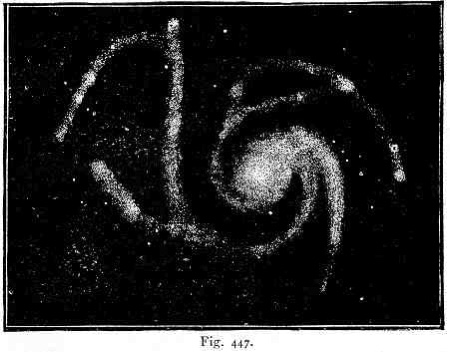
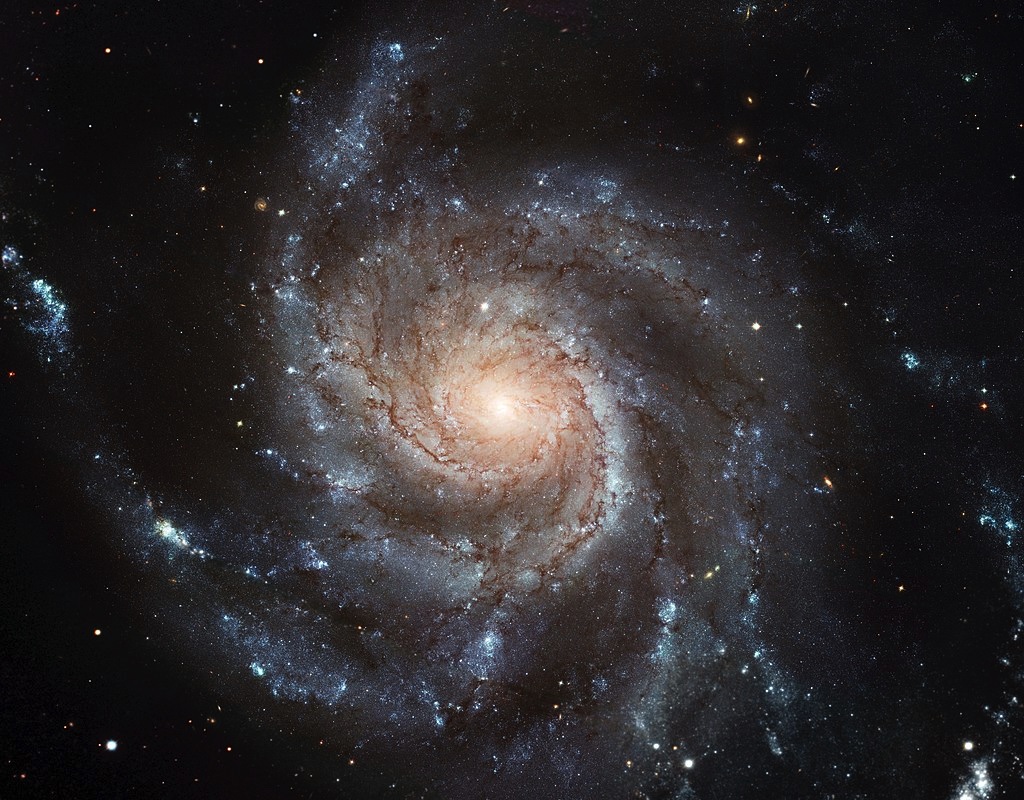
While observing these Messier items, Lord Rosse discovered that many had a similar spiral-esque shape. He named these structures ‘spiral nebulae’, believing them to be nebulae residing within the Milky Way that generated an exceptional number of stars. These nebulae, we now know, are galaxies separate from our own galaxy and millions of light-years away, but this would not be established until the 20th century. For Rosse, these were merely dust clouds dotted around the Milky Way, the only galaxy in the universe.
CONCLUSION
Here we leave the astronomical observations of the Renaissance and move through to the beginning of the 20th century. In Part III of this series of articles, we will dedicate the entire investigation to the most significant and productive era of universal observation, beginning in the 1900s, continuing through the 2000s, and extending to the present day.
Written by Rhiannon Ford
References
‘Aryabhata.’ Ramanujan College. Accessed Nov 22, 2025. https://ramanujancollege.ac.in/departments/department-of-mathematics/academic-resources/ancient-indian-mathematicians/aryabhata-476550-ce.
Barnett, Amanda. ‘1P/Halley.’ NASA. Nov 3, 2024. Accessed Nov 22, 2025. https://science.nasa.gov/solar-system/comets/1p-halley/.
Belleville, Michele. ‘Charles Messier.’ NASA. Oct 4, 2023. Accessed Nov 22, 2025. https://science.nasa.gov/people/explore-the-night-sky-hubbleatms-messier-catalog-bio/.
‘Christiaan Huygens: Discoverer of Titan.’ ESA. Accessed Nov 22, 2025. https://www.esa.int/About_Us/50_years_of_ESA/Christiaan_Huygens_Discoverer_of_Titan.
Gianopoulos, Andrea. ‘Hubble’s Messier Catalog.’ NASA. Mar 27, 2025. Accessed Nov 22, 2025. https://science.nasa.gov/mission/hubble/science/explore-the-night-sky/hubble-messier-catalog/.
Herschel Museum of Astronomy. 2025. Accessed Nov 22, 2025. https://herschelmuseum.org.uk/.
O’Connor, J J, and E F Robertson. ‘Aristarchus of Samos.’ MacTutor. Apr 1999. Accessed Nov 22, 2025. https://mathshistory.st-andrews.ac.uk/Biographies/Aristarchus.
‘Philolaus – 4.2 Astronomical System.’ Stanford Encyclopedia of Philosophy. Sep 27, 2024. Accessed Nov 22, 2025. https://plato.stanford.edu/entries/philolaus/#AstSys.
‘Psalm 104.’ King James Bible. Accessed Nov 22, 2025. https://thekingsbible.com/Bible/19/104?verse=5.
Stevens, Michael. “Travel INSIDE a Black Hole.” Vsauce. Mar 7, 2012. YouTube video, 9:02-9:35. https://www.youtube.com/watch?v=3pAnRKD4raY.
‘The Appearances of Halley’s Comet.’ Universal Compendium. 2024. Accessed Nov 22, 2025. https://www.universalcompendium.com/tables/science/ast/hc.htm.
“The Earth Spins Round the Sun SONG | Moon Mayhem | Horrible Histories.” Horrible Histories. Apr 18, 2023. YouTube video. https://youtu.be/DrdSp2f7psY?si=F10L60vFCrTqHvt9.
Whistler, Simon. “Copernicus: A Revolution of Astronomical Proportions.” Biographics. Sept 12, 2019. YouTube video. https://www.youtube.com/watch?v=GXi6YSkddD8.
Whistler, Simon. “Galileo Galilei: Father of Modern Science.” Biographics. Mar 19, 2019. YouTube video. https://www.youtube.com/watch?v=5eMYZCnNALc.
Whistler, Simon. “Isaac Newton: The Man and his Hidden Life.” Biographics. Dec 31, 2018. YouTube video. https://www.youtube.com/watch?v=TJawNbIGYbo.
Whistler, Simon. “Johannes Kepler: God’s Mathematician.” Biographics. Nov 22, 2019. YouTube video. https://www.youtube.com/watch?v=–Tqp9nwCNk&t=87s.
Images (in order of appearance)
Lord Rosse. First sketch of the Whirlpool Galaxy. 1845. 500 x 412. The Planetary Society, California. https://www.planetary.org/space-images/first-sketch-of-the-whirlpool-galaxys-spiral-structure.
Galilei, Galileo, and World Digital Library. Galileo moon drawings. 1610. 1024 x 1314 px. NASA, United States of America. https://science.nasa.gov/image-detail/galileo-moon-3/.
Chestnutscoop. Iapetus Spinning Animation. 2025. 3D render. 1280 x 720 px. DeviantART. https://www.deviantart.com/chestnutscoop/art/Iapetus-Spinning-Animation-1267510466.
Francis Williams, the Scholar of Jamaica. ~1759. Oil on canvas. 66 x 50 cm. V&A Museum, London. https://commons.wikimedia.org/wiki/File:Francis_williams.jpg.

Herschel, John and Fabian RRRR. 1847. Orion Nebula – Drawing. 3,095 × 2,827 px. Wikicommons. https://commons.wikimedia.org/wiki/File:Orion_Nebula_-_Drawing_-_John_Herschel_-1847.jpg.

NASA, ESA, Hubble Space Telescope Orion Treasury Project Team, Massimo Robberto. Orion Nebula. 2006. Photograph. 18,000 x 18,000 px. NASA, the United States of America. https://science.nasa.gov/asset/hubble/hubbles-sharpest-view-of-the-orion-nebula/#:~:text=Together%2C%20the%20two%20sections%20form,sometimes%20called%20%22failed%20stars.%22.
Herschel, William. First drawing of the Milky Way. 1795. 1,154 × 602 px. Wikicommons. https://commons.wikimedia.org/wiki/File:Herschel-galaxy.jpg.

Lord Rosse. Lord Rosse’s drawings of M1. 1844. 369 x 541 px. SEDS, Massachusetts. http://www.messier.seds.org/more/m001_rosse.html.
NASA, ESA, J. Hester and A. Loll. Crab Nebula. 2005. Photograph. 3864 × 3864 px. NASA, the United States of America. https://science.nasa.gov/asset/hubble/a-giant-hubble-mosaic-of-the-crab-nebula/.
Lord Rosse and R.J. Mitchell. Lord Rosse’s drawing of M33. 372 x 576 px. SEDS.
http://www.messier.seds.org/more/m033_rosse.html.
Triangulum Galaxy. 2014. Photograph. 19058 x 15983 px. ESA, France. https://www.eso.org/public/images/eso1424a/.
Lord Rosse. Lord Rosse’s drawings of M101. 451 x 353 px. SEDS, Massachusetts.
http://www.messier.seds.org/more/m101_rosse.html.
Pinwheel Galaxy. 2006. Photograph. 15,852 x 12,392 px. ESA/ Hubble, France. https://esahubble.org/images/heic0602a/.