Secrets, Lies, and Scandal: The Cleveland Street Case
In 1889, Victorian England was rocked by one of its most shocking scandals. From royal involvement to alleged government cover ups, the Cleveland Street affair had all the great makings of a truly infamous case. Most importantly, it depicts the presence of a lesbian, gay, bisexual, and transgender (LGBT) community, although a perverse one, in the notoriously prudish Victorian era, as well as showing the struggles that these groups went through. In addition, the story reflects a growing Marxist presence in British society, as many radical Members of Parliament (MPs) saw the scandal as reflecting a class struggle. The story began with a simple charge of theft. A messenger boy working for the post office was found with a suspicious amount of money in his possession, much more than his wage would warrant. It was naturally assumed that he had been pocketing some money from a parcel he had delivered, but when the boy was pressed about it, a much darker story was revealed. The 15-year-old messenger boy had obtained the money by working for a homosexual brothel on Cleveland Street, London. In Great Britain, sexual acts between males were illegal under the draconian Criminal Amendment Act of 1885 under the name of ‘‘gross indecency between males.’’ This law aimed to root out the LGBT community from the country by any means, especially by classing even the most harmless or private acts within the broad category of ‘gross indecency.’
After a thorough interrogation of the messenger boy, a group of other similarly aged messenger boys, their procurer Henry Newlove, and another post office employee were all also brought into questioning. Despite this, the police’s slow and inadequate investigation meant that the owner of the brothel, Charles Hammond, was able to escape to France before he could be arrested and charged. However, the real shock hit when Newlove began to reveal the names of the brothel’s regulars. He said: “I think it very hard that I should get into trouble while men in high positions are allowed to walk about free … Lord Arthur Somerset goes regularly to the house at Cleveland Street, as does the Earl of Euston.” These were no ordinary aristocrats. Lord Arthur Somerset was an aide to Prince Albert Victor, the eldest son of the Prince of Wales and as a result was presumed to be a future king before his untimely death. Later newspapers went so far as to claim that 80 well known individuals were frequenting the establishment, including the French far right wannabe dictator, Georges Ernest Boulanger.

The news of the denouncement of these notable characters spread like wildfire up the police hierarchy. Soon many members of the British government were involved. Both the attorney general and the director of public prosecutions believed that Lord Somerset should be tried and punished severely, but many cabinet members disagreed, so a prosecution was blocked for a long while. The issue eventually ended up at the table of the Prime Minister, Lord Salisbury. After long deliberation among the cabinet, the demand for justice and a swift end to the investigation outdid the desire to avoid an aristocratic scandal, and the order to issue a warrant for Somerset was given. However, the time it took for the cabinet to decide on what action to take meant that Lord Somerset was able to slip off to France by the time the warrant was issued for his arrest. The mismanagement of justice that allowed Somerset to escape was met with outrage by many, most notably the radical liberal MP Henry Labouchere, who had first introduced the draconian Criminal Amendment Act of 1885. In his newspaper, Truth, Labouchere launched a cavalcade of attacks that condemned the government for its slothfulness in prosecuting the high ranking perpetrators. He also denounced the government in various speeches in the House of Commons, asking ‘‘why are the minnows to be imprisoned, and the sharks to be allowed to go scot-free?’’ emphasising that the high class noblemen were given legal immunity over ‘men of lower estate.’
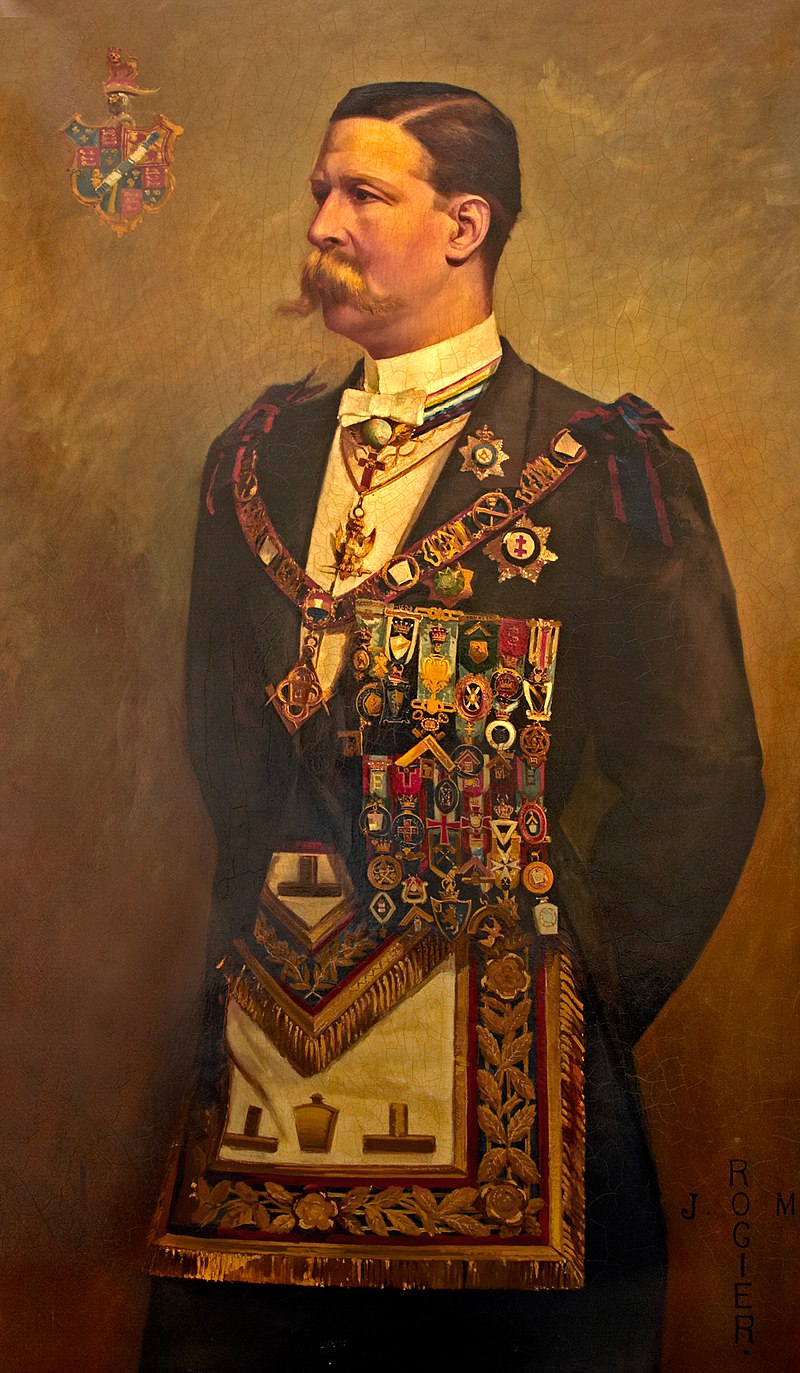
Even before Labouchere made the case a nation-wide political and social scandal, however, another newspaper also reported on the events unfolding. The little-known North London Press and its editor, Ernest Parke, utilised the scandal to push their radical agenda and to attack Lord Salisbury’s government, who they despised. Parke was in fact the first editor to discuss the story, having learnt about it from one of his reporters who wondered why the persons involved in the case all seemed to be getting off lightly, whilst other newspapers hushed it down. If it was not for the efforts of Parke himself, it is likely that the story would never have exploded, and it was likely that Labouchere would not have engaged with it. The main talking point of Parke and his North London Press was the guilt of Lord Euston, who had been mentioned by Newlove as a high ranking patron of the brothel. In keeping with the tradition of the time, Lord Euston brought a libel case against Parke’s allegations and brought with a truly fascinating defence. It was that he had actually entered the Cleveland Street establishment thinking that he would be seeing naked actresses, and therefore he was not committing gross indecency. Despite this genius defence, it was only the inconsistent accounts of Parke’s witnesses that won the case for Euston, who nonetheless would be chased by rumours for the rest of his life. In another trial, the lawyer of Lord Somerset was found guilty of bribing witnesses and helping various characters escape from Great Britain to avoid prosecution, including the owner of the brothel. The bribe money itself was coming out of the pocket of Lord Somerset, which further incriminated the man in the eyes of all involved.
In all trial documents and newspapers involved, the omission of homosexuality is most emphasised. Reports of the case mention ‘‘a very serious offence that need not be specifically described’ and an ‘unutterable and abominable crime.’’ In the face of accusations that the government was hushing up the involvement of high-ranking members of Victorian society, a common response was that ‘’the vague talk about ‘hushing up’ is simply foolish. All cases of this particularly vile and unmentionable kind are “hushed-up” from a regard for public decency.’’ This clearly shows the bigoted attitude towards even the most basic mention of non-heterosexual relationships. In newspapers of the time, such as the aforementioned North London Press, this homosexual scandal was discussed in much more condemning terms than, for example, Lord Galloway’s public molestation of a girl aged 10. Another poignant example would be the declaration of Labouchere that homosexuality was worse than murder. Whilst the Cleveland Street brothel was most certainly an exploitative and pedophilic institution, the reaction towards it was mainly one more concerned with homophobia and the perpetrators (actual and alleged), rather than the welfare of the boys who were its victims. As a result, the boys were almost entirely forgotten in the discourse about the scandal. Other than the homosexual aspect, the scandal also fueled the fire of anti-aristocratic and anti-elitist sentiment among the populace. It was emphasised in the papers that the nobility could get away with anything, whilst their common accomplices were punished for their roles.

The most outrageous part of the scandal expressed itself only towards the end of its time in the spotlight. In numerous American newspapers, but never British ones, the heir presumptive of the British throne, Prince Albert Victor, was also accused of involvement in the scandal. It was alleged that the prince’s recent trip to India, that began in October 1889 as the scandal began to blow up in the media, was just a tactic to escape from the public light for the duration of the scandal. However, the fact that this never circulated in British newspapers meant that it never became part of the British public perception of the scandal. Nonetheless, the scandal, as all do, eventually fell out of favour with the public. Although the people’s interest shifted to other topics that were more pressing at the time, the scandal remained in the back of the British mind for a time to come. The public association between homosexuality and aristocracy grew, while so did the dissatisfaction towards the government’s general favouring of aristocrats in legal cases. This can be best seen in the much more famous trial of Oscar Wilde in 1895, who was charged with gross indecency for a relationship with the aristocrat Lord Alfred Douglas.
All in all, the Cleveland Street scandal is a clear example of the bigoted attitudes towards homosexuality commonplace in the Victorian era. Homosexuality was unilaterally condemned in all its forms in the press coverage that followed the scandal, not just the perverse form found at Cleveland street. Homosexuality was also caught up in the wave of anti-aristocratic attacks that also stemmed from the scandal, and the two became untangleable. Some of those vocal about the topic, such as Henry Labouchere, attacked both aspects of the scandal in his newspaper and his parliamentary speeches. Overall, the LGBT community was seriously harmed by the scandal, and Victorian England once again proved to be an unsafe environment for gay men.
Written by James Lamont
Bibliography
Dockray, Martin. “The Cleveland street scandal 1889–90: The conduct of the defence.” The Journal of Legal History 17, no.1(1996): 1-16.
Hindmarch-Watson, Katie. “Sex, Services, and Surveillance: The Cleveland Street Scandal Revisited.” History Compass 14, no.6 (2016): 283-291.
Hyde, H. Montgomery. The Cleveland Street Scandal. New York: Coward, McCann & Geoghegan, 1976.
Simpson, Colin, Lewis Chester and David Leitch. The Cleveland Street Affair. Boston: Little, Brown, 1976.
Zanghellini, Aleardo. “The Victorian Age: The rhetorical conflation of homosexuality and poor government in the Cleveland Street and Dublin Castle scandals.” In The Sexual Constitution of Political Authority: The ‘Trials’ of Same-Sex Desire, 127-162. New York: Routledge, 2015.
Image References – in order of appearance
Tweedland. “The Cleveland Street Scandal” 2014. Accessed Aug 23rd, 2025. https://tweedlandthegentlemansclub.blogspot.com/2014/11/the-cleveland-street-scandal.html.
“British politician Henry Labouchere (1831-1912)”. Wikimedia Commons, 2007. https://commons.wikimedia.org/wiki/Category:Henry_Labouch%C3%A8re#/media/File:Henry_Labouch%C3%A8re.jpg/2.

“Henry James Fitzroy, Earl of Euston”. Wikimedia Commons, 2021. https://commons.wikimedia.org/wiki/Category:Henry_James_FitzRoy,_Earl_of_Euston#/media/File:The_Earl_of_Euston_wearing_Masonic_regalia.jpg/2.

“Prince Albert Victor, Duke of Clarence (1864-1892)”. Wikimedia Commons, 2022. https://commons.wikimedia.org/wiki/Category:Prince_Albert_Victor,_Duke_of_Clarence_and_Avondale#/media/File:Prince_Albert_Victor,_Duke_of_Clarence_(1864-1892).jpg.
.jpg)