Whatever Happened to Leon Trotsky? An Overview of Trotsky’s Last Exile, 1929-1940
Introduction
At the end of the 1920s, communist revolutionary and the former Soviet Commissar for War under Lenin, Leon Trotsky, found himself in a precarious but familiar position. He had risen to a level of importance secondary only to Lenin, having played an indispensable role in the 1917 October Revolution and the ensuing Civil War’s Bolshevik victory, and was seen by some as his natural successor. It was not the first time he had faced exile, having been forced out for his revolutionary activities under the Tsar in 1898 and 1905. After Lenin’s death, Trotsky was washed away in the ensuing power struggle by Stalin’s political manoeuvres against him and painted as an enemy of the proletarian revolution, cast from the communist dictatorship he had helped create and defend. Looking into Trotsky’s exile provides us with an interesting insight into how he was forced to adapt as a pariah, finding his way as he was isolated from the Union of Soviet Socialist Republics (USSR), where his fate was ultimately being decided in an era of turbulent change and upheaval.

Background
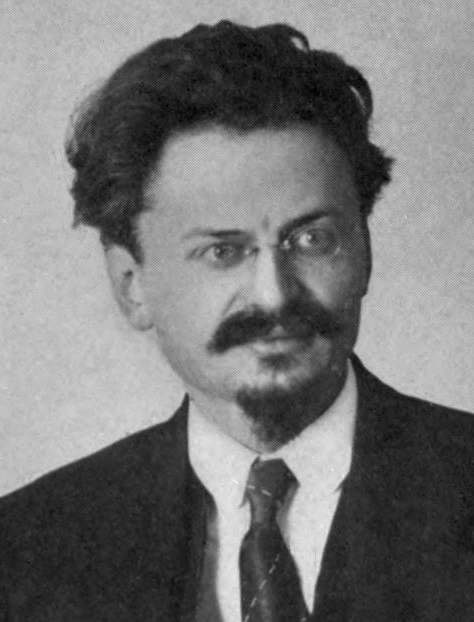
In scholarship on revolutionary Russia, there is a large focus on Trotsky due to his role in coordinating the October Revolution and winning the Civil War. Biographer of Trotsky, Dmitri Volkogonov, argues that, whether people loved or hated him for his arrogance and uncompromising will, they could not deny that he was second only to Lenin in the revolution. Despite his later position as the regime’s demonised enemy, Robert Service illustrates that he was integral for laying down some of its foundation stones through the repressive, authoritarian methods he favoured for establishing Soviet power.
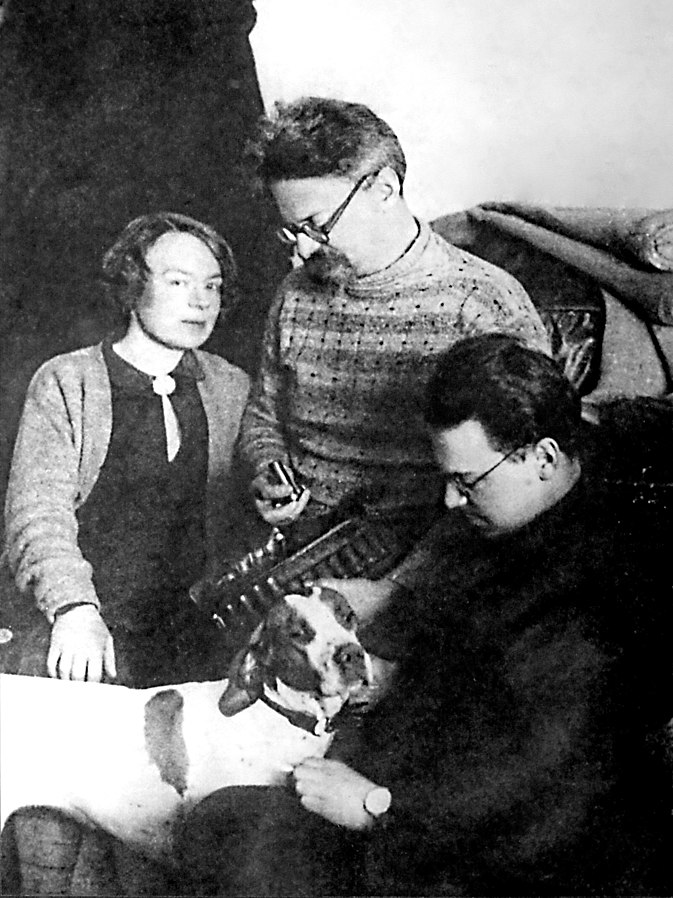
Trotsky was initially exiled internally to Kazakhstan with his wife, Natalia, and eldest son, Lev, for his opposition to Stalin and refusal to capitulate, as his comrades Grigori Zinoviev and Lev Kamenev had. Despite ongoing vilification, he was still well-known and popular enough that exile was likely viewed as the best solution. He left behind his two daughters from his first marriage, the former of whom died from tuberculosis in 1929, and younger son, Sergei.
Turkey, 1929-1933
Stalin’s enemy was shifted beyond the borders of the USSR, with an agreement struck up with Turkey to take in the aging revolutionary, and he lived on the island of Prinkipo. Trotsky’s political allies acted as bodyguards out of concern for the number of former White Army officers living nearby (the Bolsheviks’ defeated enemies from the Civil War) and potential Stalinist agents. Trotsky would reside here for three years in a dilapidated and sparsely furnished villa, finding leisure in fishing trips with the locals.
This was a productive period for Trotsky, in good health and unharassed, his lack of interest in Turkish affairs earning him amnesty from the authorities. Here he wrote his autobiography and his seminal History of the Russian Revolution, which obtained him enough money to allow him and his political allies to continue publishing their oppositionist Bulletin, which was smuggled into the USSR in small numbers. Despite a relatively quiet exile in Turkey, he was denied from other European countries; he was still seen as a rabid revolutionary, a poisonous presence within any capitalist state.
Even in the tranquil villa on Prinkipo, Trotsky still suffered politically and personally. The dial on oppositionists in the USSR was turned up, with more arrests and deportations, as well as the capitulation of important allies like Karl Radek. Stalin’s leftward shift towards industrialisation and collectivisation blindsided oppositionists who had criticised his previous stances. As his contacts waned, Trotsky’s criticism of the pace of collectivisation and Stalin’s lack of concern for the rise of the Nazis in Germany fell on deaf ears. His daughter, Zinaida, had followed him out of the USSR with her son, suffering after the permanent cancellation of her Soviet citizenship, separating her from her husband and daughter. Mentally and physically ill, she committed suicide in Berlin, leaving her son, Seva, in her half-brother’s care.
France, 1933-35
Trotsky gained asylum in France, but the following years were markedly more tense than before, as escalating persecution in the USSR and tetchiness of the French authorities made his security uncertain. On their first night in Royan, the house Trotsky and his wife were staying in caught ablaze. He suffered from ill health from the beginning, significantly hindering his ability to work and meet political sympathisers, increasing his reliance on Lev’s assistance. A temporary respite came as he moved closer to Paris for six months, where he began to consider creating a rival Communist International to the Stalin-dominated Comintern. Right-wing criticism of his asylum urged the French government to ask Trotsky to move somewhere more remote.
Near Grenoble, Trotsky complained that his newly isolated situation, without bodyguard or secretary, differed little to imprisonment. The lack of letters that could get to him from outside the USSR was a new development, but any word from within dried up long ago. Trotsky, Zinoviev, and Kamenev were held responsible for Soviet politician Kirov’s murder in late 1934, signalling a new phase in Stalinist prosecution. Natalia stopped receiving correspondence from Sergei, their son in the USSR with little interest in politics. Sergei was accused of attempting to poison workers and was likely executed. When the Franco-Soviet Treaty of Mutual Assistance was signed in 1935, Trotsky sought asylum in Norway, whose Labour Party had just taken office.
Norway, 1935-37
Norway’s Social Democratic government outwardly received Trotsky, with pride in their hospitality towards this revolutionary, yet the terms of Trotsky’s asylum were as strict as those he experienced in France; he refrained from interfering in the country’s political affairs and from visiting the capital city. He and his wife lived with Social Democrat Konrad Knudsen’s family and were able to more freely meet with allies again. While his health remained unpredictable, he managed to write The Revolution Betrayed, a Marxist condemnation of Stalin, criticising his claim to have achieved socialism in the USSR, and the rise of the privileged bureaucracy. The book sold well globally and has remained the key text when studying Trotsky’s criticism of Stalinism. After the book’s completion, the Knudsens’ house was broken into by burglars, whom Knudsen’s daughter had fended off in their attempt to steal some of Trotsky’s documents.
Trotsky was then hit by accusations from Moscow hitherto unthinkable; the Moscow Trials began in 1936, suggesting that Trotsky still worried the Kremlin elite. Himself, Lev, Zinoviev, Kamenev, and fourteen others were accused of treason, attempts to assassinate Stalin, terrorism, and even collusion with the Gestapo. Stunned, the household sat and listened to the wireless as the trial unfolded. Trotsky’s former comrades testified to extraordinary acts of conspiracy and treachery, culminating in Trotsky and his son being condemned to death in absentia, and Zinoviev and Kamenev’s executions. Before he could consider how to act in his defence, the Norwegian government, under Soviet pressure, quickly placed Trotsky and Natalia under house arrest. It fell to Lev in Paris to take up his and his father’s defence, an effort Trotsky was profoundly proud of despite their imperfect relationship. Trotsky remained indignant at his treatment by the Norwegian government for the rest of his life, and was deported at the end of 1936, having been granted asylum in Mexico.
Mexico, 1937-1940

After a long voyage in a petrol tanker, Trotsky and Natalia were warmly greeted by allies, including artist Frida Kahlo, whom the two would live with for a couple years in her and her husband Diego Rivera’s famous Blue House in Coyoacán. The country was undergoing a radical populist transformation and had provided refuge for Republican exiles of the Spanish Civil War, making it appropriate for Trotsky to settle there. Furthermore, it improved his contacts with comrades in the United States, many of whom would assist him as bodyguards and secretaries, while helping him establish the Fourth International in 1938. The Moscow Trials continued, and many of Trotsky’s former sympathisers began to waver; withdrawing all support from the USSR while the Nazis were menacing Europe was unattractive. Trotsky’s American comrades helped create the 1937 Dewey Commission, organised in an attempt to publicly repudiate the accusations against Trotsky and evidence his innocence. This was chaired by philosopher John Dewey, no political sympathiser of Trotsky’s, in an effort at impartiality. The Commission concluded that Trotsky and Lev were innocent, and the Moscow Trials were frameups, but this did little to alter their fate.
The Commission’s verdicts were, however, little consolation in the face of more personal blows to Trotsky and Natalia. A bizarre and brief affair between the revolutionary and Frida Kahlo temporarily fractured his relationship with his loyal wife, who had travelled across the world and suffered tremendously by his side. Political discord between Trotsky and Rivera also broke out, leading to their departure from the Blue House. Secretaries and other allies vanished in Europe, with one found dismembered in the Seine. Lev, under massive amounts of stress, had been taken ill and died mysteriously and suddenly in Paris, likely something to do with the undercover Soviet agent who had gained his trust. The impact of this on Natalia and Trotsky was more devastating than anything before; their last remaining child, and an integral part of their political organisation, was gone.
In Coyoacán, Trotsky kept himself busy despite the sense that the noose was tightening. He kept chickens and a small army of rabbits in the garden, and brought his comrades on exhausting cactus-hunting missions. He continued to criticise Stalin and attempted to analyse the developing events in Europe, though now at an increased distance. After Lev’s death, he manoeuvred to bring Seva to Mexico, but his grandson seemed no safer with him. One night in May 1940, assassins fired machine guns through their house. Natalia pushed her sleeping husband to safety, and the family were lucky this time – only Seva sustained an injury: a shot to the foot. Trotsky’s security had to be reconsidered, though he grew uncomfortable with the lengths at which his followers were willing to go to keep him safe.
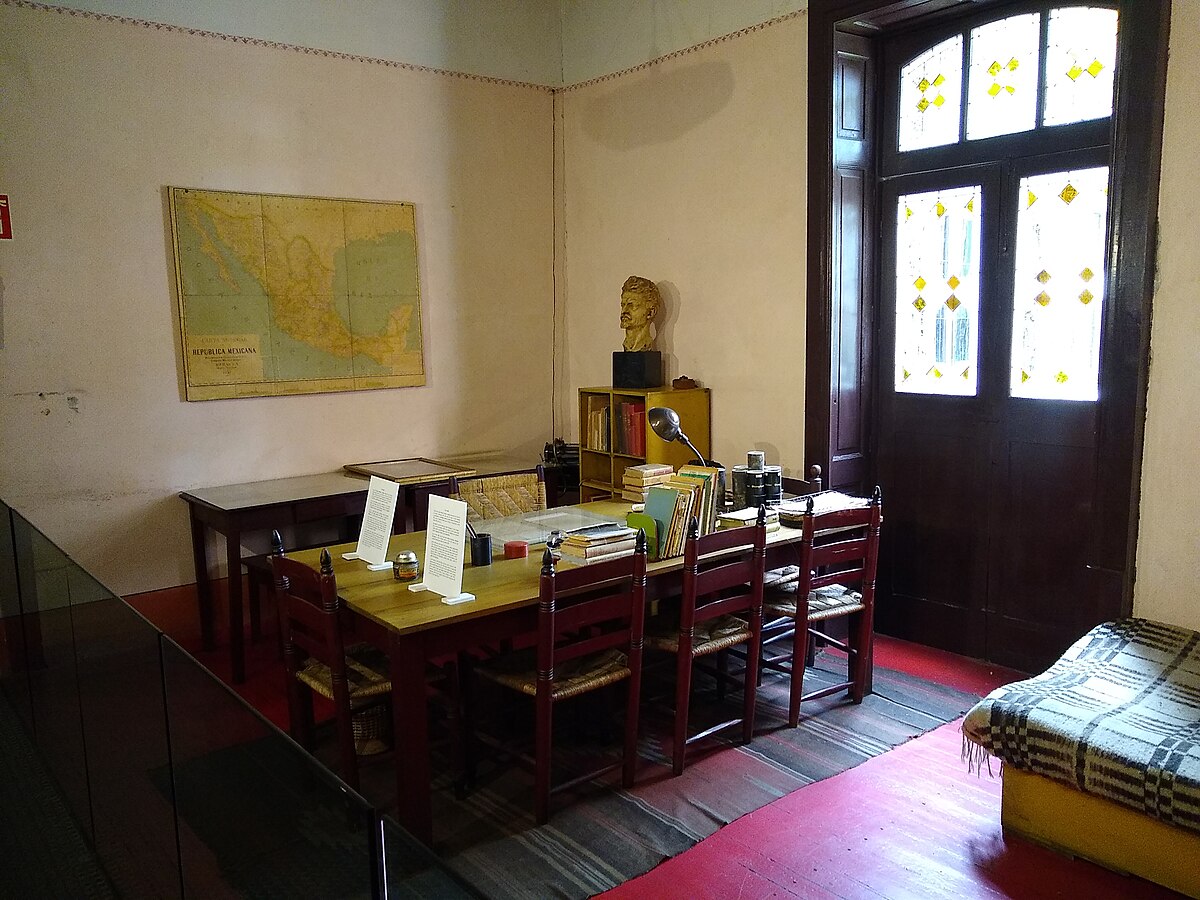
The finale came on 20 August, 1940, when Ramón Mercader, a People’s Commissariat for Internal Affairs (NKVD) agent who had wormed his way into Trotsky’s circle, met him in his study to discuss an article Mercader had written. While Trotsky was distracted, Mercader plunged an ice axe into his head, but failed to kill him instantly. The heavily bleeding Trotsky managed to avoid another blow, but the blood loss and shock was too much to survive, and he died in hospital just over a day later. In his final hours, he had little doubt that this was Stalin’s work. Trotsky was survived by his wife, Natalia, who lived until 1962, and grandson Seva (1926-2023), who turned his final house into a museum centred around Trotsky’s legacy.
Conclusion
Through the last decade of his life, doom had crept ever closer to Leon Trotsky, claiming his family and associates before reaching him across the globe, indicating the sheer animosity he had inspired within his enemies. His death went largely unlamented by much of the world, overshadowed by the growing World War, no matter his significance to the creation of the Soviet regime; he had fallen into its machinery, mercilessly crushed by cogs he had placed there in its early years. Trotsky’s final exile is fascinating as it illustrates a changing world, fascinated and repulsed by this revolutionary, as the countries that housed him grappled with the implications of his residence, while the support of sympathisers ebbed and flowed. While historians often feel his important historical role ends with his fall from power, even in Trotsky’s later years we find a dynamic figure who was the subject and analyst of important moments in early twentieth century history, one worthy of consideration beyond biographies.
Written by Iris Pinder
Bibliography
Images
Trotsky, Lenin, and Kamenev, via Wikimedia Commons, https://commons.wikimedia.org/wiki/File:Trotsky,_Lenin,_Kamenev_(1919).jpg [Accessed 18 Dec 2024].
.jpg)
Lenin Speech in 1920, via Wikimedia Commons, https://commons.wikimedia.org/wiki/File:After_Lenin_Speech_1920.jpg [Accessed 18 Dec 2024].

Trotsky in 1918, via Wikimedia Commons, https://commons.wikimedia.org/wiki/File:Trotsky_Portrait.jpg [Accessed 19 Dec 2024].

Natalia, Trotsky, and Lev in Kazakhstan, via Wikimedia Commons, https://commons.wikimedia.org/wiki/File:%D0%9B.%D0%94._%D0%A2%D1%80%D0%BE%D1%86%D0%BA%D0%B8%D0%B9_%D1%81_%D0%B6%D0%B5%D0%BD%D0%BE%D0%B9_%D0%B8_%D1%81%D1%8B%D0%BD%D0%BE%D0%BC_%D0%9B%D1%8C%D0%B2%D0%BE%D0%BC_%D0%B2_%D1%81%D1%81%D1%8B%D0%BB%D0%BA%D0%B5.jpg [Accessed 18 Dec 2024].

Trotsky, Natalia, and Frida Kahlo, via Wikimedia Commons, https://commons.wikimedia.org/wiki/File:Trotsky_%26_Khalo.jpg [Accessed 18 Dec 2024].

House of Leon Trotsky Museum- Trotsky’s study where he was assassinated, Thayne Tuason, via Wikimedia Commons, https://commons.wikimedia.org/wiki/File:Museo_Casa_de_Leon_Trotsky-_Trotskys_study_where_he_was_assassinated.jpg [Accessed 18 Dec 2024].

Primary
Sedov, Leon. The Red Book: On the Moscow Trials. New Park Publications, 1980. https://www.marxists.org/history/etol/writers/sedov/works/red/index.htm.
Serge, Victor, and Natalia Sedova Trotsky. The Life and Death of Leon Trotsky. Translated by Arnold J. Pomerans. London: Wildwood House, 1975.
Trotsky, Leon. The Revolution Betrayed. Translated by Max Eastman, 1937. https://www.marxists.org/archive/trotsky/1936/revbet/index.htm.
Trotsky, Leon. ‘Stalin Seeks My Death’. Transcribed by David Walters. The Fourth International, August 1941, Vol. 2, No. 7 edition. Leon Trotsky Internet Archive.
Trotsky, Leon. Trotsky’s Diary in Exile 1935. Translated by Elena Zarudnaya. London: Faber and Faber, 1958. https://archive.org/details/trotskysdiaryine00trot/page/n9/mode/2up.
Trotsky, Leon. My Life. New York: Grosset & Dunlap, 1960.
Dewey, John et al. Not Guilty: Report of the Commission of Inquiry into the Charges Made Against Leon Trotsky in the Moscow Trials. Transcribed by Martin Fahlgren. New York: Harper and Brothers Publishers, 1938. https://www.marxists.org/history/etol/document/dewey-report/index.htm.
Secondary
Cavendish, Richard. ‘Trotsky Offered Asylum in Mexico | History Today’. History Today 61, no. 12 (December 2011). https://www.historytoday.com/archive/trotsky-offered-asylum-mexico.
Deutscher, Isaac. The Prophet Outcast- Trotsky 1929-1940. London: Oxford University Press, 1963.
Patenaude, Bertrand M. ‘Trotsky in Exile’. Hoover Institution, 21 April 2010. https://www.hoover.org/research/trotsky-exile.
Service, Robert. Trotsky: A Biography. London: Pan Macmillan, 2010.. Volkognov, Dmitri. Trotsky: The Eternal Revolutionary. Translated by Harold Shukman. London: Harper Collins, 1996.