‘Blueshirts’: The Neglected Story of Irish Rightism in the Fledgling Free State
Introduction
Irish political history following the War of Independence (1919 – 1921), especially the history of the Irish Free State during its fragile existence between 1922 and 1937, is largely portrayed as popular democratic, radically republican, and perhaps even left-wing Marxist in character. Any disputes or political fragmentations that did occur were largely internal to the original and lasting Irish Nationalist movement. This came to a head during the Irish Civil War (1922 – 1923) with the pro-treaty national army and anti-treaty forces that both contained members of the original Irish Republican Army (IRA) from the War of Independence.
This portrayal of Irish politics obscures a key political story of the late 1920s and throughout much of the 1930s. During this period, although you were only ‘right-wing’ in as far as you supported certain Anglo-Irish treaties, you nevertheless remained Christian democratic and republican. Mirroring most of Europe following the 1929 Wall Street Crash and the ensuing Great Depression, Ireland too experienced what can at the very least be described as a right-wing, nationalist movement. At the very most, it could be described as a fascist movement.
From our modern perspective, with the Troubles, the rise of Sinn Fein, and the decline of the provisional IRA still fresh in our minds, when we look at Ireland we do not think of radical and often violent Irish politics originating from the Right. However, extremist right-wing politics in Ireland should not escape our attention, especially when considering the historical evidence that this article will provide.
Before going on to assess certain important questions, such as whether this right-wing movement was indeed fascist, it is important to give some background to the rise and fall of the multiple organisations that came to be collectively referred to as the Blueshirts.
Ireland’s Political Shift, 1932-1935
By the early 1930s, the dominant Irish political party Cumann na nGaedheal, largely constituted by the pro-Anglo Irish Treaty faction that had emerged victorious after the Irish Civil War, was on the wane. The key point of contention of the Anglo Irish Treaty (1921) was that, while the Treaty allowed a self-governing Irish State with its own army and police, it allowed Northern Ireland to opt out of the new state. After promptly leaving, the Irish Free State was left as an imperial dominion rather than an independent Republic. Cumann na nGaedheal was in decline, perhaps due to popular resentment against the terms of the Anglo Irish Treaty, but also due to failings to surmount the massive challenges of post-Civil War social and economic reconstruction. Comparatively, most of the remaining members of the anti-Treaty Sinn Fein party reconstituted themselves as a new party Fianna Fáil in 1926, spearheaded by prominent anti-Treaty figurehead Éamon De Valera. De Valera was a bogeyman for Cumann na nGaedheal, having briefly been imprisoned after the end of the Civil War. Fianna Fáil went into the election with a set of populist and protectionist policies, as well as stating that they would scale back the Anglo-Irish Treaty. In the face of accusations of being extremist and pro-Communist, Fianna Fáil returned as the largest party following the 1932 General Election and were thus able to form a government. Crucially, once in power, Fianna Fáil suppressed much of the public safety legislation directed against extant remnants of the anti-Treaty IRA, as well as releasing IRA members in prison. This came as a major shock to Cumann na nGaedheal and pro-Treaty members of Irish Society, such as veterans and members of the Irish Army and the Garda Síochána (the police force of the Irish state).
The Pro-Treaty Response and the Founding of the Blueshirts, 1932-1933
In 1932, in the face of rising IRA threats to Cumann na nGaedheal members and pro-Treaty figures, the Army Comrades Association was founded as a society for former Irish Army veterans of the Civil War who fought to preserve the Anglo-Irish Treaty. The Army Comrades Association was the first organisation to be labelled as the ‘Blueshirts.’ Amidst the Anglo-Irish trade war that commenced in 1932 and its backlash, De Valera called a snap general election in 1933, in which five members of the Army Comrades Association contested the election for Cumann na nGaedheal. The Army Comrades Association protected army meetings from the IRA, often leading to violence. However, the election returned Fianna Fáil with a larger majority. With a by-election win shortly after the general election, De Valera sat at the head of a Fianna Fáil absolute majority in Parliament. De Valera’s sympathy for the IRA and his support for cutting army pensions led to fear amongst the pro-Treaty faction, leading to a dramatic restructuring and politicisation of the Army Comrades Association following the 1933 election. Most notably, they adopted a blue shirt uniform, hence the nickname for the organisation despite the numerous name changes over the course of its history. However, the most radical change was in its leadership, and surrounding the rise of the man who would come to dominate the organisation: Eoin O’Duffy.
O’Duffy and the Growing Blueshirt Movement, 1933
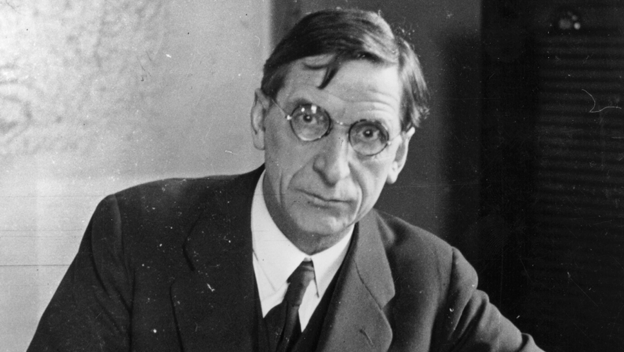
A former commissioner for the Garda Síochána and wartime commander during both the War of Independence and the Irish Civil War (being the IRA Chief of Staff in the former conflict), O’Duffy became the leader of the association in 1933. O’Duffy renamed it the National Guard and opened it up to members who had not served in the Army. A new constitution was written, committing itself to the reunification of Ireland, anti-communism, and exposing corruption in government, as well as supporting the corporatist policies espoused by the Catholic Church of Pope Pius XI. In the summer of 1933, the Blueshirts planned a march in Dublin, which was promptly banned by the Fianna Fáil government, with the weapons of Blueshirt members seized by the Gardai. While the march was called off, the government still opted to list the National Guard as an illegal movement. In response to this, on 8 September 1933, O’Duffy was named as the leader of a new political party Fine Gael, a merger of Cumann na nGaedheal, the agrarian National Centre Party and the now outlawed National Guard. The National Guard was reconstituted as the Young Ireland Association (the third organisation termed as the Blueshirts) as a factional organisation within Fine Gael to side-step the government ban.

The Blueshirt Zenith and the Rapid Fall, 1933-1937
Amongst the rising violence often instigated by the Blueshirts and policed by the Irish Army, Eoin O’Duffy encouraged farmers to avoid paying land annuities to the government, leading to violence between Gardai and farmers. O’Duffy also started to have major victories against the government, successfully challenging the legality of his arrest (October 1933) and the legality of the military tribunal trying him. The government took further measures, supporting a bill that would prevent the wearing of military uniforms. However, the Seanad Éireann (the upper chamber of the Irish Parliament) voted to delay the bill for 18 months, leading to rising support for O’Duffy and another Blueshirt victory. In following council elections, Fine Gael won 7 of the 23 council seats being contested, which, while not a poor result by any means, hindered the momentum of the Blueshirt movement. Doubling down with more violent and extremist rhetoric, in August 1934, O’Duffy espoused corporatist policies to a thousand delegates at a party conference. Supported by O’Duffy, a proposal was put to the Fine Gael executive calling for landowners to completely stop paying annuities to the government – an open call for illegality. With the executive demonstrating dismay at this resolution, O’Duffy withdrew it. In this moment of compromise, a number of proposals were given to O’Duffy. These included pre-written manuscripts for his speeches that had to be approved by the executive in order to tone down O’Duffy’s extremist rhetoric. Not wishing to accept these proposals, on 21 September 1934, O’Duffy resigned as president of Fine Gael. In the years ahead, with the de-escalation of the economic war, the Blueshirts lingered on, but in 1937, Fine Gael cut financial ties with all organisations resembling the Blueshirts and the movement came to its effective end.
An Irish Fascist Movement?
Today, the term ‘fascist’ is bandied around as if we find ourselves in that same animated pre-Second World War period, with fascism often attached to any movement perceived as extremist or straying from liberal democratic norms. One might take a look at the Blueshirts: their uniforms; political violence, and former military leadership, and instantly assert that Ireland had a real and threatening fascist movement. However, amongst historical scholarship, the debate surrounding fascism and the Blueshirts is far more delicate. While this relationship could be an entire essay in its own right, it is worth touching on this debate from a normative perspective. In other words: what are the standards and norms of fascist ideology?
During the fascist heyday of the 1930s and 1940s, four key characteristics denoted the predominantly European movements: opposition to Parliamentary democracy and favouring autocracy; belief in the nation above all else; regimentation of economy and society, and militarism. There are a number of episodes in the history of the Blueshirts that adhere to these characteristics. O’Duffy spoke of the ‘weakness of democratic rule’ in controlling the IRA, and in the same year began to canvass support for a potential coup d’etat from the security forces. The 1933 Constitution of the Blueshirts spoke of a patriotic re-awakening and striving for the reunification of Ireland and for the Irish people, detailing how the youth should be mobilised into ‘national action.’ It went on to say that farmers, employees, and employers should all be arranged into distinct political organisations to protect and serve the national common interests; most strikingly, it claimed that the unemployed should be publicly employed in tasks of national interest. Finally, the army background of many Blueshirt members, their military uniforms, and the employment of marches and encouraging weapon possession gives the Blueshirts a particularly fascistic appearance. This is especially notable given that they were not afraid to use violence. Hecklers at Blueshirt rallies were assaulted, and those who came to protest their meetings were also violently attacked. Blueshirt violence is perhaps best summarised by a quote from early leader Ned Cronin, who in 1933 called for Blueshirts to “break gobs if necessary.”
However, scholars such as Mike Cronin have argued that this fascism is balanced by a few key points. Eoin O’Duffy, the long-serving leader and figurehead, exhibited views that were indeed fascistic but were limited to his own outlook rather than the entire leadership or movement as a whole. This is demonstrated by his own, more convincingly fascist, National Corporate Party. Founded in 1935, it attained a peak membership of around five hundred people, compared to the Blueshirts membership peak of somewhere between forty and fifty thousand. Moreover, the views of the right-wing nationalist movement were particularly diverse, which is understandable when considering the numerous merging interests and parties culminating in Fine Gael in 1933. When we look at the Blueshirts, we see everything from radical fascism, to disgruntled agrarianism, to national conservatism, rather than wholesale fascism believed in by all members. The final argument is that the background of Blueshirt members consisted mainly of farmers, former military men, and middle-class tradesmen. These members were mostly former supporters of Cumann na nGaedheal who felt aggrieved towards the Fianna Fáil policy agenda and threatened by the IRA. As soon as this threat diminished, and when the Blueshirt leadership began to turn fascistic, the support dropped and the movement disappeared.
Therefore, arguably, the Blueshirts are better understood as a para-fascistic movement, exhibiting some elements of fascist ideology but diverging on key points. Undoubtedly nationalistic, anti-democratic at times, and fiercely reactionary against Fianna Fáil reforms, the Blueshirts represented a genuine far right political movement. O’Duffy could have defied the executive and completed further action to completely take over the movement, perhaps making the Blueshirts more insurrectionist and organised. If these actions were taken out, and if the government had suffered more failings in controlling the movement, a more genuine Irish fascism may have emerged. But, ultimately, the fledgling movement never managed to mirror the political successes of the nationalist and fascist movements of Continental Europe.

Conclusion
There are many things to take from this intriguing episode of Irish history. We can learn lessons from the De Valera government in how the rise of extreme politics and budding fascism can be prevented. As well, the aims and influence of social movements in the wider world of politics are illuminated by the history of the Blueshirts, for instance how rapidly they can mobilise support and action from sections of the public. This allows for a better understanding as to why Irish history proceeded the way it did until the end of the Second World War, compared to a Europe in political turmoil. The former lesson is especially significant, given the current trend of successful and enduring far-right and nationalistic figures, parties, and social movements. The Blueshirts shed a new light on this tumultuous period, and their story enriches the narrative of the emergence and struggles of the newly founded Irish state.
Written by Henry Anderson
Bibliography
Images
BBC News. ‘Eoin Duffy’. Photograph. BBC News, 2020. Accessed 26/11/24. Political leaders dealing with a violent past – BBC News.
BBC Bitesize. ‘Photograph of Éamon De Valera’. Photograph. BBC Bitesize. Accessed 26/11/24. How did Éamon de Valera go about dismantling the Anglo-Irish Treaty? (CCEA) – BBC Bitesize.
Killorglin Archive Society. ‘Blue Blouses in Kenmare’. Photograph. RTÉ, 2023. Accessed 26/11/24. You’ve heard of the Blueshirts, who were Ireland’s Blue Blouses?
Irish Independent. ‘Legacy: A salute being given at a Blueshirt meeting at Charleville, Co Cork, in April 1934’. Photograph. Irish Independent, 2018. Accessed 26/11/24. Mary Kenny: ‘The hot air of ‘fascism’ fans flames – but it’s nowhere near’ | Irish Independent.
Main Text Sources
Ahmed, Saladdin. ‘Fascism as an Ideological Form: A Critical Theory’. Critical Sociology, 49 (2023): 669-771.
Barberis, Peter, McHugh, John and Tyldesley, Mike. Encyclopedia of British and Irish political organisations: parties, groups and movements of the twentieth century. London, New York: Pinter Publishers, 2000.
Brennan, Cathal and Dorney, John. ‘The Irish History Show – Ep 7 – Fine Gael and the Blueshirts’. February, 2014. Educational video, 52:36. The Irish History Show – Ep 7 – Fine Gael and the Blueshirts – YouTube.
Cronin, Mike. ‘The Socio-Economic Background and Membership of the Blueshirt Movement, 1932-5’. Irish Historical Studies, 29:114 (1994): 234-249.
Cronin, Mike. ‘The Blueshirt Movement, 1932-5: Ireland’s Fascists?’. Journal of Contemporary History, 30:2 (1995): 311-332.
Edwards, Robert et al. ‘Independent Ireland to 1959’. Britannica. Ireland – History, Culture, Politics | Britannica.
Editors of Encyclopaedia Brittanica. ‘Irish War of Independence’. Brittanica. Irish War of Independence | Summary, Guerrilla War, Death Toll, & Anglo-Irish Treaty | Britannica.
Editors of Encyclopaedia Brittanica. ‘Irish Civil War’. Brittanica. Irish Civil War | History, Causes, Executions, & Deaths | Britannica.
Fanning, Ronan. Éamon de Valera: A Will to Power. London: Faber & Faber, 2015.
Kissane, Bill. ‘Defending Democracy? The Legislative Response to Political Extremism in the Irish Free State, 1922-39’. Irish Historical Studies, 34:134 (2004): 156-74.
Kissane, Bill. ‘Éamon de Valera and the Survival of Democracy in Inter-War Ireland’. Journal of Contemporary History, 42:2 (2007): 213-226.
McGarry, Fearghal. ‘Violence, Citizenship and Virility: The Making of an Irish Fascist’. History Ireland, 13:6 (2005): 30-35.
McGarry, Fearghal. Eoin O’Duffy: A Self-Made Hero. Oxford: Oxford University Press, 2018. Nagel, James. ‘Fine Gael and the Blueshirts | 1933 – 1934 | The Emergency – E03’. May, 2020. Educational video, 23:10. Fine Gael and the Blueshirts | 1933 – 1934 | The Emergency – E03.