Titanic’s Only Black Passenger: The Story of Joseph Laroche
Possibly the most famous ship in history, the RMS Titanic has fascinated generations since its unfortunate sinking in 1912. Despite being retold countless times through various forms of media, the overarching narrative surrounding the Titanic rarely changes. Almost all of the experiences we have recorded about the Titanic come from the white, rich, first-class passengers who survived, leaving the horrific memories of those in second or third class to disappear with the passengers and the ship. One of these experiences which remained forgotten up until the 1990s was that of the Laroche family. The re-emergence of their story allows the public to see a new narrative about the Titanic from the point of view of Joseph Laroche: the only Black passenger aboard the Titanic.
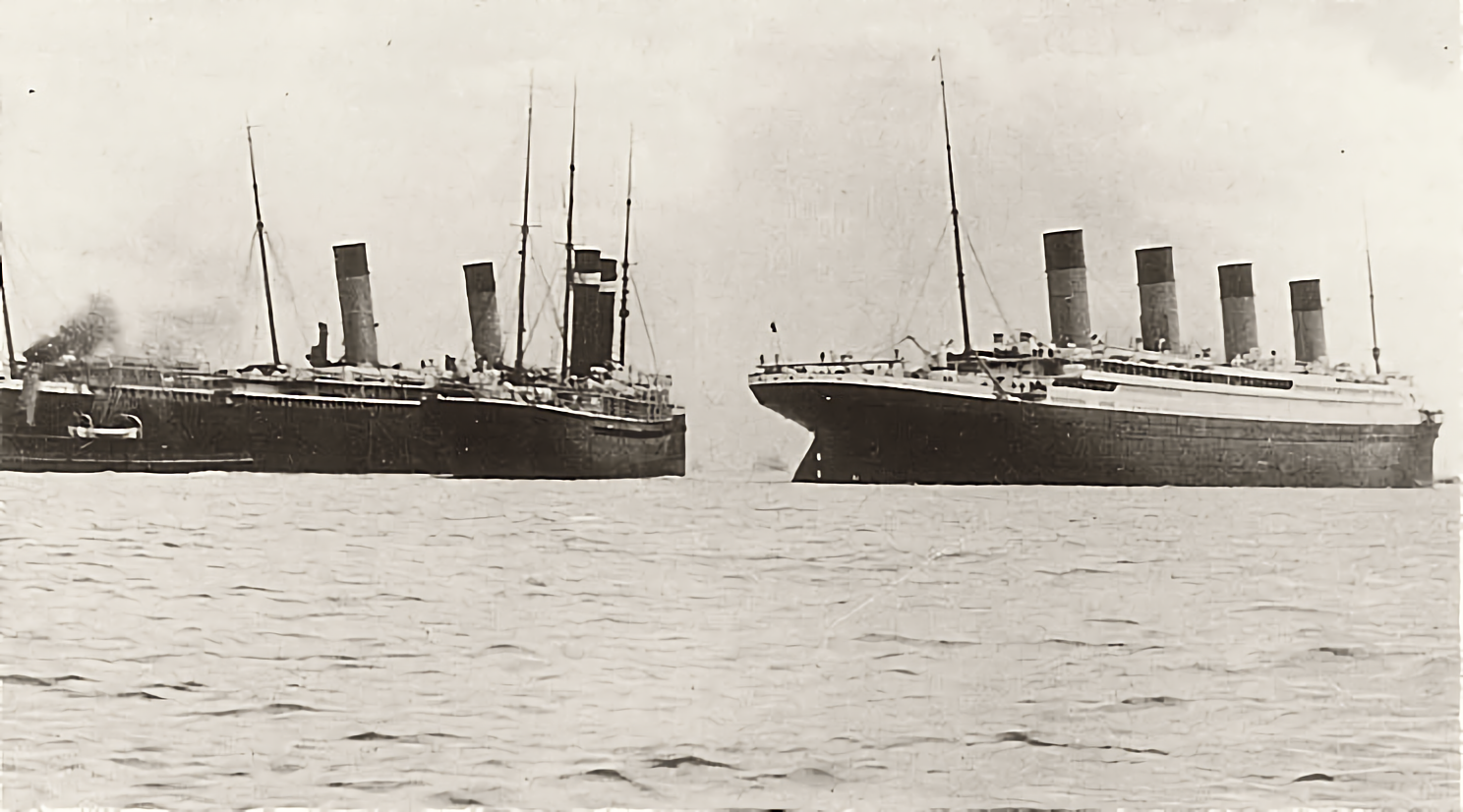
The Titanic:
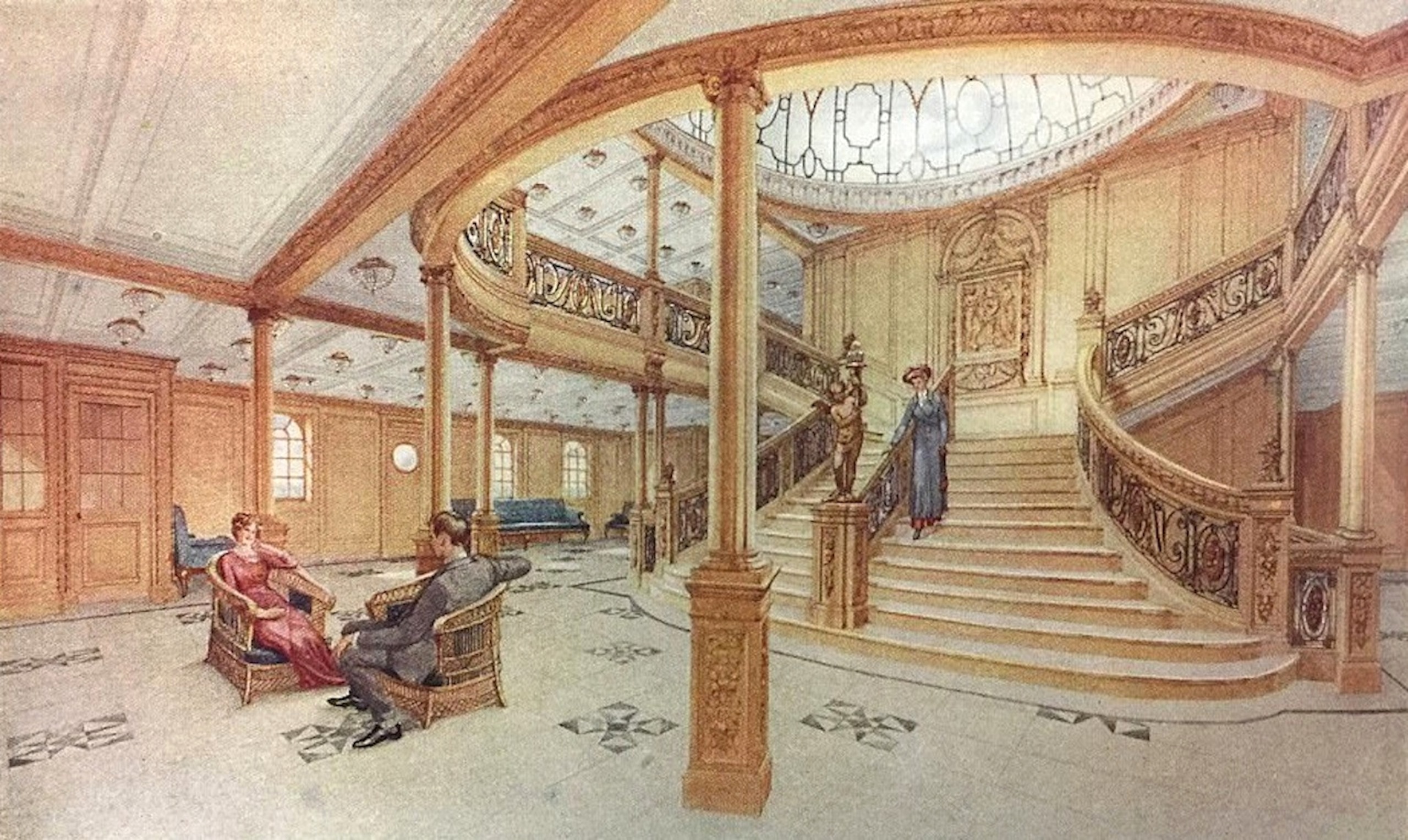
The Titanic itself was a marvel of shipbuilding in its day. The sheer size of the ship was much larger than any other ocean liners built at the time or in previous generations. For example, the RMS Mauretania, one of the prized ships of the Cunard Line, was 790 feet long, while the Titanic reached a colossal length of 883 feet. Likewise, the living conditions within the Titanic could be highly luxurious, particularly for those travelling in first or second class, with the first class grand staircase (which one might recognise from James Cameron’s 1997 film) being perhaps some of the most iconic parts of the interior. Most of the furniture in first class had been carved in detail from oak, mahogany and sycamore, and the windows in the first-class lounge – identical to the ones on Titanic‘s sister ship, the Olympic – depicted classical muses in stained glass. Passengers in this area could also enjoy a range of facilities, such as a gymnasium, Turkish baths and a swimming pool.
However, the night of April 15 fell into catastrophe as the ship struck the iceberg at 11:39 p.m. It took just over 2 and half hours for the Titanic to sink and all the lifeboats to be lowered before the ship finally foundered, arguably contributing to the romanticisation of the tragedy, with many viewing the Titanic as elegant even in death. Many people and families died that night, and, sadly, many of those lives we will never be able to put a name to. One of the lives lost that night was that of Joseph Laroche.
Joseph Laroche:
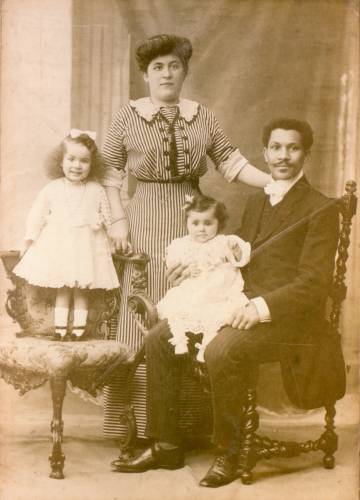
Joseph Phillippe Lemercier Laroche was born on May 26, 1886, in Cap-Haitien, Haiti, where he lived until travelling to Beauvais, France, at the age of 15 to study engineering. Whilst in France, Laroche received his degree and met Juliette Lafargue, a White French woman. The couple were wed on March 18, 1908, and later had two daughters, Simonne and Louise. As a result of her premature birth, Louise suffered many medical problems, costing the family large amounts in medical care. In fact, this was one of the reasons which led the family to board the Titanic in 1912, as setting sail for America was a first step towards returning back to Haiti: a move which, they hoped, may offer Joseph a more profitable job and allow them to better support Louise’s medical care.
Louise’s medical expenses were not the only reason the family was heading back to Haiti: the racial discrimination that Joseph experienced while living in France prevented him from gaining a high paying job there. In addition, in 1911, Joseph’s mother’s brother-in-law, Cincinnatus Leconte, had become president of Haiti following a coup, and it is speculated that he may have promised Joseph a high-paying job if he returned home.
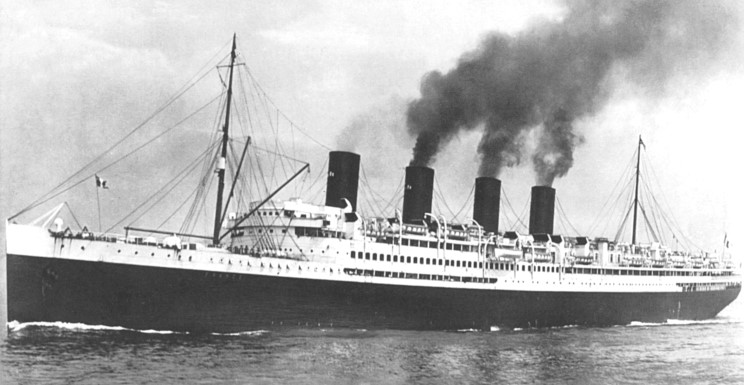
The family’s move had originally been scheduled for 1913, but in March 1912, Juliet had discovered that she was pregnant, and the couple decided to move their plans forward before the pregnancy became too advanced for travel. The family was given tickets aboard the ocean liner, the SS France, by Joseph’s mother as a welcome present. However, in what would turn out to be a tragic twist of fate, the couple exchanged their tickets at the last minute after discovering that the steamer’s policy required children to remain in the nursery at all times. This did not sit right with Joseph, who wanted to be able to dine and enjoy time with his daughters, and thus they decided to travel on the Titanic in second class instead.
It is estimated that there were about 284 passengers travelling in the standard or second class on Titanic, the majority of which would have usually travelled in first class aboard other vessels. A second class ticket aboard the Titanic cost £12 or $60, which is about £1412.38 or $1834 in today’s money. The second-class dining area was not as magnificent or luxurious as that of first class, although they did have a library and a smoking room. Likewise, their activities and experiences were also not as extravagant as that of first class. For example, while first-class passengers had a ten course meal, second class only had a three course meal consisting of soup, followed by a main meal and then a dessert. Two other well known second-class passengers on the Titanic were Lawrence Beesley, a teacher who wrote the first published account on the Titanic, and Michel Navratil, who was travelling under the name Louis M. Hoffman after kidnapping his two children.
On the fateful night of April 15, Juliette and her eldest daughter, Simonne, had managed to find their way onto a lifeboat (believed to be lifeboat number 10). Joseph was last seen rushing towards the lifeboats with their younger daughter, Louise, ensuring that she made it to (relative) safety alongside her mother and sister. After putting Louise into the lifeboat, his wife Juliette recounted his final words to her: “I’ll see you soon, my darling! There’ll be room for everyone, go with the lifeboats. Look after our little girls. See you soon!” Sadly, Joseph did not survive the sinking, and his body was never recovered. He was just 25 years old.
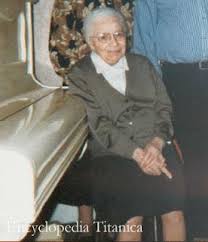
Now widowed, Juliette arrived with her daughters in New York after being rescued by the RMS Carpathia. She had no husband, no money and did not speak any English. After 3 weeks in New York, Juliette could afford to take herself and her daughters back to France, where she gave birth to a son, whom she named Joseph in honour of his father. Devastated by the tragedy, she never fully healed from the trauma and forbade her children from even speaking of the sinking or their father. She continued to manage the lives of her daughters right up until her own death on January 10, 1980, at the age of 91.
Joseph’s story has been brought to light with the increase of historical research into Black histories and by the work of his youngest daughter, Louise. Up until her death in 1998, she was a part of the Titanic Historical Society and appeared at the 1996 Titanic Historic Society memorial plaque dedication at Cherbourg (the dock that the family set off for the Titanic from). She recounted her family’s story later in life, keeping the memory of her father alive. Likewise, websites and societies such as the Encyclopedia Titanica and the Titanic Historical Society have also helped to illuminate his story and those of many other lesser-known passengers aboard the Titanic.
Conclusion:
Joseph’s story has been overlooked for decades, but is essential in broadening the narrative of the Titanic disaster and for shedding light on the racial discrimination faced by Black people in the early 1900s. Many survivors of the disaster never mentioned the presence of a Black man on the Titanic. Considering that Laroche was the only Black man amongst 2,225 passengers, questions are inevitably raised about the White Star Line’s policies, especially surrounding their attitudes towards race. Aside from socioeconomic and political factors, could this also have been a result of deliberate discrimination against people of colour? Additionally, there has also been some debate about whether the family being given a second-class ticket may have been racially motivated. They would likely have been able to afford a first-class ticket, so why would they settle for second class? Was this due to their last minute travel change, or did the White Star Line only allow them to board as part of the second class? It is important that we now use Joseph’s story to help expand our understanding of the time, and remember the incredible person he was: a hard-working and loyal family man right up until the end of his life.
Written by Helena Hunter
Bibliography:
Images:
Bodego, Joe. 2024. “Joseph Philippe Lemercier Laroche.” SamePassage. March 16, 2024. https://samepassage.org/joseph-philippe-lemercier-laroche/.
Encyclopedia Titanica. 2018. “The New York Incident.” Encyclopedia Titanica. January 5, 2018. https://www.encyclopedia-titanica.org/the-new-york-incident.html.
“Louise Laroche : Titanic Survivor.” n.d. Www.encyclopedia-Titanica.org. https://www.encyclopedia-titanica.org/titanic-survivor/louise-laroche.html.
Wikipedia Contributors. 2024. “Grand Staircase of the Titanic.” Wikipedia. Wikimedia Foundation. October 20, 2024.
2024. Boroughsofthedead.com. 2024. https://boroughsofthedead.com/wp-content/uploads/2016/04/laroche_01.jpg.

Wikipedia Contributors. 2024. “SS France (1910).” Wikipedia. Wikimedia Foundation. October 28, 2024.
Sources:
Bile, Serge. Black Man on the Titanic: The Story of Joseph Laroche. Mango Media Inc., 2019.
Donalson, Mel. “Poetry.” African American Review 36, no. 2 (2002): 318–20. https://doi.org/10.2307/1512264.
Gavin, Mike. 2023. “History of the Titanic: 10 Questions about the Ill-Fated Ship.” NBC Los Angeles. June 21, 2023. https://www.nbclosangeles.com/news/national-international/history-of-the-titanic-10-questions-about-the-ill-fated-ship/3173692/.
“Joseph Philippe Lemercier Laroche : Titanic Victim.” n.d. Www.encyclopedia-Titanica.org. https://www.encyclopedia-titanica.org/titanic-victim/joseph-laroche.html.
“Joseph Philippe Lemercier Laroche | Boroughs of the Dead.” n.d. https://boroughsofthedead.com/joseph-philippe-lemercier-laroche/.
Matthews, Diana. 2012. “Second Class Life on the Titanic.” ALookThruTime. ALookThruTime. April 12, 2012. https://alookthrutime.wordpress.com/2012/04/12/second-class-life-on-the-titanic/.
Villagomez, Carissa, Marketing, and Communications Intern. 2021. “The Story of Joseph Laroche, the Only Black Man on RMS Titanic.” Court Theatre. May 11, 2021. https://www.courttheatre.org/about/blog/the-story-of-joseph-laroche-the-only-black-man-on-rms-titanic/.
Pingback: Laroche Review: Destiny Osagiede Returns To The Stage As Titanic’s Sole Black Passenger