A Western Phenomenon?: A Study of Witchcraft in Colonial Africa
The term ‘witchcraft’ often evokes images of medieval or early modern witch trials, with popular perceptions focusing on the ‘witch craze’ of the later sixteenth century. However, its manifestations extend far beyond Western early modern history.
The nineteenth and twentieth centuries consisted of a so-called European ‘scramble’ for Africa, as imperial powers competed for new territories. However, some suggest that African civilisations remained largely intact despite this intense colonisation, and the endurance of traditional witchcraft can be deemed as a convincing example of this. Despite concerted efforts by Christian imperialists, African traditions of magic and sorcery remained as an integral aspect of native cultures. However, witchcraft in this context does not necessarily fit neatly into the category presented by Western histories of Early Modern Europe, as the practices and perceptions differ significantly.
Thus, through an exploration into witchcraft legislation and practices in Kenya and Lesotho, this article aims to provide a distinct explanation of African witchcraft during this colonial period. A brief look into contemporary issues in South Africa and Nigeria also aids this discussion in comprehensively addressing the lasting legacy of witchcraft and colonialism. A full exploration into the practices of witchcraft across the whole continent is beyond the scope of this article. However, an introduction is nevertheless invaluable in providing a jumping-off point for the wider reworking of colonial history. By considering both the historical context and contemporary issues, we are seeking to address prevailing misconceptions which can perhaps be credited to the limited understanding provided by Western examples.
Legislation
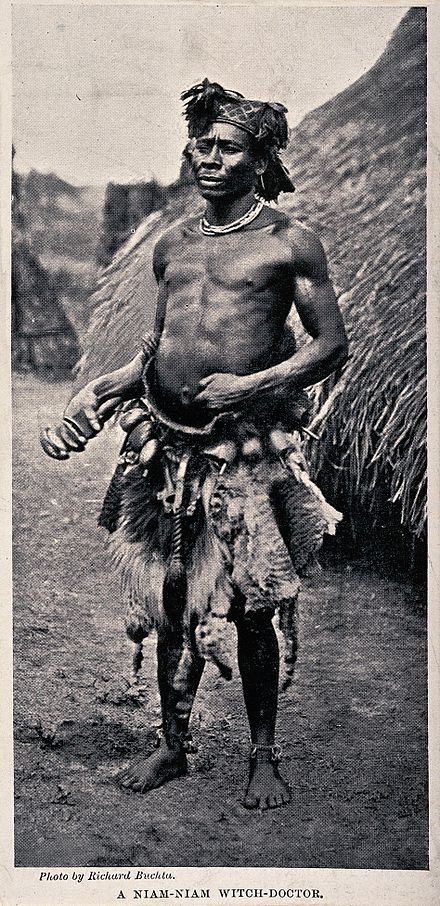
In colonial Africa witchcraft was demonised and misunderstood. European officials lacked the essential understanding of the practices and traditions which would permit the comprehension of African witchcraft and its place in society. Instead, they viewed witchcraft through the European lens as something undesirable and threatening. As a result, legislation was drawn up in order for witchcraft to be tackled. For example, a Kenyan Witchcraft Ordinance was first established in 1909. It defined three criminal offences surrounding witchcraft: the claim of being a witch; giving advice on the subject of witchcraft or sorcery; and the use of such advice to commit any sorcery or witchcraft. However, under this Ordinance, the colonial government failed in many attempts to prosecute cases of witchcraft, as their rules lacked an establishment of proof. This can be credited to the lack of colonial understanding of the beliefs surrounding these supernatural forces. Colonial officials could not, or chose not to, recognise witchcraft as something objectively based in legitimate cultural practices, and thus any form of proof was implausible.
Despite these frequent prosecution failures, the legislation remains a topic of interest. Ultimately, the legislation was drawn up in response to the growing threat to colonial power that officials understood to be held by witches and sorcerers. Legislation such as the Kenyan Ordinance was likely in existence to ensure that colonial power remained unrivalled. Whether colonial officials viewed witchcraft as a genuine threat due to their supernatural power, or, more likely, due to the influence they held over local communities, it should still be recognised that in colonial contexts, power is often the focus, and this example of witchcraft should be no exception.
Practices
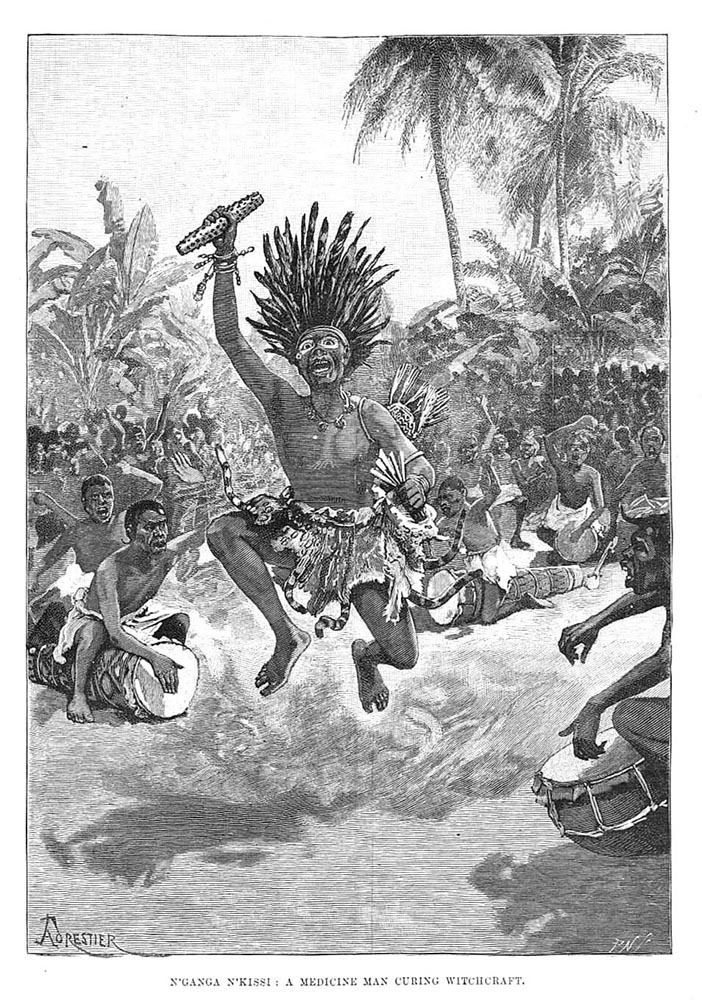
As mentioned above, European misconceptions concerning witchcraft practices in Africa have continued to impact perceptions of this topic to this day, especially when considering the way witchcraft was practised by native Africans. The Basotho culture in Lesotho, formerly Basutoland under British rule, is a key example of the European misunderstanding of cultural practices, which facilitated the European demonisation of African culture. Liretlo ‘murders’ (witchcraft or ritual murders) earned Basutoland the title of the ‘Land of Witchcraft’ under the colonial lens. Liretlo referred to the parts of the victim’s body which were cut away and used for the purpose of making medicine, strengthening the person who took it. Many believed in the efficacy of Liretlo medicine and believed it to be part of a tradition of good magic performed by lingaka (healers). Liretlo murders have a complex history, dating back to when the Basotho people fought the Zulu, British soldiers and South African settlers. Basotho warriors would use charms made from the bodies of their deceased enemies and it was believed that mixing them in ointment would transfer the opponent’s strength to the Basotho. It was thus seen as a way to ward off colonisers and reclaim the political levers that Basotho leaders desired to control themselves. Similar to how British colonial officials saw resistance groups and witches as the same, for the Europeans, all ‘magic’ was deemed demonic. European colonists imported the binary of ‘good’ and ‘evil’, with Christianity being the remedy to what they saw as demonic magic. This binary ignored the complex and nuanced history of African cultural practices, and demonised all they saw as un-Christian.
Now, and Why
It is important to view the phenomenon of witchcraft in Africa as different to the mass witch trials of sixteenth and seventeenth century Europe. Not only because it posits Africa in a position of ‘backwardness’ compared to Europe, but, in making this comparison, scholars have ignored the contemporary complexities that continue to fuel these beliefs. It is important to understand why and how the belief in witchcraft still prevails in Africa. In 1966, the South African government set up the Ralushai Commission in its Northern province, now Limpopo, to report on preventative measures to stop the murder of suspected witches. Unexpectedly, the report both listed and endorsed reasons for belief in witchcraft, proposing that a new Witchcraft Control Act should replace the previous Witchcraft Suppression Act. The proposed act would introduce a four-year maximum sentence or a fine for any person reasonably suspected of witchcraft. By punishing witches, the report recognised that they do exist, which makes a break from the colonial trend of disregarding the legitimacy of witch accusations. The line between fiction and reality continues to be blurred to this day with anthropologists suggesting that Nigerian films and TV dramas are responsible for spreading the idea of witchcraft as a real threat. Witchcraft has not disappeared with modernisation, and the introduction of new technologies may have also influenced beliefs to fuel beliefs in witchcraft and the susceptibility of children. Witchcraft rumours incorporate contemporary technological items which prompted concerns of exposure beyond their community. These items were seen as sources of possible temptation into witchcraft, illustrating how modern life became entangled with these fears. A report by UNICEF points out how witchcraft beliefs in Africa are still widespread, with witchcraft now becoming the pretext for abandoning children, with them facing the blame for a family’s personal misfortunes.
This is why it is integral to understand why fears of witchcraft have persisted. Following decades of British colonisation and enslavement, fears of the invasive ‘outsider’ have prevailed. Enslaved people themselves were often deemed victims of witchcraft, with the Europeans being the witches due to the threat they posed as colonial perpetrators and enslavers. It is within the context of cultural uncertainty caused by years of colonial rule and economic crisis, that women and children are accused as witches and continue to be scapegoats.
Conclusion
This article has sought to provide a re-examination of witchcraft in colonial Africa which will allow us to move beyond traditional Western scholarship. Through the Western colonial lens, witchcraft was deemed a threat, and used as a scapegoat for fears of unrest and potential imperial weakness. This exploration has attempted to illuminate the richness of African colonial witchcraft, seeking to reveal the complexities that constituted it, not just Western understandings. It is essential that as we come to terms with the legacy of colonialism, we address undervalued aspects of native history, and how it was affected by imperialism. Through continued discussions in this nature, we can gain a greater understanding that will aid us in overcoming historical misconceptions.
Written by Libby Foxwell and Eloise Gibson
Bibliography
Battany, G T. Witch Doctor Curing Witchcraft, Congo. Engraving. Research Gate. 1891. https://www.researchgate.net/figure/Antique-Victorian-Print-1887-sketching-a-medicine-man-curing-witchcraft-in-Congo-C_fig3_222719512.
Buchta, Richard. Portrait of a Zande Witchdoctor. Photograph. The History Collection, Alamy Stock Photo. https://www.alamy.com/stock-photo-richard-buchta-portrait-of-a-zande-witchdoctor-140365788.html?imageid=B088235C-84FE-4F9F-A7EA-29BB2C193B4F&p=699200&pn=3&searchId=3a8a1084155e1839317068162270af5a&searchtype=0.
Johns, Chris. Zulu Traditional Healer. Photograph. National Geographic. October 19, 2023. https://education.nationalgeographic.org/resource/witch-trials-21st-century/.
Kroesbergen-Kamps, Johanneke. “Witchcraft After Modernity: Old and New Directions in the Study of Witchcraft in Africa.” Journal of Ethnographic Theory 10 no. 3 (2020): 860-873.
Kunhiyop, Samuel Waje. “The Role of Nollywood in Witchcraft Belief and Confessions.” Henry Center, February 2, 2016. Accessed March 21, 2024. https://henrycenter.tiu.edu/2016/02/the-role-of-nollywood-in-witchcraft-belief-and-confessions/.
Murray, Colin and Peter Sanders. Medicine Murder in Colonial Lesotho: The Anatomy of a Moral Crisis. Edinburgh, Edinburgh University Press, 2008.
Parker, John and Richard Rathbone. African History: A Very Short Introduction. Oxford: Oxford Academic, 2013.
Taylor, David. “Witchcraft Violence and the Law in South Africa [Review].” The Comparative and International Law Journal of Southern Africa 37, no. 3 (2004): 442-444.
Tran, Mark. “Witchcraft claims against children in Congo DRC reflect curse of poverty”. The Guardian, January 24, 2013. Accessed March 23rd, 2024. https://www.theguardian.com/global-development/2013/jan/24/witchcraft-children-congo-drc-poverty.
Waller, Richard D. “Witchcraft and Colonial Law in Kenya.” Past & Present, no. 180 (2003): 241–275.