Why did Hospital Medicine Emerge in Paris?
After the French Revolution and throughout the first half of the 19th century a new method of delivering healthcare to patients emerged. This emphasis on treatment within the hospital, as opposed to treatment at the bedside, is now often termed hospital medicine or Paris medicine. Paris medicine is perhaps a more appropriate term as it is clear this development began due to the specific conditions in France at this time.
This article will highlight why Paris emerged as the centre of hospital medicine and set an example to be followed by many European nations.
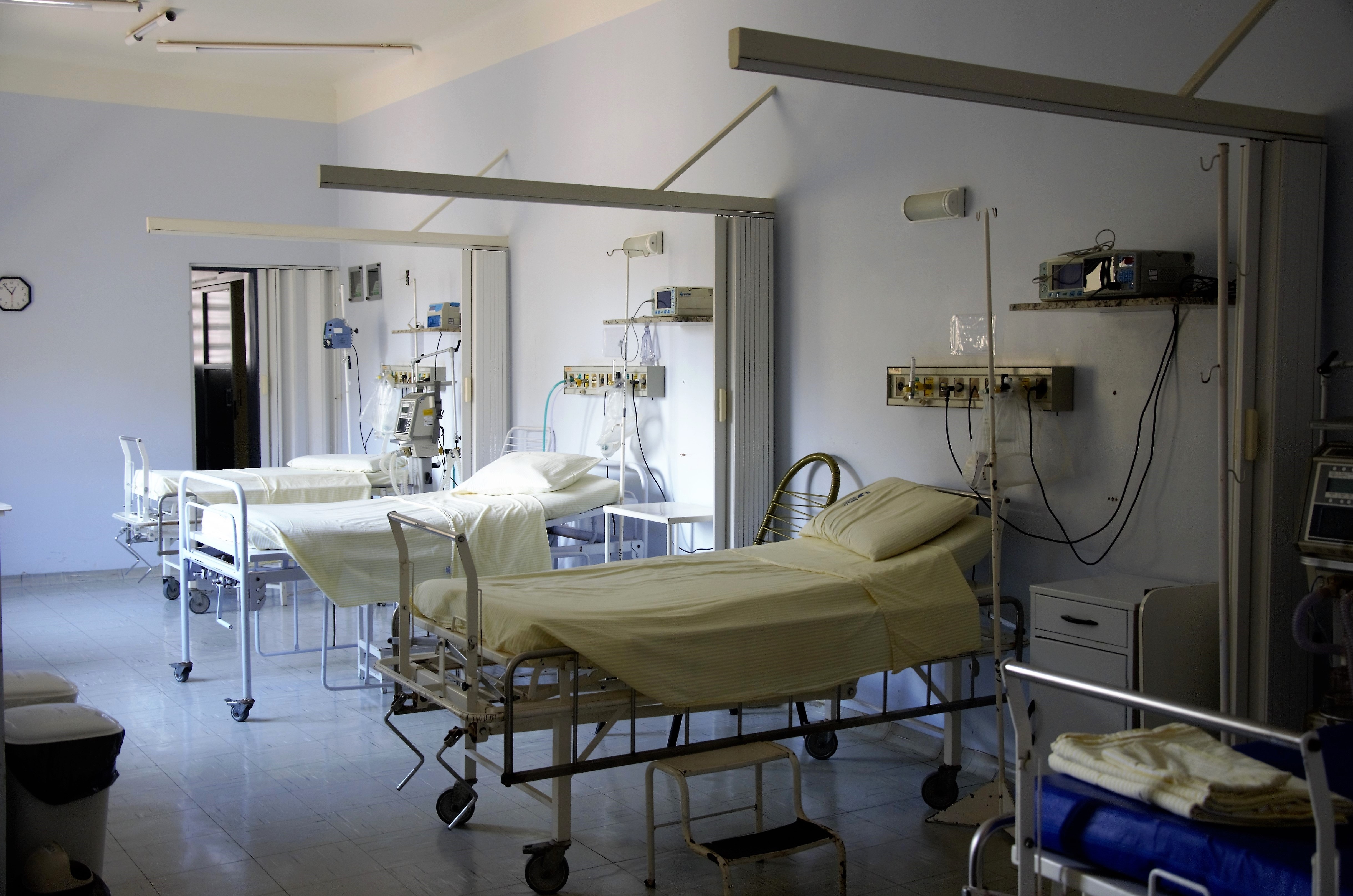
Defining ‘hospital medicine’
Nicholas Jewson provides a suitable definition to assess stating that “the four great innovations of Hospital Medicine were structural nosology, localised pathology, physical examination, and statistical analysis.” This emphasises the increased structural classification of diseases, the localised study of diseases centring around specific organs or parts of the body, increased examinations of the body, and the use of statistics to enhance medical knowledge. Each of these innovations emerged in Paris from a variety of causes including increasing numbers of patients to study and dissect. Similarly, the French Revolution and the resurgence of Enlightenment ideals. Crucially, the number of those in poverty in Paris led to a great transition in the purpose of the hospital.
The French Revolution
During the late 18th and early 19th century in France, there was an increased focus on public health and intervention because of the huge numbers of citizens in poverty. The French Revolution played a significant role in this issue as “the optimistic ideal of the philosophes” led to a more secular and rational state, which replaced the previous Christian charitable interventions. Michel Foucault comments on the desire to police the masses and educate them on healthier practices. This was caused by frequent outbreaks and epidemics in Paris, such as the 1785 epidemic of quartan fever. In addition, the number of those in poverty in France was “swollen even more by the Revolution” and with “population pressure such a fundamental issue” of this period so became public health. Previously, hospitals in Paris had become temporary housing for the poor and destitute as they were so often ill. As early as 1785, the hospital Hotel-Dieu was a “crowded mass” of 3’000 patients, more inhabitants than 84% of the cities and towns in France at this time. It was also situated in the “unhealthy location” of the centre of Paris. Before the French Revolution, healthcare was delivered primarily by religious institutions, and even after the revolution many hospitals remained within religious buildings or housed religious caregivers.
However, hospitals. become much more of a priority to develop and improve in the new secular culture. In essence, a key factor in the emergence of Paris medicine was a desire to provide healthcare on a more institutional and rational basis after the French Revolution. This was prompted by the vast numbers of people in poverty housed in hospitals and in need of treatment.
Social and structural change
Hospital medicine is also characterised by the innovation indicated by Jewson of “statistical analysis.” Hospitals in Paris began to use their newly developed institutional authority to standardise treatment and establish a statistical norm for patients. Waddington cites “social structural changes” as “conducive to the emergence of modern medicine”. It is clear hospitals become “reconstituted at the centre of the French medical system” after the French Revolution as a result of the transition away from the ancien regime. These changes in France after the revolution developed the profession of the doctor as bringing “authority inherent in [the] occupational role rather than on the basis of [the] individually proven worth.” As healthcare became institutionalised, the role of the doctor became standardised. This naturally prompted a change in approach to delivering healthcare with a transition away from diagnosing an individual condition, towards establishing a variance from what was considered the normal state of being or “abnormalities of the various organ systems”.
Additionally, Volker Hess argues that record keeping for each patient was well established in the early 19th century further showing the importance places on establishing a statistical norm. 13 Thus, it is clear that the institutional developments after the French Revolution in Paris had a role to play in the emergence of hospital medicine.
The Philosophy of the Enlightenment
The philosophies of the French Revolution and the Enlightenment were also responsible for a shift in focus from intangible consultation to physical examination of patients. The concepts of Empiricism were idealised, and thus sensory and physical learning was considered the most reputable. Consequently, patients were increasingly examined; Mary E. Fissel and Waddington highlight the work of Parisian doctor Corvisart who “emphasi[sed] careful examination” of patients.
Further to this the medical elite “desire[d] to use the hospital as a teaching clinic” transitioning the site of learning from the written word and books, to the human body and the hospital. Teaching and research consequently took place through the physical examination and observation of the body: for example, at the Hôpital des Cliniques “there [were], on an average, two deliveries [of children] during each day in the year… [and] all ha[d] an opportunity of seeing what [was] going on.” Ivan Waddington, however, suggests that although Enlightenment ideals played a role in this new method of diagnosing patients what was more significant was the class of those subjected to examination. He argues that as the population of Paris hospitals was largely lower class and “exposure of the body, even of the sexual organs” as was necessary for observing childbirth did not cause “the anxieties that would have been present in a patient of much higher social status.”
This is supported by the existence of institutions such as The Maison Royale de Santé where paying patients were given privacy from medical students. Even if patients of a lower status didn’t feel more comfortable being physically examined it is certain that many doctors thought that they did and this affected their delivery of healthcare. Thus, both the Enlightenment ideal of Empiricism and increased treatment of the lower classes contributed to the emergence of physical examination, a key part of hospital medicine.
Including the lower classes in healthcare
Arguably, another key factor in the development of hospital medicine was the development of medical aid to include the poor and destitute in Paris. The public health issues previously discussed were somewhat forcing medical treatment of the lower classes, so delivery of medical intervention developed in response. The doctors who worked in hospitals were largely unregulated and being often elite and well-educated naturally saw themselves as superior to the lower classes filling the hospital beds. This is possibly responsible for “the sick-man f[inding] himself unequivocally subordinated to the medical investigator.” Jewson argues that as hospitals had long been a place of housing for “thousands of poor and destitute sick” this meant there was “little opportunity to exercise control over the activities of the medical staff” who had the authority to change the existing relationship between doctor and patient.
Lower-class patients are under Foucault’s “medical gaze”, while the rich still paid for bedside medicine techniques where their personal narrative was given more weight in diagnosis.
Additionally, patients paying fees varying from two to six francs a day to visit The Maison Royale de Santé were given private rooms without access for medical students and treated very differently to those who could not pay. Arguably, treating more people of lower class led to the development of the doctor as a superior and professional figure to which the patient felt subordinate.
The approach to dissection
Revisiting Jewson’s characterisation of hospital medicine, the emergence of “structural nosology” and “localised pathology” remains to be addressed. Before the French Revolution, the dissection of corpses to aid medical research had been considered “sacrilege” and as the vast majority of caregivers had been religious figures such as nuns there was little incentive to prompt advancement. As new ideas such as Empiricism were cultivated in the late eighteenth century and religious caregivers were replaced by those given authority by the state, the use of corpses to facilitate medical learning became more acceptable and by the early nineteenth century was very much encouraged. It was felt that a doctor’s training could no longer be completed unless they had witnessed dissection with prominent figures such as Bichat relying on it to evidence their written work.
Dissection was now to be “cultivated assiduously” as a reliable and valuable learning tool for doctors and students. For dissection to take place on a large scale, medical professionals needed to access a supply of cadavers. In the late 18th century, the previously mentioned hospital Hotel-Dieu had “a death rate of 25 percent, purportedly the highest of any hospital in Europe”. Colin Jones also makes several references to the pathogenicity of hospitals across France and the high levels of mortality among children and the elderly as a result. Thus, those who were the poorest and of the lowest class who died in hospitals and were not collected by any relation were often dissected. Ruth Richardson argues dissection was often seen as a punishment for those in poverty.
The “detailed postmortem analysis” that was facilitated through dissection allowed the emergence of many of Jewson’s proposed innovations of hospital medicine including localised pathology. “The sick-man became a collection of synchronized organs, each with a specialized function” and increased dissection allows bodies to be classified through “legible signs of its interior processes” or damage, which were often categorised as legions to specific organs.
Thus, high death rates in Paris hospitals, and the secularisation of medical treatment in the late eighteenth century led to increased dissection of cadavers. As a result of this, our final characteristics of hospital medicine emerged.
Conclusion
In conclusion, the reasons for the emergence of hospital medicine are not only diverse but interrelated and cumulative. In France, and specifically in Paris, particular conditions after the French Revolution came together to cause the emergence of hospital medicine or Paris medicine.
A change in ideology and ideals was essential for physical examination and dissection of patients to take place, while overcrowding and population pressure caused more standardisation and institutionalism in healthcare. However, it is clear that poverty was essentially the catalyst for the emergence of hospital
medicine. Without the huge number of impoverished citizens in Paris the hospital would not have become the new centre of modern medicine. Forced to treat the lower class of Paris’s overcrowding
central hospitals, doctors developed a new way to diagnose patients changing the long-standing doctor-patient relationship from bedside techniques. Additionally, without the presumed lack of concern of the lower class for the exposure of their bodies to medical examination and observation, new Empirical methods of teaching and diagnosis would have been impossible.
Finally, the mass deaths of the lower classes in hospitals were pivotal to facilitating discoveries made through dissection and pathology.
Written by Lauren Cheetham-Birmingham
Bibliography
Images
Vials. Unsplash. 26th April 2023.
Doctor. Unsplash. 26th April 2023.
Hospital beds. Unsplash. 26th April 2023.
Primary Sources
Campbell, Stewart F. The hospitals and surgeons of Paris. An historical and statistical account of the
civil hospitals of Paris; with miscellaneous information and biographical notices of some of the most
eminent of the living Parisian surgeons. Philadelphia: Carey and Hart, 1843.
Henderson, Thomas. An epitome of the physiology, general anatomy, and pathology of Bichat.
Philadelphia: Lea & Carey, 1829.
Secondary Sources
Ackerknecht, Erwin Heinz. Medicine at the Paris Hospital, 1794-1848. Baltimore: Johns Hopkins
Press, 1967.
Bristow, William. “Enlightenment.” The Stanford Encyclopaedia of Philosophy, 2017. Accessed Nov
12, 2020. https://plato.stanford.edu/archives/fall2017/entries/enlightenment/
Doyle, William. “Review of Charity and ‘Bienfaisance’. The Treatment of the Poor in the Montpellier
Region 1740-1815 by Colin Jones.” The English Historical Review 100, no. 397 (1985): 900-901.
Fissel, Mary E. “The disappearance of the patient’s narrative and the invention of hospital medicine.”
In British medicine in an age of reform, edited by Roger French and Andrew Wear, 92-109. London:
Routledge, 1991.
Foucault, Michel. The Birth of the Clinic: An Archaeology of Medical Perception. London:
Routledge, 2012.
Gelfand, Toby. “Review of Charity and Bienfaisance: The Treatment of the Poor in the Montpellier
Region, 1740-1815 by Colin Jones.” Bulletin of the History of Medicine 58, no. 4 (1984): 599-600.
Greenbaum, Louis S. “Thomas Jefferson’s University of Virginia and the Paris Hospitals on the eve of
the French Revolution.” Medical History 36 (1992): 306-319.
Hess, Volker. “Formalizing observation: The emergence of the modern patient record exemplified by
Berlin and Paris medicine, 1725-1830.” Medizinhistorisches 45 (2010): 293-340.
Jewson, N. D. “The Disappearance of the Sick-Man from Medical Cosmology, 1770-1870.”
Sociology 10, no. 2 (1976): 225-244.
Jones, Colin. Charity and ‘Bienfaisance’. The Treatment of the Poor in the Montpellier Region 1740-1815. Cambridge: Cambridge University Press, 1982.
Pomata, Gianna, and Siraisi, Nancy G. Historia: Empiricism and Erudition in Early Modern Europe.
Cambridge: MIT Press, 2005.
Richardson, Ruth. Death, Dissection, and the Destitute. 2nd Ed. Chicago: University of Chicago
Press, 2001.
Risse, Gunter B. Mending bodies, saving souls: a history of hospitals. Oxford: Oxford University
Press, 1999.
Shaw, Jennifer. “The Birth of the Clinic and the Advent of Reproduction: Pregnancy, Pathology and
the Medical Gaze in Modernity.” Body & Society 18, no. 2 (2012): 110–138.
Theodore, David. “Sound medicine: studying the acoustic environment of the modern hospital,
1870–1970.” The Journal of Architecture 23, no. 6 (2018): 986-1002.
Waddington, Ivan. “The Role of the Hospital in the Development of Modern Medicine: A
Sociological Analysis.” Sociology 7, no. 2 (1973): 211-224.