Berlin’s Deutschland Museum: A new approach to the German Museological landscape.
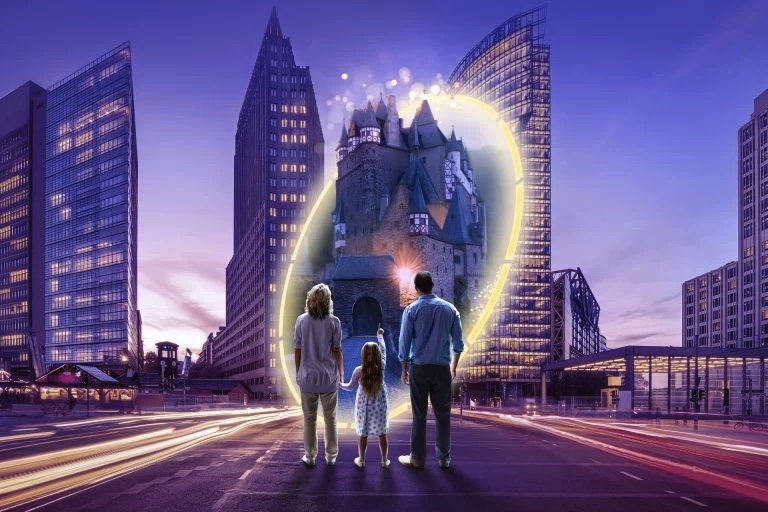
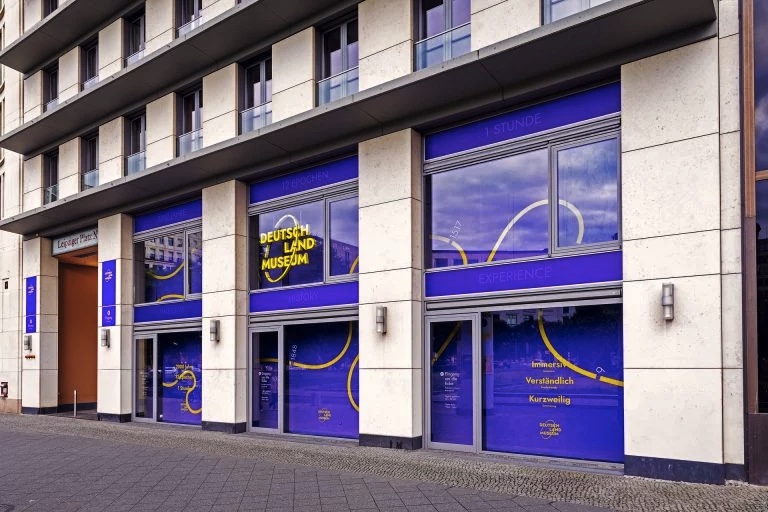
Located in the historic centre of Berlin and opened in June 2023, the Deutschland Museum (DM) offers an overview of “2000 years of German history in just one hour.” The museum hopes to broaden public perceptions of German history and renew public interest in this history through fully immersive and interactive techniques. As one of only two national history museums in Berlin, the DM has a powerful platform from which to tackle German history and identity. The DM builds on concepts of edutainment and the sensory turn. The former, which merges education with entertainment to stimulate greater interest and a different type of learning, the latter focuses on the inclusion of all senses rather than just the visual sense to create an embodied museum experience. In this article, I will outline how the museum’s conception, aims, and interactive features hope to reshape perceptions of German history in Berlin.
Conception
The Deutschland Museum was intended to be “a unique journey through German history.” Unlike traditional museums with permanent and temporary exhibits, objects under glass displays, the entirety of the museum space at the Deutschland Museum is the experience. The DM is the first fully immersive German history museum in Germany. The director of the DM, Robert Rückel, was the founding director of the DDR Museum for 11 years and has been the director of the German Spy Museum since 2016. Rückel has combined a living history museum (the DDR museum) with a theme park-like museum (the German Spy Museum) to create the Deutschland Museum. By hiring themed attractions and game designers alongside teachers, historians, and architects, Rückel’s priority was to make German history attractive and accessible to a large audience whilst remaining historically accurate. Experiences are proving to be more memorable than the history portrayed. The success of museums are no longer solely tied to the history explored but rather by the experiences they offer, so museums are forced to market themselves as entertainment institutions.
As a result, the DM team prioritises the visitor experience and hopes to create a good introduction to German history. On the DM website, the rhetorical question “What do you think of when you hear “German History Museum”? Roped-off exhibits, dusty statues, stone fragments and a lot of boredom perhaps?” suggests that people are accustomed to viewing German history in a very distanced way. Although the commercialisation of heritage risks histories being trivialised and inaccurate, it is the reason for the DM’s fast-growing success. Marketed as “a history museum like no other” and “the first of its kind in the world”, the DM is set apart as a global phenomenon. In November 2023, it was the first museum in Germany to be awarded the THEA Award (the Oscar of the entertainment sector and the most important award for themed attractions). Evidently, the DM is not only valued as an entertainment venue over a museum, but this prize cements the museum’s place in the entertainment industry, attracting a global audience. Additionally, it was named Germany’s most popular Museum in August 2024 and was the only German museum nominated for European Museum of the Year 2025, which is Rückel’s fourth nomination. The public clearly believe the DM to be the best introduction to German history as opposed to other competitor museums. In a survey conducted by the German National Tourist Board between March and July 2024 to establish the top 100 sights in Germany, the Deutschland Museum was voted seventh by 25,000 international tourists, surpassing the 14 other UNESCO sites on the list.
Immersive and Interactive Experience
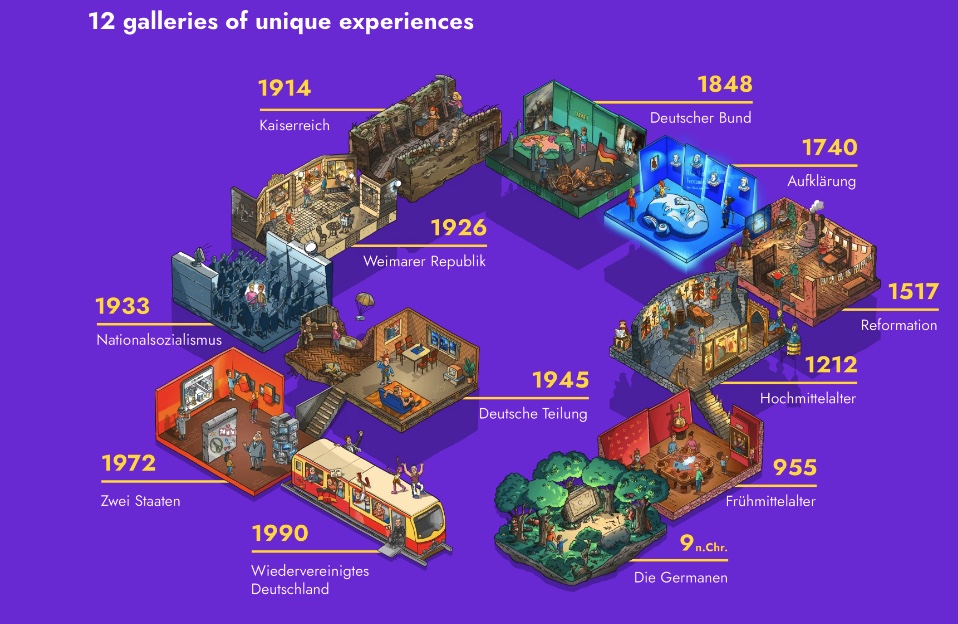
The DM is designed to provide a comprehensive overview of German history and to challenge simplistic preconceptions people may have. The museum is split chronologically into twelve rooms, creating the feeling of time travel. The stairs connecting different rooms and the last “room” being a 1990s S Bahn (city rapid railway), reinforces this sense of movement and temporality. The layout elicits a sense of adventure about history that traditional museums struggle to generate. Most importantly, this layout guides the visitor through all of German history without them feeling forced to do so. This model is rare, creating an embodied experience where the outside world becomes invisible. The first room recreates the Battle of Teutoburg Forest; it teaches visitors about how the Germanic tribes lived in 9 AD, their role in the collapse of the Western Roman Empire, and the origin of the German people. In a search for historical authenticity, visitors want to fathom what it was like to live like their historical contemporaries: how things smelled, how they sounded, how they felt. Whilst there are dangers regarding immersion, it can be a positive tool for reducing the gap in historical knowledge between the public and experts, which is especially visible in traditional museums.
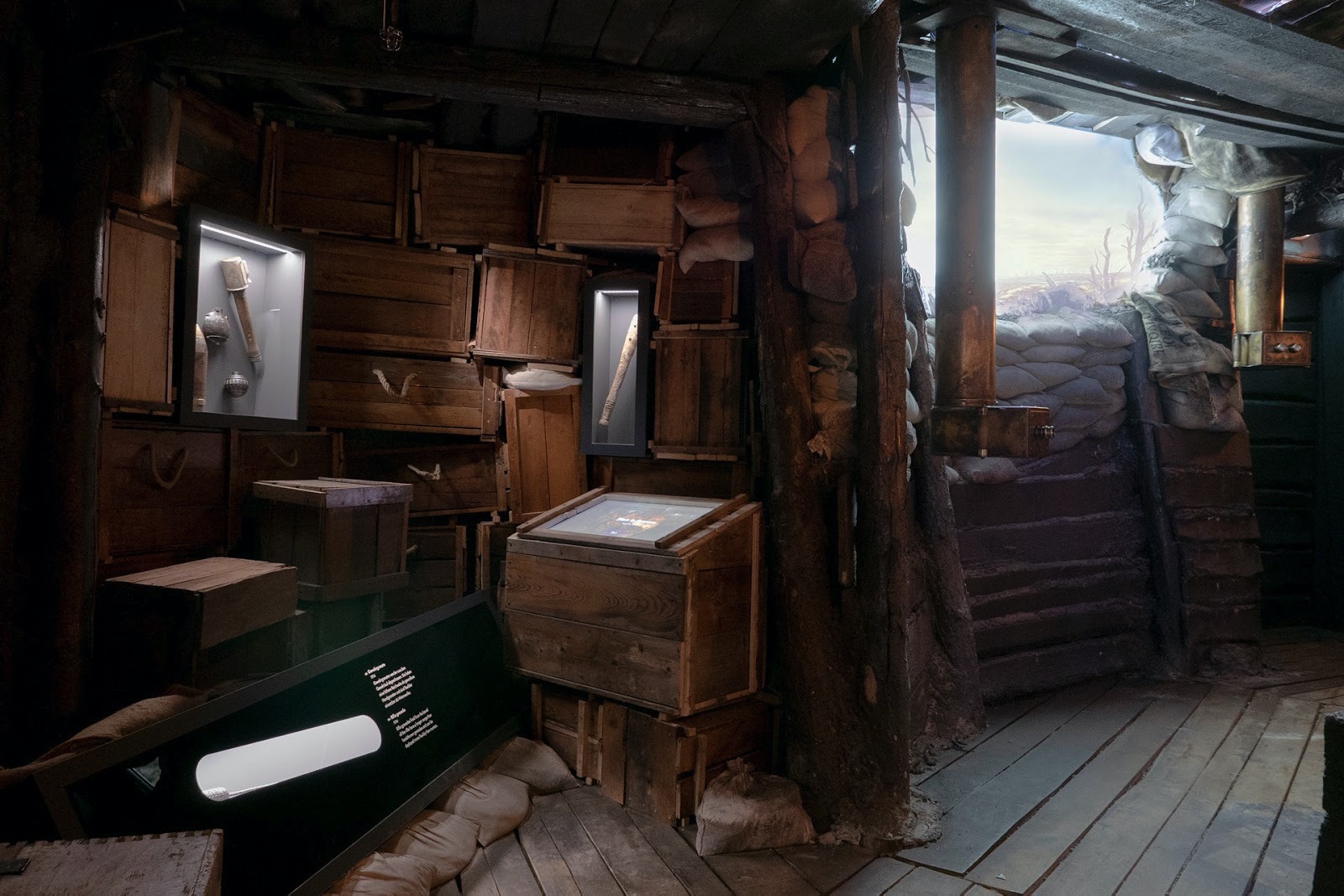
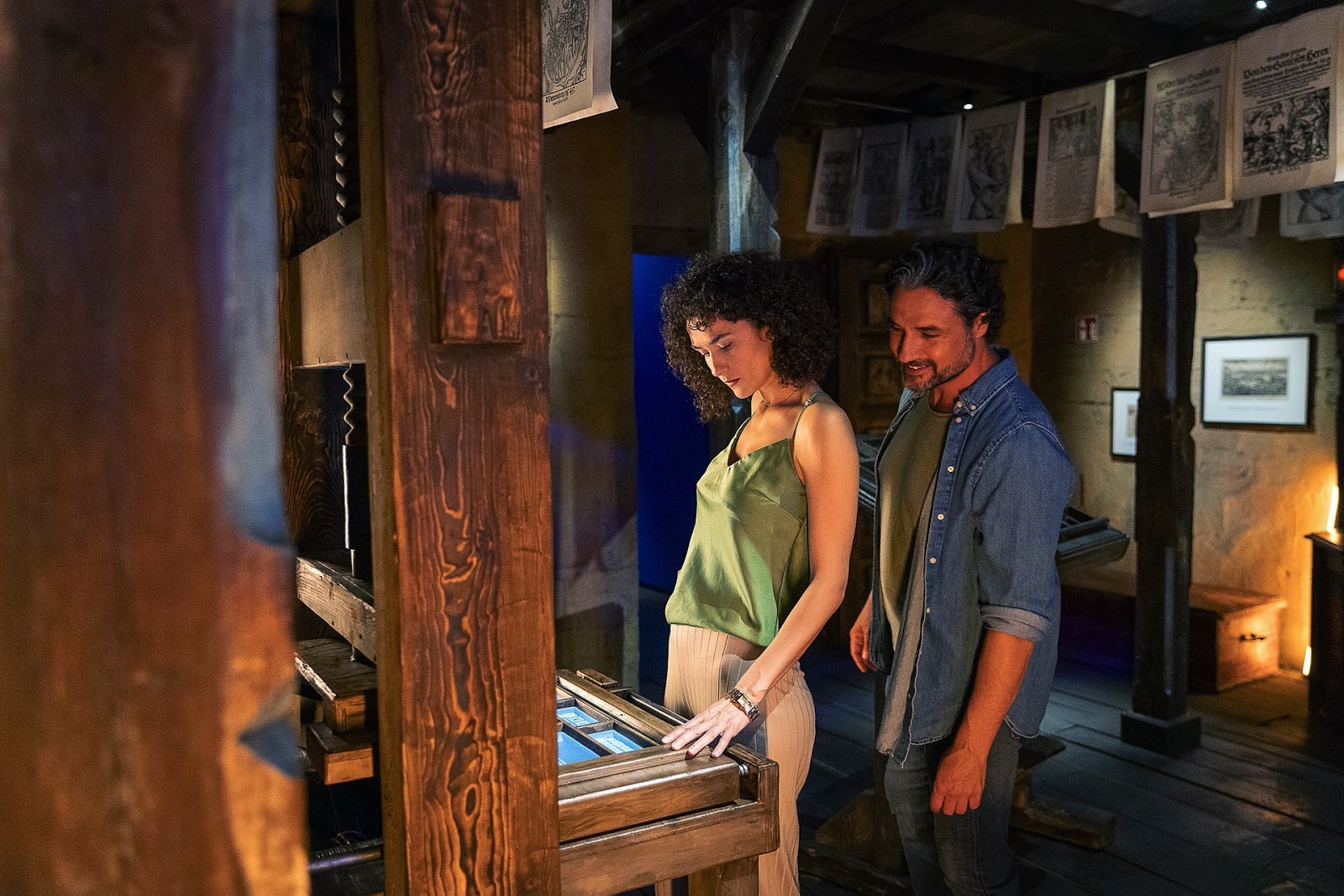
Alongside immersion, new technologies in the DM are used to create interactive games and digital recreations to foster better museum learning for the public. By designing a bookmark on a digital reproduction of the Gutenberg Press, museum professionals create a personalised historical experience. This game allows visitors to learn about the press, its impact, the history of the Reformation and to create a keepsake of their museum experience. In the eighteenth century, learning was expected to take place through looking, as “the eye provided a direct conduit to the mind”. The body, on the other hand, was seen as a potential problem, a less reliable way of learning. No longer seen as a “problem”, the body is now seen as an opportunity for more participatory, stimulating and “authentic” learning. With digital recreations such as that of a First World Trench, the DM team attempts to recreate the atmosphere of war. In the seventh room, Rückel states, “you can look through periscopes, you can smell gunpowder, and you can hear bombs.” This sensory experience has also been employed in many other museums, such as the Jorvik Viking Centre in York, where the visitor takes a ride through a reconstructed 10th-century Jorvik and experiences it through sound, smell, and sight.
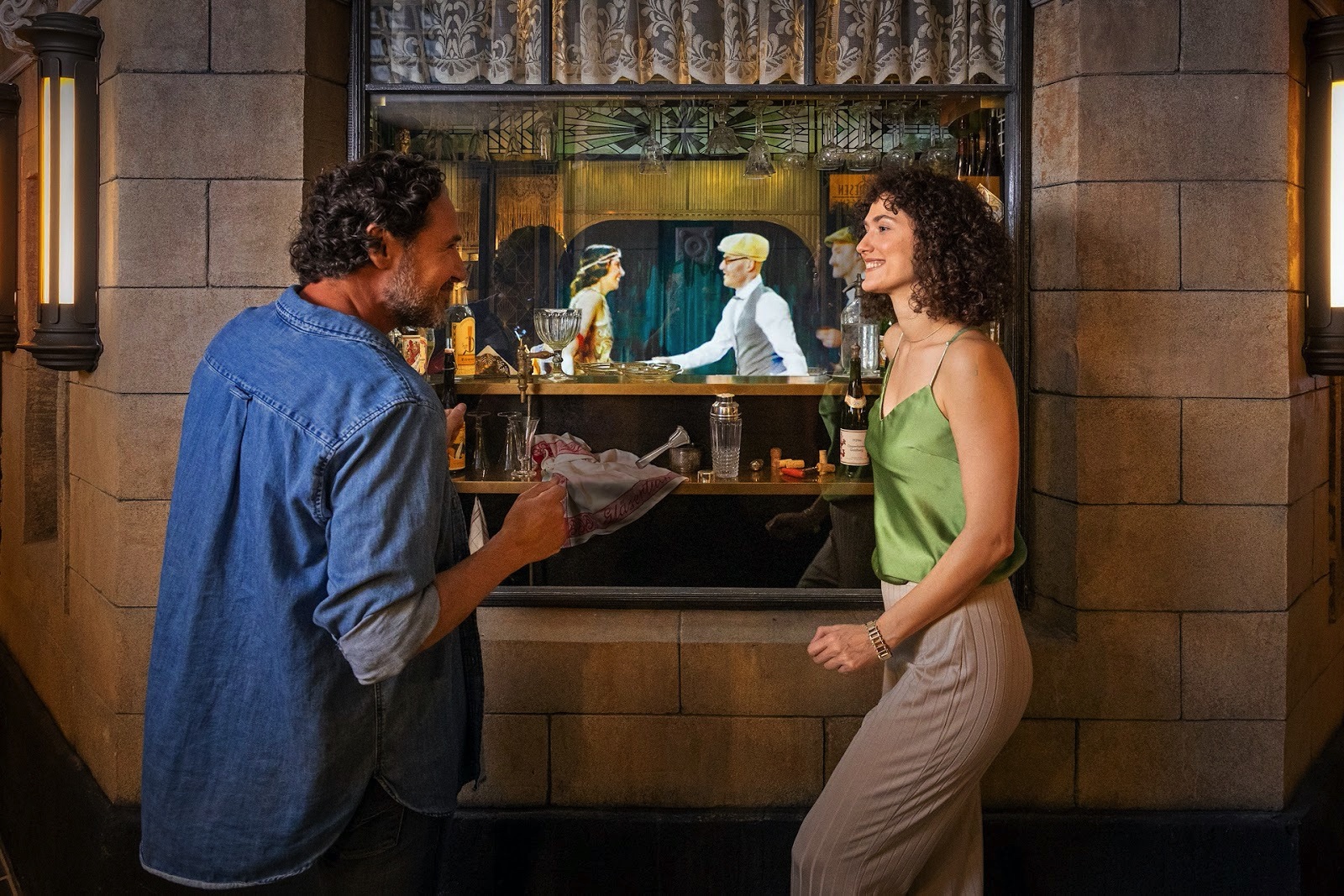
Curiosity for learning motivates visitors to visit museums and thus it is crucial for their survival. Falk and Dierking, for whom museums are “free choice learning environments”, argue that curiosity and learning are mutually exclusive and that curiosity is how we respond to unfamiliar environments. The move to interactivity to renew visitors’ curiosity indicates that the strict didactic method of knowledge transmission that has long existed in traditional museums is becoming less efficient in inspiring people to learn. The DM team uses technology to reignite visitors’ curiosity for all aspects of German history. Whilst new technologies are proving extremely beneficial for museum learning, our reliance on technology in society and the pace at which the digitisation of heritage is growing, is worrying. Caution must be exercised when incorporating technology into museums, as this process may lead us to lose a sense of reality, historical nuances, and interdisciplinary discourse. Better museum learning is not only achieved with new technologies but also through a return to a key behaviour: play. The DM team is keen to make “learning automatic for young and old alike,” for example, in the room recreating the Weimar Republic, you can walk through a shopping arcade and see couples dancing in a pub. Also available is the opportunity to play a detective game to guess who broke into a pharmacy and through doing so, learn about the rich and poor in the Weimar Republic. As play has primarily been seen as a childish activity, its effect on adults has been neglected. Through interactive games and the use of play, museums change from being “keepers of knowledge” to “a place of exchange of knowledge.” The visitor regains some control over their learning. However, the DM does offer additional tours specifically for school classes that can be tailored to the curriculum. These opportunities indicate that the DM team hopes to expose children to a new way of interacting with German history.
A new experience of German History
Although an immersive experience, the DM also aspires to offer a holistic historical experience of German history without it being overshadowed by the history of the Holocaust and the Cold War that has dominated Berlin. As a result of the German Vergangenheitsbewältigung (coming to terms with the past) process, Holocaust and Cold War museums and memorials have proliferated in Berlin. People visit Berlin precisely for this history, or their knowledge of it; the Topography of Terror (2008) and the Berlin Wall Memorial (1998) are consistently ranked among the top ten most visited Berlin museums. Not only does this history dominate Berlin’s physical landscape, it also shapes international perceptions of German history and has regularly resurged in national politics. As a result, the public are less aware of other parts of German history and thus are more likely to gravitate towards a museum of a specific past than a whole history museum. What kind of space then, does the Deutschland Museum occupy? The DM does conform to certain national discourses as half of the museum focuses on the years 1914-1990, but there is no space solely dedicated to the Holocaust. The museum team has made a conscious effort to avoid this history dominating the exhibition. The DM’s chronological layout hopes to offer a holistic view of German history by allocating each “era” the same amount of exhibition space.
The exhibitions of darker pasts raise further questions about what it means to be German, which Karen Till argues is to occupy a particular social category as a perpetrator in a historical space. Is German identity now solely tied to that of a perpetrator, as Till suggests? The DM seeks to separate the German identity from that of the perpetrator and prompts the visitor to think more broadly about German history: where is Germany? Who are the Germans? How do they see themselves? In the DM, viewing an interactive map that projects the development of the Holy Roman Empire or watching animations narrating the story of the Thirty Years War helps the visitor to break down these questions. The DM is a good introduction to German history for people who may previously have been unfamiliar and uninterested with German history. For a more in-depth, nuanced analysis however, the Deutsches Historisches Museum may be the better option.
Conclusion
The DM has undoubtedly broadened the idea of what a German National Museum should look like and has impacted Berlin’s tourist landscape. The DM borders the historic squares Potsdamer and Leipziger Platz and is a close walk away from the Topography of Terror, the Holocaust Memorial, a preserved section of the Berlin Wall and Checkpoint Charlie. The museum is proving to be a practical choice for visitors with limited time in Berlin and want a short yet concise overview of German history. The DM is truly unique: it has managed to convey a large and complex history in a confined space through immersive and interactive methods, placing the visitor’s experience at the core of the museum. As it only opened in June 2023, it is hard to assess the museum’s impact and longevity. Despite its short life, the museum has done exceptionally well, taking advantage of innovative technologies, consumer culture, and is boosted by websites such as Tripadvisor. For all its success, the DM is not without its flaws: the simplification of German history simplified and the risks posed by its commercialisation. Nevertheless, the DM adheres to its main goal: to remind visitors to think more broadly about German history and identity. For all the above, the Deutschland Museum could be considered a prototype for future national history museums.
Written by Cassia Wydra.
Bibliography:
Images:
Figure 1: Deutschlandmuseum Berlin, CC BY-ND 4.0
Figure 2: Deutschlandmuseum. “Adventure.” Deutschland Museum.de. Accessed October 20, 2024, https://www.deutschlandmuseum.de/en/adventure/?_gl=1*184sxvk*_up*MQ..*_ga*ODExNjk4MTI3LjE3Mjk3ODIwNjI.*_ga_YF5KP7Z9NR*MTcyOTg0OTU4Ni4yLjAuMTcyOTg0OTU4Ni4wLjAuMA..
Figure 3: Deutschlandmuseum Berlin, Photo: BaenferKartenbeck CC BY-ND 4.0
Figure 4 and 5: Deutschlandmuseum Berlin, Photo: David Weyand CC BY-ND 4.0
Figure 6: Deutschlandmuseum Berlin, Photo: David Weyand CC BY-ND 4.0
Primary Sources:
Deutschlandmuseum. “Visit.” Deutschland Museum.de. Accessed October 20, 2024, https://www.deutschlandmuseum.de/en/?_gl=1%2A1viv8f1%2A_up%2AMQ..%2A_ga%2AMjk2NDU4NzI2LjE3MzY2OTQwNzc.%2A_ga_YF5KP7Z9NR%2AMTczNjY5NDA3Ny4xLjAuMTczNjY5NDA3Ny4wLjAuOTA1NDQzMzI3
Deutschlandmuseum. “Press.” Deutschland Museum.de. Accessed October 20, 2024, https://www.deutschlandmuseum.de/presse/?_gl=1*k3tvey*_up*MQ..*_ga*MTk5NTIyMjE3NC4xNzM1MzM4Njk1*_ga_YF5KP7Z9NR*MTczNTMzODY5NS4xLjEuMTczNTMzODc0NS4wLjAuMTkwMjA2Njk4NA..&gclid=CjwKCAiAyJS7BhBiEiwAyS9uNXOlkrbFGikMgIW8zont0TQdPwBBoG8DhyhHEEcc60DEUYaY9ZCsSxoCuy4QAvD_BwE
Deutschlandmuseum. “Awards.” Deutschland Museum.de. Accessed October 20, 2024, https://www.deutschlandmuseum.de/en/awards/?_gl=1*ocnzpw*_up*MQ..*_ga*MTk5NTIyMjE3NC4xNzM1MzM4Njk1*_ga_YF5KP7Z9NR*MTczNTM0MTI3MC4yLjEuMTczNTM0MTUyOC4wLjAuMTg2ODMxNzY5MA..&gclid=CjwKCAiAyJS7BhBiEiwAyS9uNXOlkrbFGikMgIW8zont0TQdPwBBoG8DhyhHEEcc60DEUYaY9ZCsSxoCuy4QAvD_BwE
Deutschlandmuseum. “Adventure.” Deutschland Museum.de. Accessed October 20, 2024, https://www.deutschlandmuseum.de/en/adventure/?_gl=1*184sxvk*_up*MQ..*_ga*ODExNjk4MTI3LjE3Mjk3ODIwNjI.*_ga_YF5KP7Z9NR*MTcyOTg0OTU4Ni4yLjAuMTcyOTg0OTU4Ni4wLjAuMA..
Deutschlandmuseum. “The Germanic peoples.” Deutschland Museum.de. Accessed October 20, 2024, “https://www.deutschlandmuseum.de/en/history/the-germanic-peoples/?_gl=1*9z0cpc*_up*MQ..*_ga*OTQ0MDMxOTkuMTczNjYxMDYzMg..*_ga_YF5KP7Z9NR*MTczNjYyMTgwOC4yLjEuMTczNjYyMTgyMy4wLjAuMTM4MzA1MDAwMQ..
Deutschlandmuseum. “Families.” Deutschland Museum.de. Accessed October 20, 2024, “For Families” https://www.deutschlandmuseum.de/en/kids/?_gl=1*72abci*_up*MQ..*_ga*MTYyMTk4OTMyNi4xNzM2Njg3NDM2*_ga_YF5KP7Z9NR*MTczNjY4NzQzNS4xLjEuMTczNjY4NzY2NS4wLjAuMjQ4MDg5OTY0
Deutschlandmuseum. “School classes.” Deutschland Museum.de. Accessed October 20, 2024,https://www.deutschlandmuseum.de/en/school-classes/?_gl=1*1ynwzct*_up*MQ..*_ga*MTYyMTk4OTMyNi4xNzM2Njg3NDM2*_ga_YF5KP7Z9NR*MTczNjY4NzQzNS4xLjEuMTczNjY4NzcwNi4wLjAuMjQ4MDg5OTY0
Merlin, Lalla. “Immersive history at Berlin’s Deutschlandmuseum.” Blooloop. January 17, 2024. https://blooloop.com/museum/in-depth/deutschlandmuseum/
Secondary Sources:
Aalst, Irina van and Inez Boogaarts, “From Museum to Mass Entertainment.” European Urban and Regional Studies 9, no. 3 (2002): 195–209.
Addis, Michela, “New Technologies and Cultural Consumption – Edutainment is Born!” European Journal of Marketing 39, no. 7–8 (2005): 729–736.
Anderson, Maxwell, “Museums of the future: the impact of technology on museum practices.” Daedalus 128, no. 3 (1999): 129-62.
Bauer, Karin and Jennifer Ruth Hosek, eds. Cultural Topographies of the New Berlin. New York: Berghahn Books, 2018.
Benyon, David. Spaces of Interaction, Places for Experience. California: Morgan and Claypool, 2014.
Cameron, Fiona and Sarah Kenderdine, eds. Theorizing Digital Cultural Heritage: A Critical Discourse. Cambridge: MIT Press, 2007.
Charléty, Véronique, “Fragment de mémoire. Le musée historique allemand de Berlin.” Politix 1, no. 33 (1996): 133-155.
Chua, Alton and Snehasish Banerjee. “Reliability of reviews on the Internet: The case of TripAdvisor.” Paper presented at WCECS 2013: World Congress on Engineering and Computer Science. San Francisco, October 23-25, 2013.
Drotner, Kirsten, Dziekan Vince, Parry,Ross and Schrøder, Kim Christian, eds. The Routledge Handbook of Museums, Media and Communication. London: Routledge, 2018.
Eisenhuth, Stefanie and Scott H. Krause, eds. Cold War Berlin: Confrontations, Cultures, and Identities. London: Tauris, 2021.
Evrard, Yves and Anne Krebs, “The Authenticity of the Museum Experience in the Digital Age: The Case of the Louvre.” Journal of Cultural Economics 42, no.3 (2018): 353–363.
Falk, John and Lynn Dierking. Learning from Museums. California: Rowman and Littlefield, 2000.
Giannini, Tula and Jonathan Peter Bowen, eds. Museums and Digital Culture: New Perspectives and Research. Switzerland: Springer, 2019.
Greffe, Xavier, Anne Krebs, and Sylvie Pflieger, “The Future of Museums in the Twenty-First Century: Recent Clues From France.” Museum Management and Curatorship 32, no.4 (2017): 319–334.
Henrichs, Hendrik. “Truth, power and beauty: Rethinking the nation in German historical museums.” In Beyond the canon: History for the twenty-first century, edited by Maria Grever and Siep Stuurman, 110-127. London: Palgrave Macmillan, 2007.
Hooper-Greenhill, Eilean. Museum and Education: Purpose, Pedagogy, Performance. Oxon: Routledge, 2007.
Hooper-Greenhill, Eilean. Museums and the Shaping of Knowledge. London: Routledge, 1992.
Howes, David. The varieties of sensory experience. Canada: University of Toronto Press, 1991.
Jordanova, Ludmilla. “Objects of Knowledge: A Historical Perspective on museums.” in The New Museology, edited by Peter Vergo, 22-40. London: Reaktion Books,1989.
Komarac, Tanja, Durdana Ozretic-Dosen and Vatroslav Skare, “Managing edutainment and perceived authenticity of museum visitor experience: insights from qualitative study.” Museum Management and Curatorship 35, no.2 (2020): 160-181.
Koschnick, Leonore. German Historical Museum: German History in Pictures and Documents. Munich: Prestel, 2006.
Ladd, Brian. The ghosts of Berlin: confronting German history in the urban landscape. Chicago: University of Chicago Press,1997.
Levent, Nina and Alvaro Pascual-Leone, eds. The Multisensory Museum : Cross-Disciplinary Perspectives on Touch, Sound, Smell, Memory, and Space. Plymouth: Rowman and Littlefield, 2014.
Marinescu, Anda Becut, “The Museum between Education and Entertainment: The Role of the Museum According to the Target Public.” Sociology International Journal 2, no. 3 (2018): 185-89.
Mencarelli, Rémi and Mathilde Pulh, “Museoparks and Re-Enchantment of the Museum Visits: An Approach Centred on Visual Ethnology.” Qualitative Market Research: An International Journal 15, no. 2 (2012): 148-164.
Ntalla, Irida, “Play and Manifestations of Playfulness in Interactive and Immersive Museum Spaces.” Culture, theory and critique 62, no. 3, (2021): 266-286.
Ottomeyer, Hans, “History and museums in Germany.” Treballs d’Arqueologia 8, (2002): 9-22.
Pallud, Jessie, “Impact of interactive technologies on stimulating learning experiences in a museum.” Information & Management 54, no. 4 (2016): 465-478.
Parry, Ross, ed. Museums in a Digital Age. London: Routledge, 2010.
Simon, Nina. The Participatory Museum. California: Museum, 2010.
Till, Karen E. The New Berlin: Memory, Politics, Place. Minneapolis: University of Minnesota Press, 2005.
Vergo, Peter, ed. The New Museology. London: Reaktion Books, 1989.
Wang, Ning, “Rethinking Authenticity in Tourism Experience.” Annals of Tourism Research 26, no. 2 (1999): 349–370.
Ward, Simon. Urban Memory and Visual Culture in Berlin: Framing the Asynchronous City, 1957-2012. Amsterdam: Amsterdam University Press, 2016.
Zbuchea, Alexandra, “Museums as Theme Parks – A Possible Marketing Approach?” Management Dynamics in the Knowledge Economy 3, no. 3 (2015): 483-507.