Finding Headspace: Embracing Eastern Meditation Practices in Western Culture
An Introduction to Orientalism
The practice of meditation, which originated between 600-500 BCE, is defined by the Oxford English Dictionary as “a practice of the mind (and body) aimed at achieving the eradication of rational or worldly mental activity”. In recent decades, meditation has experienced a wave of global popularity. However, the orientalist discourse has attached a stigma to spiritual practices, especially those not founded by the West. This article is inspired by Edward Said’s work, Orientalism, in which he argues that the East is continually studied through a Eurocentric approach and that this damaging view of the East as exotic justifies colonisation. Said’s argument is particularly useful when discussing how meditation is received, adapted and implemented in Western cultures. This article aims to highlight the Buddhist roots of meditation and its history attached to Tibetan monasteries to offer a de-colonised approach to understanding meditation. I shall do this by analysing the approach of the meditation app Headspace, which seeks to bridge a gap between the traditional Eastern practice of meditation and the Western adaptation to everyday mindfulness. Overall, this article shall propose that there is an effort to challenge modern Western attitudes towards meditation.
A Brief History of Tibet
Tibet occupies a region in South-West China, bordering on India and was self-governing under the Qing Dynasty from 1720 to 1912. Upon the downfall of the Qing Dynasty, Tibet declared itself independent in 1913. Its independence was recognised by British India under the Shimla Convention in 1914. This convention divided Tibet into ‘inner Tibet,’ which was to be ruled under the Chinese government, and ‘outer Tibet,’ which was to be granted its independence. However, China refused to be a part of this agreement, claiming all of Tibet as part of the People’s Republic of China. This led to the Chinese invasion of Tibet in 1950. The Chinese Communist Party has since introduced severe restrictions on civil rights and imposed political oppression. Much like the process of Russification (which sought to suppress other languages and impose Russian as the dominant language in the early 1900s), the Chinese government wished to abolish the Tibetan language. It has removed the Tibetan flag from circulation and violently suppresses protests against the new political system.
Tibetan society is centred around Buddhist practice, which, in the West, is most closely associated with the practice of meditation. It is important to briefly note a distinction between Buddhist and Hindu meditations. Whilst both practices seek a form of spirituality through the embrace of meditation, they share distinct differences. Hinduism, the world’s oldest religion, dating back to approximately 3000 BCE, appears to utilise meditation as a method of achieving a deeper connection with Brahman, the supreme God who represents the highest form of existence. In contrast, Buddhist meditation focuses on self-enlightenment, the conclusion to which should be a state of deeper concentration, tranquillity and a heightened awareness of the mind-body connection.

The Tibetan population follows a monastic lifestyle and grounds itself in deep-rooted traditions of a nomadic society. Monks and Nuns are led by the Dalai Lama, the political and spiritual leader of monastic practices. However, the Chinese Communist Party severely restrict Buddhist practices, deeming them to be a rebellion against the occupation. Monasteries have become political centres for Tibetan resistance and therefore are tightly monitored by the Chinese. China has also forced the current 14th Dalai Lama, Tenzin Gyatso, into exile in India where he has been residing since 1959.
The Effect of Chinese Occupation
The abolition of Tibetan traditions as a result of Chinese occupation has had a significant impact on how meditation is interpreted andpractisedd by the West. Alan Wallace, an American Buddhologist of Tibetan Buddhism, argues that there is a lack of understanding and teaching of theoretical and faith contexts which lie behind Buddhist practices. Since there is difficulty accessing Buddhism’s traditional roots, one may be wary of the authenticity of the meditative practice that has prospered in Western societies. Thisis an idea which theological scholar Ira Helderman grapples with. She states that the “rational psychological teachings of the historical Buddha…have been degraded when disseminated through the masses”, criticising the West for imposing their own adaptations on the traditional practice. Helderman’s proposal is strong; however, Wallace provides a convincing middle ground in proposing that contextual education allows meditation to transgress across borders.
Wallace’s proposal that awareness of Buddhist history is important to fully immerse oneself in meditation, offers an opportunity to critique Western consumerist culture. Meditation has experienced a surge in popularity because of its commercialisation for capitalist gain which has led to the neglect of contextualising Buddhist origins. This supports Said’s argument that the West impose an orientalist narrative on meditation, stemming from the prioritisation of monetary gain rather than an education of Eastern practices. Adapting meditation to appeal to a Western consumer without providing faith or cultural contexts sustains a hierarchical and colonial attitude, indirectly silencing the everyday lives of Tibetan Buddhists and exacerbating the suppression they feel under the current Chinese occupation. Tibet’s insistence on saving Buddhism from eradication by China is becoming increasingly silenced as Eurocentric frameworks occupy the foreground in both scholarly and public discussions of Buddhism.
Headspace– A Bridge Between East and West?
Does Headspace, an award-winning meditation app, offer a solution to the persistent colonial attitudes toward meditation that currently dominate the Western world? The founder, Andy Puddicombe, trained as a Tibetan monk at 22 years old. He lived in several Tibetan monasteries for over 10 years before returning to the UK and establishing Headspace. I argue that Puddicombe’s authentic connection to the indigenous Buddhist community effectively bridges the gap between the faith’s traditionalism and its Western counterpart by creating an app accessible to the Western consumer whilst providing educational context led by his own experiences in Tibet. In his interviews with leading journalistic platforms such as the BBC, the Guardian and TED, Puddicombe encourages a deeper understanding of the rich cultural history behind Buddhist meditation by sharing stories of his own experiences. His interviews contain descriptions of 16-hour meditations within monasteries and the incredible sense of hospitality received from the Tibetan community. This serves two purposes; first, it gives an insight into this immersive experience, encouraging Western audiences to acknowledge Tibetan roots in their encounters with meditation practices. Second, it challenges the orientalist discourse by offering stories of a Western male embracing Eastern practices in the authentic environment. This aids in destigmatising preconceived notions of meditation as ‘other’, allowing for the expansion of the traditional practice to a broader transnational audience.

Headspace has over 100 million downloads, demonstrating just how popular meditation is becoming in the West. Whilst the app does charge a fee for subscriptions, 4000 organisations, including Sephora, Sony Music and Vitality, have chosen to subscribe on behalf of employees, and students can access the app at a significantly reduced rate. Headspace doesn’t impose any religious sentiment that could cause a conflict of interest in predominantly Christian Western societies and doesn’t require a lifestyle change, since sessions are as short as three minutes. Resources offered by Headspace are vast; Puddicombe narrates sessions ranging from traditional Samatha meditation, which involves slowing the mind and focusing on breathing techniques, to sessions surrounding money anxieties to offer support in the UK’s cost-of-living crisis, or health anxieties during the Covid-19 pandemic. The app also partners with therapists, doctors and sports personalities to cover a wide range of topics, from life skills to coping with mental health and staying disciplined. These factors demonstrate the effectiveness of Headspace in balancing awareness for traditional Buddhist practices whilst accommodating the Western lifestyle. A range of positive reviews support this, with one user stating that the app has “actually cured [her] long suffering insomnia” and another describing the app as “life-changing”. Whilst Puddicombe now resides in America, in founding Headspace, he encourages an awareness and appreciation for meditative origins according to his Tibetan lifestyle and offers the contextual education behind Buddhism that Wallace argues is essential to the practice.
Can Headspace Do More?
I have argued that Headspace is a stepping stone to achieving a decolonised approach to practising meditation as it experiences a popularity surge in the West. However, reviews consistently critique the subscription cost, which, at £10 per month, supports my argument that meditation is increasingly commercialised and confirms the validity of these reviews. This is an ironic juxtaposition since the app offers support for those in a cost-of-living crisis and yet is becoming inaccessible in favour of its monetary endeavours. Many also state that there is an overwhelming amount of content, which makes it difficult to find relevant practices. Puddicombe intends for Headspace to reach a widespread Western audience, which sometimes leads to content that is specifically targeted at American or UK political and social climates. One could argue that this encourages Buddhism to be utilised and incorporated internationally, which aids in expanding the practice. However, making specific content that targets Western cultures encourages a colonial narrative; using a distinctly Eastern practice as a coping mechanism for mental health. This places less emphasis on the education surrounding Buddhism and its Tibetan origins and instead uses the benefits of an Eastern practice to cure Western anxieties. This leads me to a final discussion on meditation’s use in the medical profession.
Meditation for Mental Health
Wallace argues that Buddhist monks encourage the use of meditation in the West, likely as a method of resistance to its current, politically fuelled silencing. However, a major trend over the course of this research has been that scholarship surrounding meditation is heavily linked to disciplines of sociology, psychology and medicine rather than history or philosophy. Its association with medical disciplines further demonstrates how Eastern meditation is being used as a method to soothe Western anxieties, contributing to the silencing of meditation as a form of Buddhism.
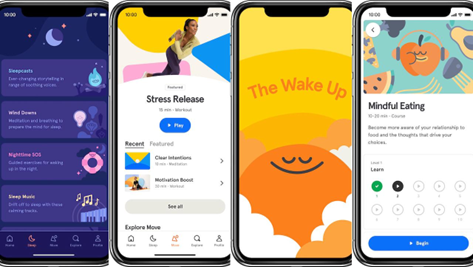
(2020).
According to the National Institute of Health, meditation has a significant positive impact on Western consumer mental health, treating conditions such as anxiety, depression and addiction. Whilst meditation as a mental health tool can be very beneficial as it can be a form of treatment over pharmaceuticals, this trend would point to the West having more diagnosed mental health issues than the East. Evidently, the marketing team at Headspace have been successful in branding their app as it is now adopted by many organisations for employees struggling with work-related stress and anxiety. This effort not only highlights the fact that Western capitalist and workplace culture is a key factor for increasing mental health issues, but it also indicates that Buddhism in the West is being used as a medical cure rather than a spiritual practice. Since contextual education surrounding Buddhism is not at the forefront of meditation when it is being prescribed for mental health purposes, it contributes to the orientalist discourse.
Final Thoughts
The purpose of this article was to apply the arguments of Said’s Orientalism work, which highlights how historicism of the East perpetuates colonial attitudes attached to the practice of Tibetan meditation. I have argued that the commercialisation and medicalisation of meditation in the West has contributed to the neglect of its Buddhist roots and favour a Westernised version that further silences Tibetan history. Alongside the ongoing Chinese attempt to occupy Tibet, this neglect threatens to extinct the Tibetan population and the traditional meditation practice, leaving behind a stigma attached to the East and the encouragement of a colonised narrative of the history of meditation. I have argued that Headspace offers relief to this enduring narrative by bridging a gap between Western curiosities towards meditation and its traditionalist Tibetan roots. Puddicombe’s personal experience of Tibet and his position to educate on this matter serves to destigmatize the East and offer a decolonised method of practicing meditation. Headspace should be praised for its contributions to the mental health crisis that the 21st century Western world is experiencing. However, Headspace also contributes to the issue of commercialisation and medicalisation of meditation and therefore it’s vitally important to continue to root the app in its traditional founding, inspired by Puddicombe’s personal experience. This is essential in educating the West on the history of meditation to avoid the preservation of the orientalist narrative. There is still much work to be done in the practice of decolonising history; however, in highlighting cases where Western impositions are increasingly dominating, academics can aim to achieve more authentic narratives of historical practice.
Written by Harriet Vicary
Bibliography:
“History of Tibet”. Free Tibet. (2024). Accessed Jan 8, 2025: https://freetibet.org/freedom-for-tibet/history-of-tibet/.
Helderman, Ira. “Meditation Madness: Meditation’s Popularity, Popular Religion and Unsupervised Religion.” Culture and Religion 23, no. 1 (2023): 21-45.
McGee, Michael. “Meditation and Psychiatry”. In The National Library of Medicine. (2008). Accessed Jan 8, 2025: https://pmc.ncbi.nlm.nih.gov/articles/PMC2719544/#ref-list1
Puddicombe, Andy. Headspace. Accessed Feb 4, 2025: https://www.headspace.com/andy-puddicombe
Roll, Richard. “From Monk to Entrepreneur: How Andy Puddicombe Became the Modern Voice of Meditation and Mindfulness.” The Rich Roll Podcast. (April 2015). Accessed Feb 4, 2025: https://open.spotify.com/episode/4ZLcVGpWANAs25l5auX6L0.
Vohra-Gupta, Shetal, Amy Russell and Elsie Lo, “Meditation: The Adoption of Eastern Thought to Western Social Practices.”Journal of Religion & Spirituality in Social Work 26, no. 2 (2007): 49-61.
Wallace, Alan. In Brian Hodel, “An Interview with Alan Wallace”. Snow Lion 15, no.4 (2000): 1-20. Accessed Jan 8, 2025: https://www.shambhala.com/wp/wp-content/uploads/2017/03/52.pdf
Images:
“Ten Incredible Buddhist Monasteries around the World”. India Today. (2015). Accessed Jan 8, 2025: https://www.indiatoday.in/travel/listicle/story/10-incredible-buddhist-monasteries-
around-the-world-275216-2015-12-01.
“Andy Puddicombe”. Bon appétit. (2018). Accessed Jan 8, 2025: https://www.bonappetit.com/story/andy-puddicombe.
“Headspace Offers Unemployed Americans a Free Year of Mindfulness”. PCMag.
(2020). Accessed Jan 8, 2025: https://uk.pcmag.com/blackberry-apps/126985/headspace-offers-unemployed-americans-a-free-year-of-mindfulness
Thumbnail: Headspace Official Logo Thumbnail: https://play.google.com/store/apps/details?cat=-
1&id=com.getsomeheadspace.android&hl=en_CA.
Interesting read – going to try using meditation to deal with uni stress now 🙂
LikeLike
Pingback: 40 Evidence-Based Benefits of Meditation — How Practice Transforms Every Dimension of Life | Balanced Achievement