Cultural Exchange: Ptolemaic Egypt
Overview
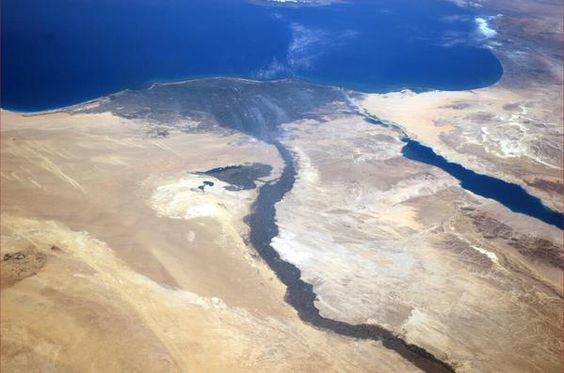
For well over a century, the land of Egypt has dazzled the Western world. Initiated by Napoleon’s occupation of the land in 1798 and further intensified by British interests in the region throughout the nineteenth and twentieth centuries, Egypt’s pharaonic era has been a titan of historical interest amongst both the Western public and academic circles. For evidence of this, one need look no further than the sea of tourists crowding around the famous Rosetta Stone. The stone is, of course, controversially held within the British Museum, along with many hundreds of other stolen Egyptian artefacts. Since the stone’s discovery, it has come to represent many things: a fossil of a bygone civilisation, a Eureka moment in linguistic understanding, and a monument to European colonial exploitation. There is, however, an irony in that final interpretation. While our twenty-first century psyches would be forgiven for only noting its relationship with the British Empire, the stone’s writing reveals its original relationship was to different rulers hailing from another foreign land: the Macedonian Greeks. These Macedonians would have similar aspirations of colonial rule and, over nearly three centuries, the intermingling of these Hellenic immigrants with the Egyptian natives would see widespread cultural exchange across political, religious, economic, and social avenues.
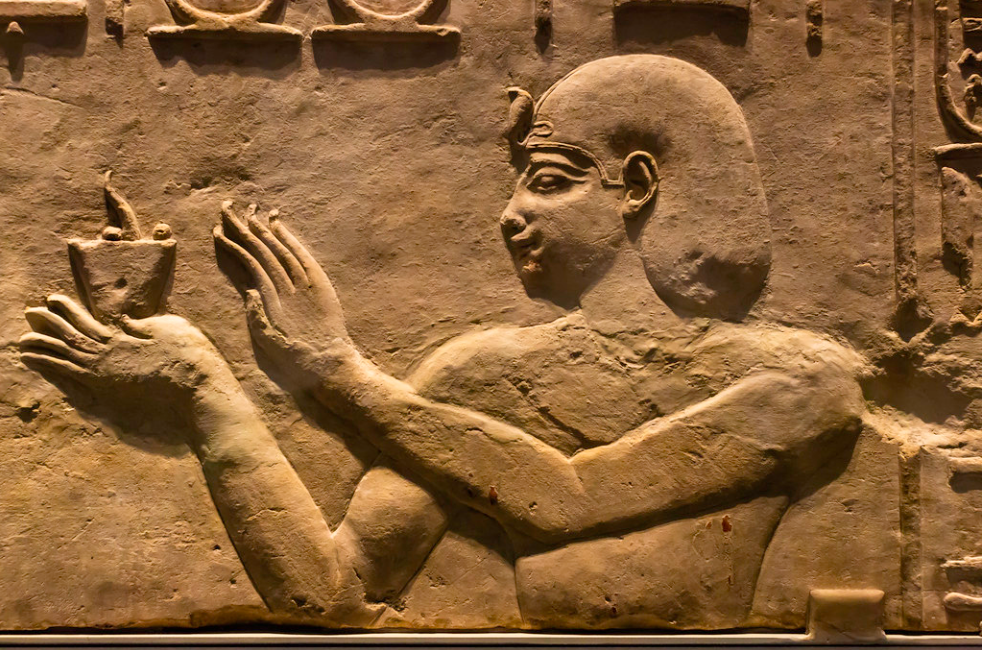
The Rosetta Stone, an important artefact in our understanding of this time, speaks of the grandiosity and policies of Ptolemy V, the fifth ruler of the Ptolemaic Dynasty who, coincidently, also inherited the throne at the age of five. Upon his ascension in 204 BCE, it had been 128 years since Alexander the Great wrestled Egypt from the Achaemenid Persian Empire. Further, it had been a century and a year since the foundation of the Ptolemaic Dynasty under Ptolemy I, one of Alexander’s generals and successors. By the time of Ptolemy V’s reign, it would be tradition for males of this family to be named after the founder of their dynasty. Female descendents would later come to be named Cleopatra, after Ptolemy V’s wife. A passing familiarity with the Ptolemaic family tree reveals naming conventions were the least peculiar thing about them. The royal family is well recorded by contemporary historians as being rather incestuous. This was not a Macedonian custom but rather an adopted practice that the dynasty engaged with to better integrate themselves with local culture. Ptolemy I was very conscious of the centuries-old tradition of Egyptian Pharaohs marrying their relatives. One can only imagine the tension at a dinner table as he informed his children, with their Macedonian upbringing, that they would marry one another. With our modern sensibilities, being a “sibling lover” (incidentally a title of Ptolemy II) is not a flattering example of the cultural exchange from the Egyptians to the Macedonians. Luckily, there are many more examples of cross-cultural exchange which paint a more holistic picture.
Religion
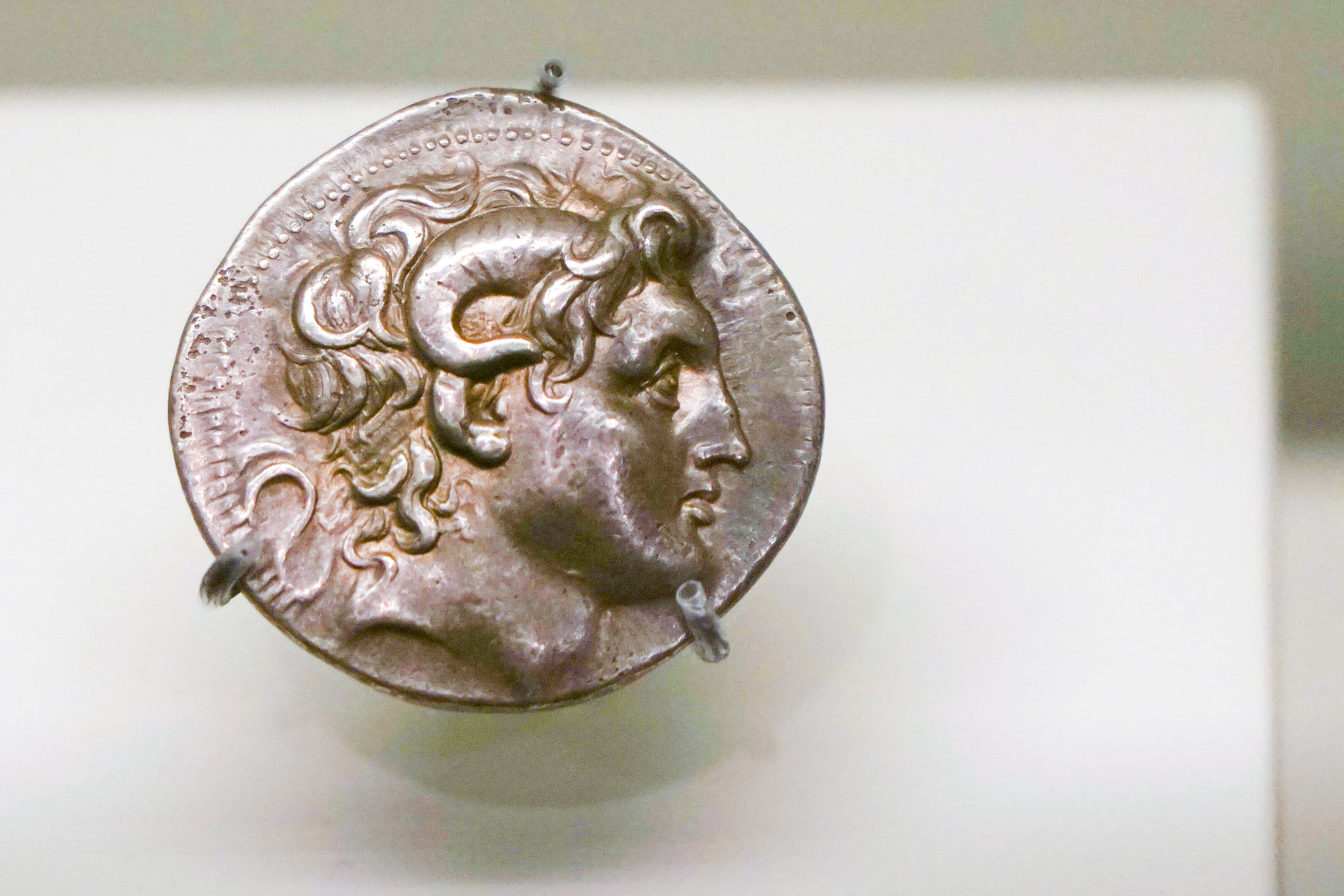
Religious exchange was quite prominent under the Ptolemies. Whether out of genuine devotion, cynical pragmatism, or a combination of both, aspects of the Hellenic and Egyptian pantheon were merged together in acts of religious syncretism. A prime example is the fusion deity Zeus-Ammon. For centuries, Ammon (sometimes Amun-Ra) had been depicted as the ruler of the Egyptian pantheon. To a Hellenic mind, this would draw parallels with Zeus, the lord of the Greek gods. This fusion was culturally cemented when Alexander the Great proclaimed that Zeus was his true father, and drew no distinction between the Ammon of Egypt and the Zeus of Greece.
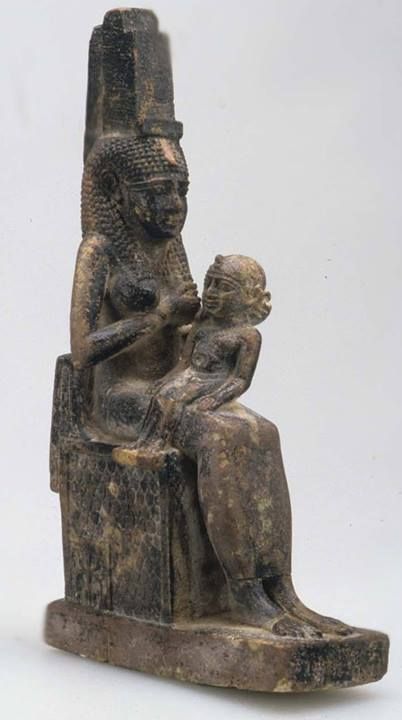
Another example of religious syncretism can be seen with the goddess Isis: a mother goddess in the Egyptian pantheon. A popular depiction of the goddess shows her nursing Horus. Notably, she would explode in international popularity during the Hellenistic age as can be seen with the “Cult of Isis” within the Roman Empire. In Egypt itself, Cleopatra III would adopt the name, or title, of Isis. Later, the more famous Cleopatra VII would title herself as the “new Isis.” She would, evidently, also be the last, as Egypt was annexed by Rome following her death.
Multiculturalism
Unsurprisingly, the Macedonian soldiers and their families, who immigrated with the Ptolemies into Egypt, formed a pseudo-ethnic ruling class. While much of the regional and theocratic bureaucracy remained intact, the country’s vast wealth would be increasingly concentrated within the Hellenic demographic of the population. We have reason to believe this consolidation of wealth did not go unnoticed by the general populace. Alexandria, the capital of the Ptolemaic Kingdom, was often called Alexandria ad Aegyptum meaning “Alexandria next to Egypt” as opposed to “in Egypt” due to the city’s comparatively large Hellenic cultural make-up. This linguistic proposition that Alexandria, and by extension the Ptolemies, were a foreign phenomena, suggests the Ptolemies were never fully accepted.
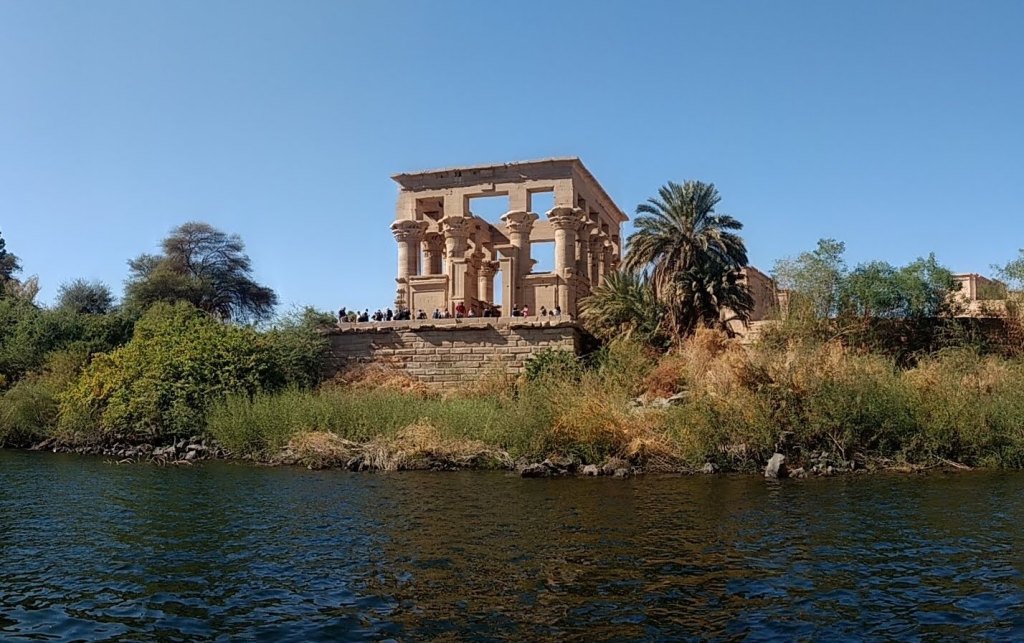
Historian Lewis Naphtali, author of Greeks in Ptolemaic Egypt, argues that the military served as a consistent vehicle for social advancement and cultural exchange as can be seen through men like Dionysios. Naphtali explains that Dionysios lived in the early second century BCE as a member of the Ptolemaic infantry. His Greek name suggests a Hellenic heritage yet Naphtali notes that surviving documents record that he had a secondary Egyptian name. This indicator of his family’s culturally mixed heritage was a product of the working-class Macedonians interacting more with their fellow Egyptian labourers than the Macedonian upper-class. Before he served in the military, Dionysios was reportedly a farmer on crown land, yet he had labourers of his own. Paradoxically, in the army, Dionysios was a member of the infantry as opposed to the cavalry, which was reserved for wealthy Macedonians. This nuanced ethnic and economic situation suggests the existence of a thriving middle branch of society between the Egyptian underclass and the Macedonian aristocracy. This middle-branch seems to have been made up of those with mixed ethnic and cultural heritage. These people would engage with both cultures in the country to a far greater extent than the rural Egyptian farmers and Hellenic elite.
Conclusion
Through Ptolemaic Egypt, we see how early modern colonial trends have manifested themselves as early as the classical age. A cultural divide reinforced by divisions in economic classes meant that the ruling aristocracy would never be seen as fully integrated with the people of the country. Yet, intermingling between the working Hellenic immigrants and Egyptian natives would lead to families of mixed cultural heritage. The Ptolemaic dynasty would end in 30 BCE when the country was annexed by Rome. Nevertheless, twenty centuries later, the echoes of this civilisation can be heard within other nations who have experienced this history far more recently.
Written by Isaiah Reitan
Bibliography
Budge, E.A.W. The Nile, Notes for Travelers in Egypt, by E.A. Wallis Budge, 9th Edition, London, Thos.Cook and Son [1905], pp. 199-211. Retrieved from https://archive.org/details/nilenotesfortrav00budg.
Fraser, P. M. “Alexandria Ad Aegyptum Again.” Journal of Roman Studies 39.1–2 (1949): 56–56. Web.
Jakob A. O. Larsen. “Alexander at the Oracle of Ammon.” Classical Philology, vol. 27, no. 1, 1932, pp. 70–75. JSTOR, http://www.jstor.org/stable/265248. Accessed 1 Oct. 2024.
Naphtali, L. (1986). Upward Mobility in the Military Services. In Greeks in Ptolemaic Egypt : case studies in the social history of the Hellenistic world. essay, Oxford University Press. Retrieved 2024, from Greeks in Ptolemaic Egypt: case studies in the social history of the Hellenistic world.
Pfeiffer, Stephan (2008). “The God Serapis, his Cult and the Beginnings of the Ruler Cult in Ptolemaic Egypt”. In McKechnie, Paul; Guillaume, Philippe (eds.). Ptolemy II Philadelphus and His World. Brill. pp. 387–408.
Images:
Egypt. (n.d.). Pinterest. Retrieved October 6, 2024, from https://www.pinterest.com/pin/362610207477669997/.
El Abd, W. A. E. (2019b). River Nile, Nuba, Aswan, Egypt , Fila Temple. pxhere. Retrieved October 6, 2024, from https://pxhere.com/en/photo/1565779.
Opacity, (2016). Lysimachus Coin (Tetradachm) representing Alexander as the combined personification of the supreme deities of both Greece and Egypt – Zeus and Amun, silver, 297-281 BCE – Field Museum Flicker, Retrieved October 10, 2024, from https://www.flickr.com/photos/opacity/24223456741.
Ptolemy I Soter Louvre, wikimedia commons, retrieved on October 9 2024, from https://commons.wikimedia.org/wiki/File:Ptolemy_I_Soter_Louvre_Ma849.jpg.

Stauffer, W. (2017). Isis | AMNTE NOFRE (Amentet Neferet). Pinterest. Retrieved October 8, 2024, from https://www.pinterest.com/pin/541557923918007552.
Zajdowicz, Thad. Relief of Ptolemy I Making an Offering to Hathor. 2018. Flicker, https://www.flickr.com/photos/thadz/42480950610.
Pingback: Mirina Kleopatrayê û Pêvekirina Misrê ji hêla Romayê ve (30 BZ) – xwende
This article is available as a video here: https://www.youtube.com/watch?v=Quryah5q7vc&embeds_referring_euri=https%3A%2F%2Fwww.bing.com%2F&embeds_referring_origin=https%3A%2F%2Fwww.bing.com&source_ve_path=Mjg2NjY
🙂
LikeLike